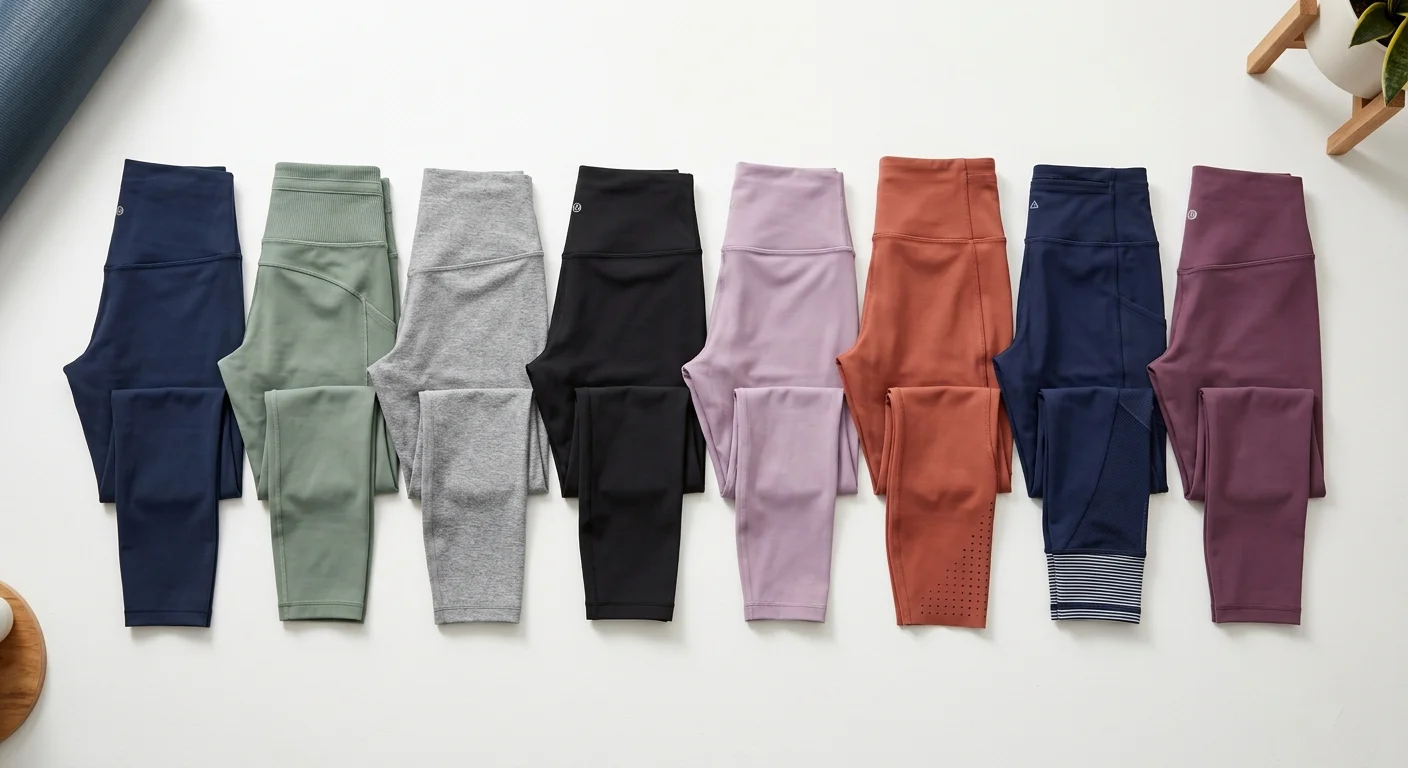
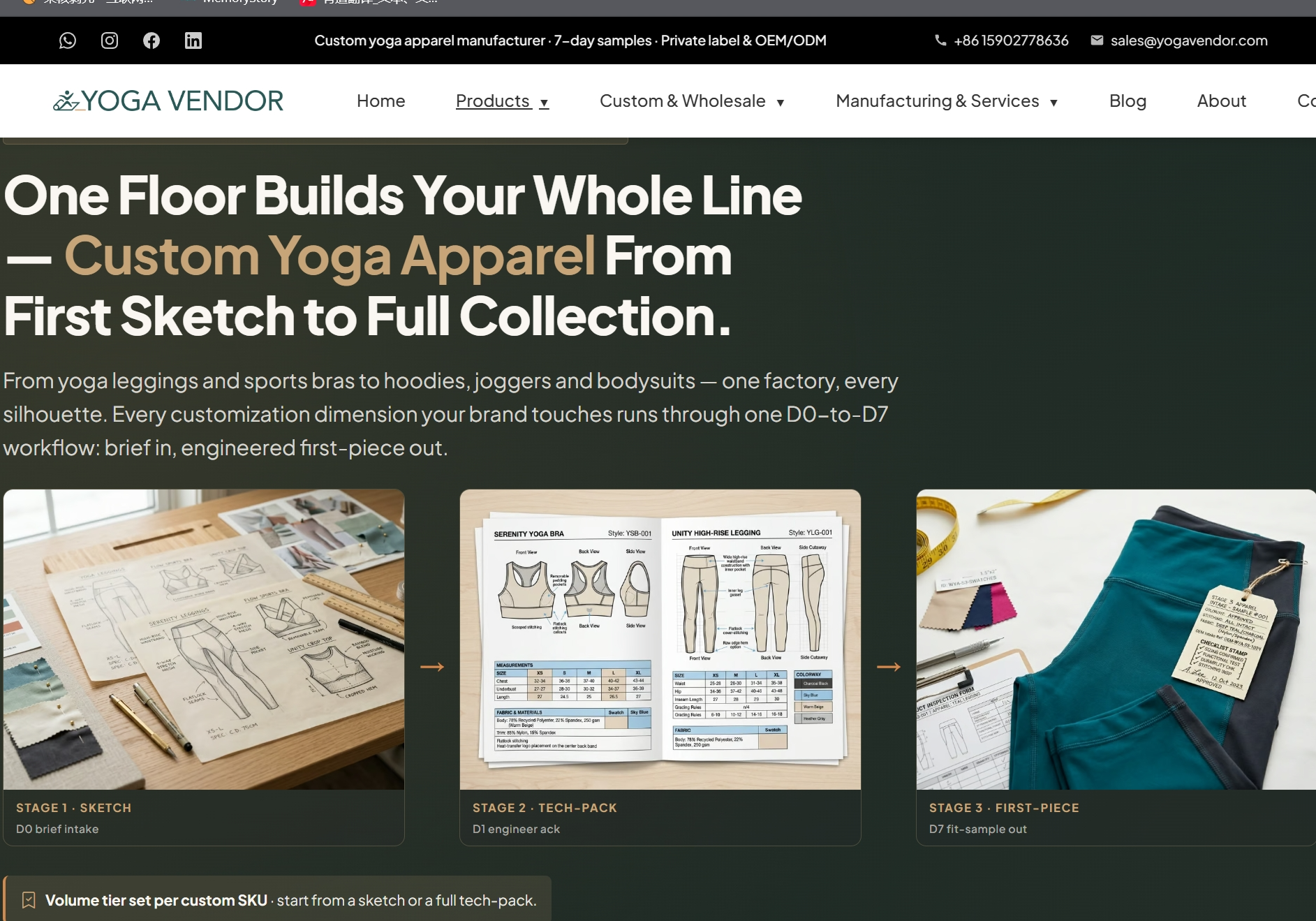
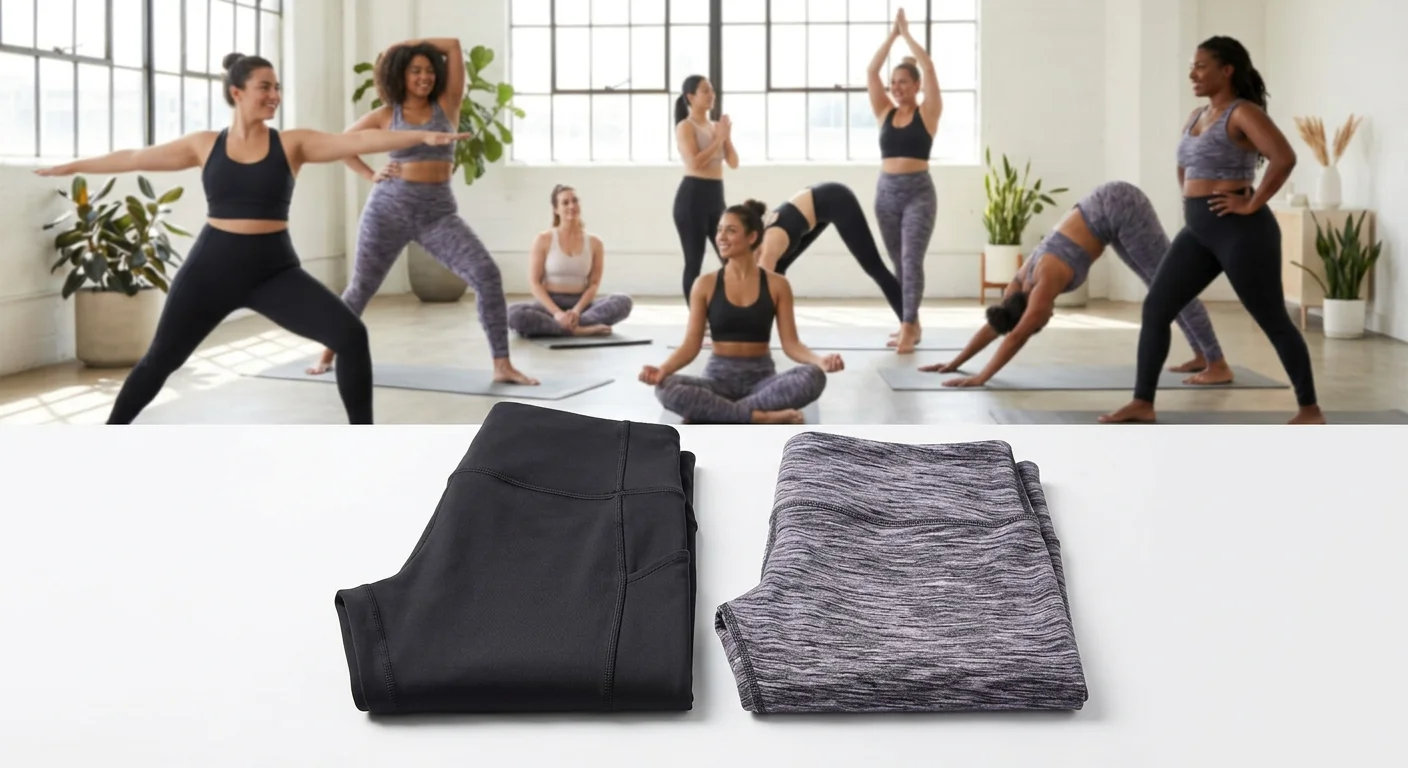
Every great yoga brand started with one person who was fed up. Fed up with leggings that rolled down mid-flow. Fed up with fabrics that couldn't handle a hot yoga class. Fed up with watching someone else build the brand they'd been dreaming about.
Sound familiar? You're already closer to launch than you realize.
The global activewear market has crossed $500 billion. Grabbing your share doesn't need a fashion degree or a warehouse full of stock. You just need the right roadmap.
These 10 steps to launch your own yoga clothing brand cover everything — from locking in your niche, to finding a reliable yoga wear manufacturer , to building a launch strategy that gains real momentum. No fluff. Just the decisions that matter, in the order they matter.
Step 1: Find Your Yoga Clothing Niche Before You Spend a Single Dollar
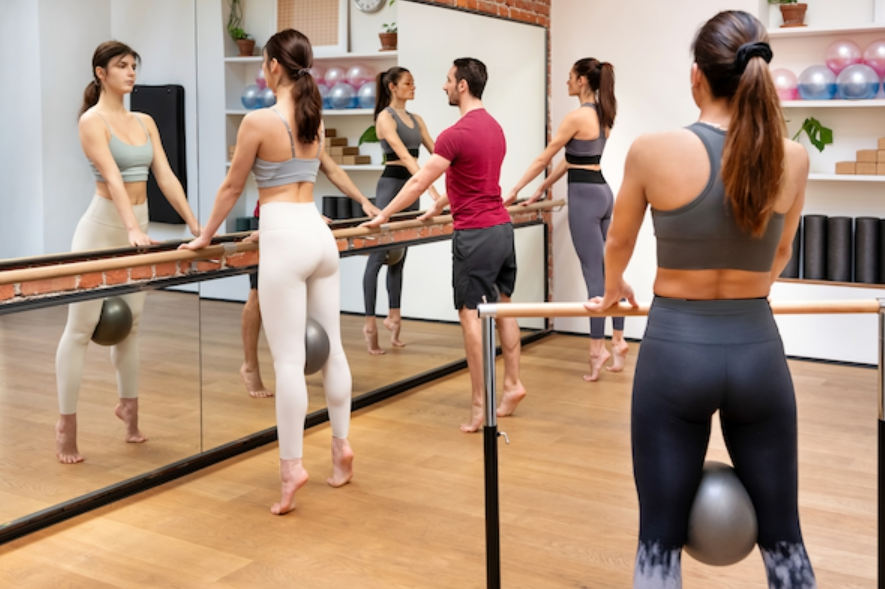
The yoga apparel market is worth over $31 billion in 2025 and climbing toward $66 billion by 2034. That's not a reason to jump in without a plan. Pick your corner with purpose.
A niche isn't a limitation. It's your competitive edge.
Before you contact a single yoga wear manufacturer or request one sample, know who you're serving. The data makes this clearer than you'd expect:
Gender : Women drive 73.1% of global demand . That's your lowest-risk starting point. Men's yoga clothing is underserved and growing faster — higher risk, real upside.
Product type : Bottom wear (leggings, pants, capris) holds the largest market share . Tops account for 23.7% . Pick one category and own it.
Region : North America commands ~34% of the global market . Asia-Pacific is growing fastest for cross-border opportunities.
Price tier : Mass-market takes 50.7% of sales. Premium sits close behind at 49.3%. Neither is "wrong" — they just need different production partners and margin structures.
Channel : Online is growing at 8.3% CAGR . Specialty retail still holds 33.6% of sales .
Combine these five dimensions into one sentence before doing anything else:
"We design women's yoga leggings for North American buyers in the mid-price range, sold online-only."
That sentence is your filter. It tells you which yoga clothing wholesale supplier to approach. It guides your fabric choices. It points you toward the right competitors to study — players like Alo Yoga, Athleta, and smaller brands like Lily Lotus. These brands prove that niche positioning works at every scale.
No niche statement? No next step.
Step 2: Research the Market and Identify Gaps Your Brand Can Fill
Most founders skip this step. They assume personal frustration equals market demand. Sometimes it does. More often, it doesn't — not at the scale needed to build a real business.
Market research isn't glamorous. But done right, it shows you where competitors are failing, which customers are underserved, and whether your idea is a real business or just a very expensive hobby.
Here's how to make it concrete:
Mine competitor reviews. Pull 200–500 customer reviews from the top 10–15 yoga apparel brands on Amazon, Reddit, and Google. Complaints appearing in more than 10–20% of reviews across multiple competitors point to a real, recurring gap — not a one-off grievance. Size running too small? Waistbands losing elasticity after three washes? Those are your product briefs.
Map what's missing, not just what exists. Build a simple competitor matrix. Track price points, fabric claims, size ranges, and sustainability positioning. Look for the clear absences — the segments nobody prices for, the features everyone complains about but few brands fix.
Validate before you invest. A landing page with a clear value proposition costs almost nothing. 10–20% of visitors joining your waitlist confirms the gap is real.
That signal is worth more than any gut feeling.
Step 3: Build a Brand Identity That Yoga Customers Connect With
Brand identity is the reason someone picks your leggings off a shelf — or scrolls past them.
This isn't about having a pretty logo. It's about building a system of signals — visual, verbal, emotional — that makes the right customer stop and think: this brand gets me.
Build that system on purpose, not by accident.
Start with a person, not a market.
There are 36 million yoga practitioners in the U.S. alone. Don't try to dress all of them. Studies show that 70–80% of a yoga brand's loyal revenue comes from a small core group of regulars. Build your identity around that person — not the whole category.
Create 2–4 specific customer personas. Skip the vague archetypes. Use real attributes:
Age range (e.g., 28–40), primary practice style, fitness goals
Practice frequency and schedule (early morning flows vs. weekend power sessions)
Price sensitivity — are they comfortable at $80 leggings, or is $45 their ceiling?
Know who you're designing for. Every brand decision gets easier from there.
Write your value proposition in one sentence.
Use this structure: "We help [specific audience] who struggle with [key challenge] achieve [specific outcome] through [unique approach]."
Keep it to two sentences maximum. Then put it everywhere — website hero, social bio, email footer. Repetition isn't redundancy. It's recognition.
Build a visual identity that feels like your product.
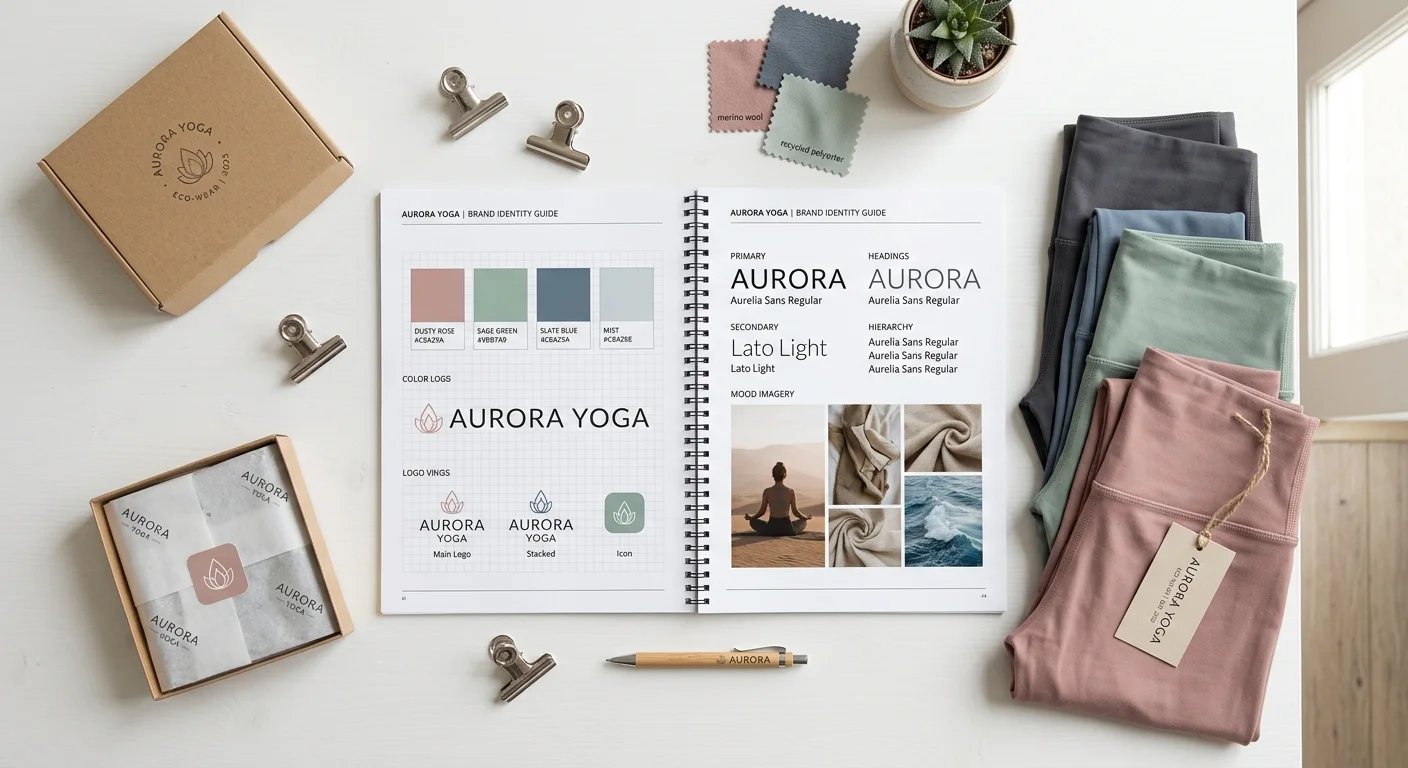
Color palette : 1 main brand color + 2–3 accents + 2–3 neutrals. Match the mood of your line: restorative and soft (sage, dusty rose, warm beige) vs. high-energy and bold (deep teal, charcoal, warm orange). Once set, never mix in random new colors.
Logo : Must work at three sizes — website header, social avatar, print. Must hold up in monochrome. Before briefing a designer, collect 5–10 logos you admire. Write down five words you want your brand to feel like.
Fonts : Two, maximum three. One for headings, one for body, one optional decorative accent. Use them the same way across every touchpoint.
Lock in your tone of voice.
Pick 3–5 personality traits (grounded, inclusive, no-nonsense, warm). Then build a bank of 10–20 phrases that name your customer's real experience — "tight hips from sitting all day" , "that 2am mind that won't quiet down" . Use those phrases in your product descriptions, social captions, and packaging inserts.
Customers read your copy and think "that's literally me" — that's brand identity doing its job.
Compile everything into a one-page style guide before you touch a manufacturer. Include color HEX codes, logo files, font names, tone-of-voice notes, and example imagery. Start working with a yoga wear manufacturer on custom packaging or hang tags of yoga apparel brand? Hand them this document. It cuts guesswork and keeps your brand consistent from first sample to final product.
Step 4: Choose the Right Business Model — OEM, ODM, Private Label, or Print-on-Demand
Four paths lead to a finished yoga legging on a customer's doorstep. Pick the wrong one and you'll burn six months and $20,000 on a lesson you could have learned in ten minutes.
Here's the map.
OEM yoga clothing services (Original Equipment Manufacturer) means you own everything — design, specs, IP. Your factory builds what your technical sheets describe. Nothing more, nothing less. Full exclusivity is yours. But the timeline runs 4–12+ months. Development costs run 2–5× higher than ODM. You'll also need to commit to 1,000–3,000+ units per SKU to make tooling costs work. This path fits brands building something premium and distinct — brands ready to protect their IP with legal backing.
ODM (Original Design Manufacturer) means the factory already has the base design ready. You adjust colors, trims, and branding — then launch in 2–4 months at much lower dev costs. The tradeoff is real: other brands can use the same base. For most first-time founders, ODM through a trusted sportswear OEM manufacturer is the best starting point for Custom yoga apparel production.
Private Label moves even faster — often 2–8 weeks from approved artwork to delivery. The manufacturer holds the formula and cut. You own the brand. Entry costs are low, but so is product exclusivity. This model works well for brand-first plays where speed matters more than a unique product design.
Print-on-Demand needs zero inventory. Upload a design, sell a unit. Unit costs run 2–3× higher than bulk ODM, so margins stay thin — but your capital risk is close to zero. It's a solid way to test a design or niche before locking into bulk yoga clothing wholesale supplier minimums.
Which Model Fits Where You Are Right Now?
OEM | ODM | Private Label | POD | |
|---|---|---|---|---|
Time to market | 4–12+ months | 2–4 months | 1–2 months | Hours–1 week |
MOQ | 1,000–3,000+ | 500–1,000 | 100–500 | 1 unit |
Dev cost | Highest | Medium | Low | Very low |
Product exclusivity | High | Limited | Low | Low |
Best for | Premium/established brands | Startups, first collections | Brand-first, speed priority | Low-capital validation |
The playbook most successful activewear private label brands use: start with ODM yoga wear or private label to test your market with real customers. Then move your best-selling styles to OEM once your volume supports it. Don't build a custom factory relationship before you know which legging your audience will reorder again and again.
One rule to keep: can't yet commit to 500+ units per SKU ? Start with POD or a small-MOQ private label yoga apparel. Once you can forecast 1,000–5,000 units per SKU per year with confidence, OEM becomes both practical and profitable.
Step 5: Register Your Business and Protect Your Brand
Your brand name is an asset. Treat it like one from day one.
Most founders put this off until something breaks — a name conflict, a copycat, a bank account they can't open. Don't wait. Legal structure opens the door to everything: manufacturer contracts, payment processing, trademark protection, and tax compliance.
Register your business entity first. File Articles of Organization (LLC) or Articles of Incorporation with your state's Secretary of State. Total cost: under $300 in most states. You'll need a registered agent, a unique business name, and your ownership details.
Get your EIN right after. The IRS issues it online in under 30 minutes. No EIN means no business bank account. No business bank account means serious manufacturers won't touch you.
Lock your name across every channel at once:
Search USPTO's TESS database for conflicting trademarks
Register your .com domain plus .net, .biz, and common misspellings
Reserve matching social handles before someone else grabs them
File your federal trademark. Budget $250–$350 per class. Expect 8–12 months to full registration. Use ™ while your application is pending. Switch to ® after approval. File maintenance at years 5–6, then again every 10 years. Miss the deadline and your registration gets cancelled.
Register your logo and tagline as separate filings. Each one is its own asset. Each one deserves its own protection.
Stay alert after that. Set Google Alerts for your brand name and its common variants. A trademark holds its value as long as you defend it — stop watching, and you risk losing it.
Step 6: Design Your First Yoga Clothing Collection With Purpose
No clear functional brief? You'll waste samples, delay production, and confuse customers. Build this collection around specific movement problems — not around what looks good on a flat sketch.
Start small and intentional: 10–15 SKUs.
A focused debut collection for women's yoga might look like this:
- 4–6 leggings (2 lengths, 2–3 colors each)
- 3–4 sports bras (light and medium support)
- 3–4 tops (tank, longline crop, long-sleeve)
Aim for 3–4 matching sets plus 2–3 mix-and-match tops that pair with every bottom. That's capsule logic — and it drives set purchasing.
Assign every style a functional promise.
Each piece should solve one defined problem:
- Legging A: No-see-through, high-rise tummy control for inversions
- Bra B: Medium support up to cup D for vinyasa flows
- Top C: Bonded hem that won't ride up in downward dog
Hit the performance benchmarks that matter.
Feature | Target Spec |
|---|---|
Stretch & recovery | 4-way stretch, ≥15–20% spandex |
Opacity | ≥90% under full squat stretch |
Moisture management | Dries within 30–60 minutes |
Seam construction | 4-needle 6-thread flatlock |
Waistband elastic recovery | Stretches to 120–130%, returns to original shape |
Choose fabrics with purpose.
For leggings: 73–80% polyester or nylon / 20–27% spandex , targeting 220–260 gsm . For bras: 75–85% nylon or polyester with 15–25% spandex.
Eco-friendly options like recycled polyester, bamboo, and organic cotton can work well. Just make sure they're blended with enough spandex to keep the stretch intact.
Size your collection to fit real bodies.
Start with S–M–L–XL. Activewear runs smaller than casual clothing — stretch does the fitting work. Decide who you fit best upfront — petite, tall, or curvy. Then adjust inseams and grading rules before sampling starts.
Encode every decision in a tech pack.
One tech pack per style, at minimum. Each one should include:
- Flat sketches with measurement points
- Fiber composition and GSM
- Pantone color codes
- Stitch specifications
- Fit notes like "light compression, no dig-in at waistband"
Hand this document to your yoga wear manufacturer before the first sample gets cut. It clears up confusion and keeps your custom yoga apparel production consistent across every style.
Test before you scale.
Order samples of every style and size. Wear-test each one for 60–90 minutes — try both an active class and a restorative session. Check for transparency, waistband roll, seam chafing, and fabric pilling across 20–30 wash cycles.
After that, compare 3–5 manufacturers on sample quality, turnaround speed, and per-piece pricing. Do this before you commit to full production.
Your first collection isn't permanent — it's a structured experiment. Launch small batches, track returns by size and style, and use that data to double down on what works.
Step 7: Select the Best Fabrics for Yoga Wear Performance and Sustainability
Fabric is where yoga clothing brands win or lose — not in marketing, not in pricing. It comes down to the moment a customer bends into a deep forward fold and feels what your material is made of. That one sensation tells them everything.
The choice isn't just technical. It's a brand statement. Your fabric tells customers whether you're a performance label or a conscious one — or whether you've managed to be both.
Here's how to choose without guessing.
Match Fabric to Intensity First
Start with one question: what is your customer doing in this piece?
High-intensity or hot yoga : Go synthetic. Recycled polyester or nylon blended with 15–25% spandex gives you moisture-wicking, quick-dry performance. Target 220–260 gsm for compression leggings, 180–220 gsm for lighter cuts.
Restorative or studio sessions : Natural and semi-synthetic fabrics earn their place here. Bamboo, TENCEL™/Lyocell, Modal, and organic cotton deliver breathability, softness, and skin comfort that polyester can't match.
Know Your Fibers
Performance synthetics (for sweat-heavy use):
Recycled polyester (rPET) : Dries 2–3× faster than cotton. It has high tensile strength, resists abrasion, and has a lower carbon footprint than virgin polyester. This is the workhorse of hot yoga collections.
Nylon/Econyl : Softer drape than polyester. Superior elasticity makes it ideal for sculpting leggings. Blend with 15–25% spandex for premium compression.
Spandex/Elastane : Never a standalone — always a blend. It delivers up to 500–700% elongation with strong shape recovery. No pose-ready garment works without it.
Natural and semi-synthetic (for comfort and sustainability positioning):
Bamboo : Antibacterial, moisture-wicking, and cool against the skin. It performs well in legging blends ( 70–80% bamboo + 20–30% spandex ) for an eco-performance angle.
TENCEL™/Lyocell : Made in closed-loop systems, breathable, and genuinely soft. Great for low-impact yoga and Pilates.
Organic cotton : Best for restorative wear and layering pieces. It absorbs well but dries slow — keep it away from high-sweat applications.
Hemp : Durable, quick-drying, and pesticide-free. Blends well with cotton or bamboo for yoga pants with a clear sustainability story.
Sustainability Certifications Worth Caring About
Your brand makes eco-claims. Back them up with verifiable credentials:
Claim | Certification to Look For |
|---|---|
Organic cotton/bamboo | GOTS |
Lyocell/Modal | Lenzing TENCEL™ branding |
Recycled synthetics | Global Recycled Standard (GRS) |
Wood-based fibers from responsible sources | FSC/PEFC |
Virgin polyester and nylon carry real environmental costs — microplastic pollution, fossil fuel dependency. Switching to rPET or Econyl keeps performance intact and cuts those impacts at the same time.
Ready-to-Spec Fabric Shortlist
Use these as your starting specs when briefing a yoga clothing fabric selection with your manufacturer:
Eco-performance legging : 70–80% bamboo or TENCEL™ + 20–30% spandex, 200–240 gsm
Hot yoga legging : 70–85% recycled polyester + 15–30% spandex, 220–260 gsm, moisture-wicking finish
Comfort top : 95% organic cotton + 5% spandex, 160–200 gsm, single jersey knit
High-support bra : 70–80% nylon or Econyl + 20–30% spandex, 240–280 gsm
Hand these specs to your yoga wear manufacturer alongside the tech packs from Step 6. A clear fabric brief means fewer sampling rounds. Fewer sampling rounds means your custom yoga apparel production moves to fit-approval faster.
Step 8: Find Reliable Yoga Clothing Manufacturers and Build Your Supply Chain
The manufacturer you choose will make or break your brand — not your logo, not your Instagram feed. Get this wrong and everything you built in Steps 1–7 falls apart. Fast.
Here's the reality of yoga apparel sourcing: Asia-based private label factories require 100–300 units per style per color . Smaller ethical manufacturers will work with you at 50–100 units — but only with their stock fabrics. Go custom-dyed or custom-milled, and minimums jump back to 200+. Large-scale OEM operations won't talk to you below 500–1,000 units per style . Know your volume before you send a single inquiry.
How to Find and Qualify the Right Partner
Don't start with Google. Start with a spec sheet.
Step 1: Lock your technical requirements first. Your manufacturer needs precise inputs. That means fabric composition (e.g., 80% polyester / 20% spandex), GSM, size range, measurements, and tolerances (+/- 1–2 cm on key measurements, +/- 5% on GSM, shrinkage under 3–5% after washing). No tech pack means no accurate quote.
Step 2: Build a longlist of 10–20 candidates. Filter for yoga garment experience — not generic sportswear. Look for private label capability, eco certifications if that matches your positioning, and solid production capacity data.
Step 3: Shortlist to 5–7 using hard criteria:
- Factory certifications: ISO 9001 for quality, SA8000/BSCI/WRAP for social compliance
- Sample lead time: 7–21 days after tech pack approval
- Bulk production lead time: 30–60 days after sample sign-off
Step 4: Test before you commit. Order fit samples — 1–3 units per style. Run the squat test for legging opacity. Stretch the waistband 20 times and measure permanent growth. It should stay under 2–3% . Put samples through 5–10 wash cycles and check color fastness and pilling.
Step 5: Evaluate costs head-on. Mid-range yoga leggings run $6–12 FOB . Sports bras land at $5–10 FOB . Eco-certified fabrics add 10–30% to material costs. Standard payment terms: 30% deposit, 70% before shipment .
Build a Supply Chain, Not Just a Vendor List
Your supply chain has three tiers:
- Tier 1 : Cut-and-sew factories (your primary manufacturers)
- Tier 2 : Fabric mills supplying your polyester-spandex or nylon blends
- Tier 3 : Yarn and raw material suppliers
For logistics, use sea freight for bulk orders. Lead times run 20–45 days depending on origin. Save air freight for urgent replenishment — that's it.
Never single-source. This is the biggest risk most new brands ignore. Work with 2–3 core manufacturers per category — leggings, bras, tops. Keep at least one approved backup supplier ready to absorb 30–50% of your volume if your primary factory goes dark.
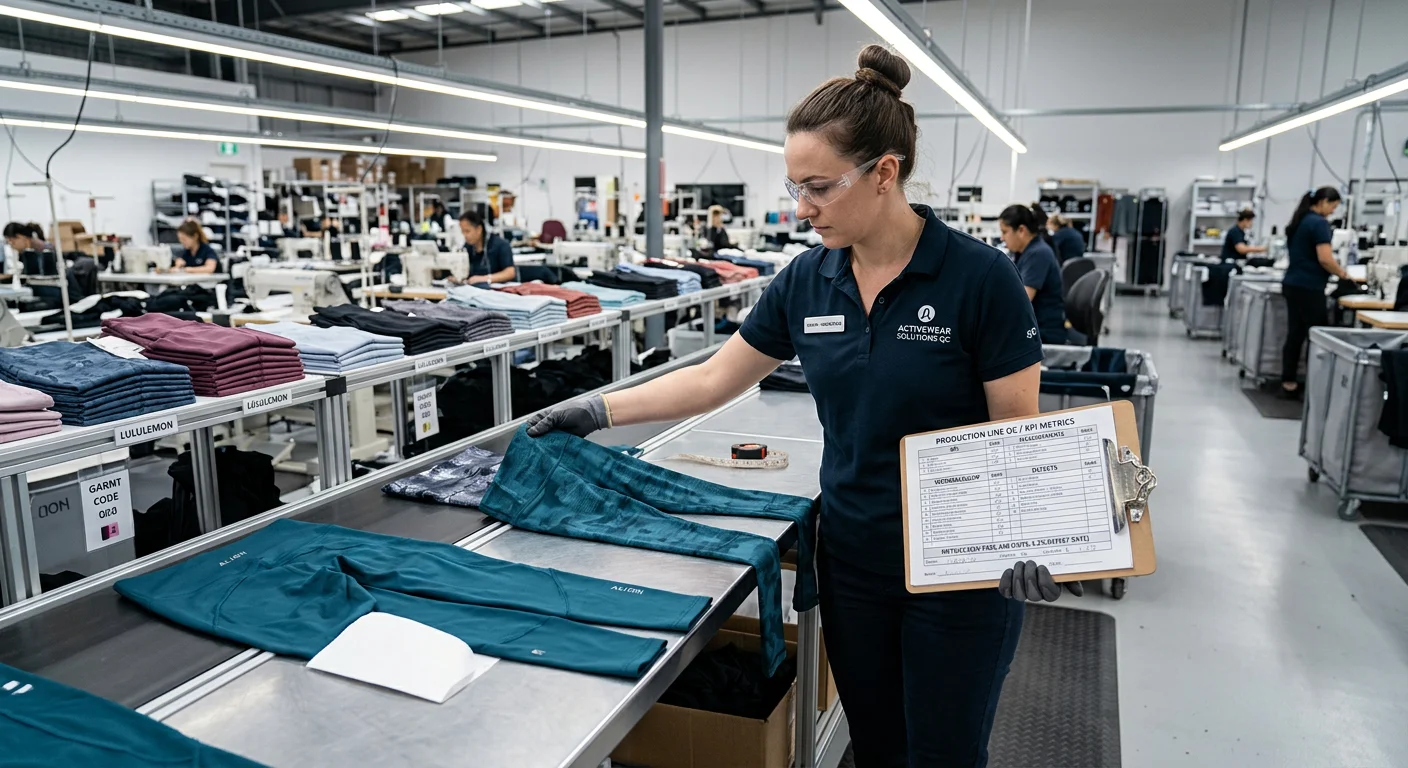
Set your quality KPIs from day one — and make them non-negotiable: defect rate ≤2–3% per shipment, on-time delivery ≥95% , customer return rate <1–2% for quality-related issues. Get these into your supplier agreement before the first bulk order ships.
Step 9: Launch Your Yoga Brand Website and Marketing Strategy
Your product is ready. Your manufacturer is confirmed. Now the work shifts — from building something to making sure the right people can find it.
Build a Website That Converts, Not Just Impresses
70–80% of your visitors will arrive on mobile. Design for that screen first, every time. Keep key images under 100 KB.
Above the fold, your homepage needs three things:
- A value proposition in 12 words or fewer ( "Eco yoga wear built for hot power flows" )
- One clear CTA button
- 3–5 trust signals like reviews or certifications
Nothing else earns space there.
Launch with five core pages minimum — Home, Shop, About, FAQ, Contact. Before anything goes live, click-test every link. Run at least three trial submissions through every form. Add SSL, a privacy policy, and a returns policy with a specific timeframe (30 days, not "contact us").
For SEO, follow this per-page checklist:
- One primary keyword per page
- Meta titles at 50–60 characters
- That keyword in your URL, H1, first paragraph, and image alt text
Marketing Channels That Move Product
Instagram Reels are your highest-leverage free channel at launch. Post 3–5 reels per week for the first 90 days. Keep your content mix balanced:
- 40% education
- 30% product
- 20% behind-the-scenes
- 10% community
Pair that with 5–10 micro-influencers (5K–50K followers). Give them free product plus a unique discount code. Target a story, a reel, and a feed post during launch week.
Build your email list before launch. A simple landing page with a lead magnet ("7-day home yoga sequence" PDF) can pull in 100–500 signups. Then send a 4–5 email sequence:
Brand story → Product reveal with a 10–20% launch discount → Social proof → Last-chance reminder
Test paid ads on a small budget — $5–$20/day on Meta or Google. Run 3–5 creative variants over 7–14 days. Target a CTR above 1.5% and keep CPC under $1.50. A landing page that converts cold traffic at 2–3% purchases or 8–10% email signups is worth scaling.
Track return rates by SKU, size, and color every week. Keep total returns under 15%. A style that keeps selling and coming back clean? Reorder bigger. Add new SKUs one at a time — no rushing.
Step 10: Execute Your Launch Plan, Track Results, and Scale with Purpose
Launch day is not the finish line. It's the moment your assumptions meet reality — and reality wins every argument.
The brands that scale aren't the ones with the biggest launch budgets. They're the ones watching their numbers closely from day one. They make fast, clear decisions about what to keep and what to cut.
Structure your post-launch attention in three layers:
Daily : traffic sources, conversion rates, and any critical bugs blocking purchases
Weekly : feature engagement, email performance, and NPS feedback from early customers
Monthly : revenue trajectory, CAC by channel, and return rates by SKU
Set your thresholds before launch — not after. Know in advance what a good week looks like versus a warning sign. Results lagging? Work three levers before adding more spend. Sharpen your messaging around the first purchase moment. Shift budget toward channels that are converting. Double down on the one product your customers keep reordering.
Run 5 short customer interviews every two weeks . Numbers tell you what is happening. Customers tell you why .
Scale what works. Cut what doesn't. Document everything into a playbook you'll put to real use.
Conclusion
Every iconic yoga brand you admire — Lululemon, Alo Yoga, Beyond Yoga — started where you are right now: with an idea, a gap in the market, and the nerve to act.
The 10 steps in this guide aren't theory. They're a real, working blueprint. You start by carving out your niche and building a brand identity that sticks. Then you source the right fabrics and find a yoga wear manufacturer you can trust. Work through each step in order. You're not just launching a product — you're building something people will wear during the most personal moments of their day.
Now comes the part only you can do: start.
Ready to move from planning to production? yogavendor.com connects new founders with vetted activewear private label manufacturers. They help bring your first collection to life — no guesswork needed.
Your brand doesn't launch itself. But it can start today.