You showed up to your first yoga class in basketball shorts and a cotton tee. The shorts ballooned up during downward dog. The shirt soaked through in twenty minutes. You spent half the class wrestling your waistband back into place — not doing yoga. That experience — or the fear of it — is why you're here.Many men shopping for custom men's yoga apparel realize quickly that the wrong fit can ruin an entire class experience.
You deserve a straight answer to the question every guy asks: what should guys wear to yoga? This guide breaks it down by yoga type. It covers the upper-body and lower-body decisions most men get wrong the first time. Plus, it settles the five outfit questions that are too awkward to Google twice. Check your gear closet first — you might already own everything you need.
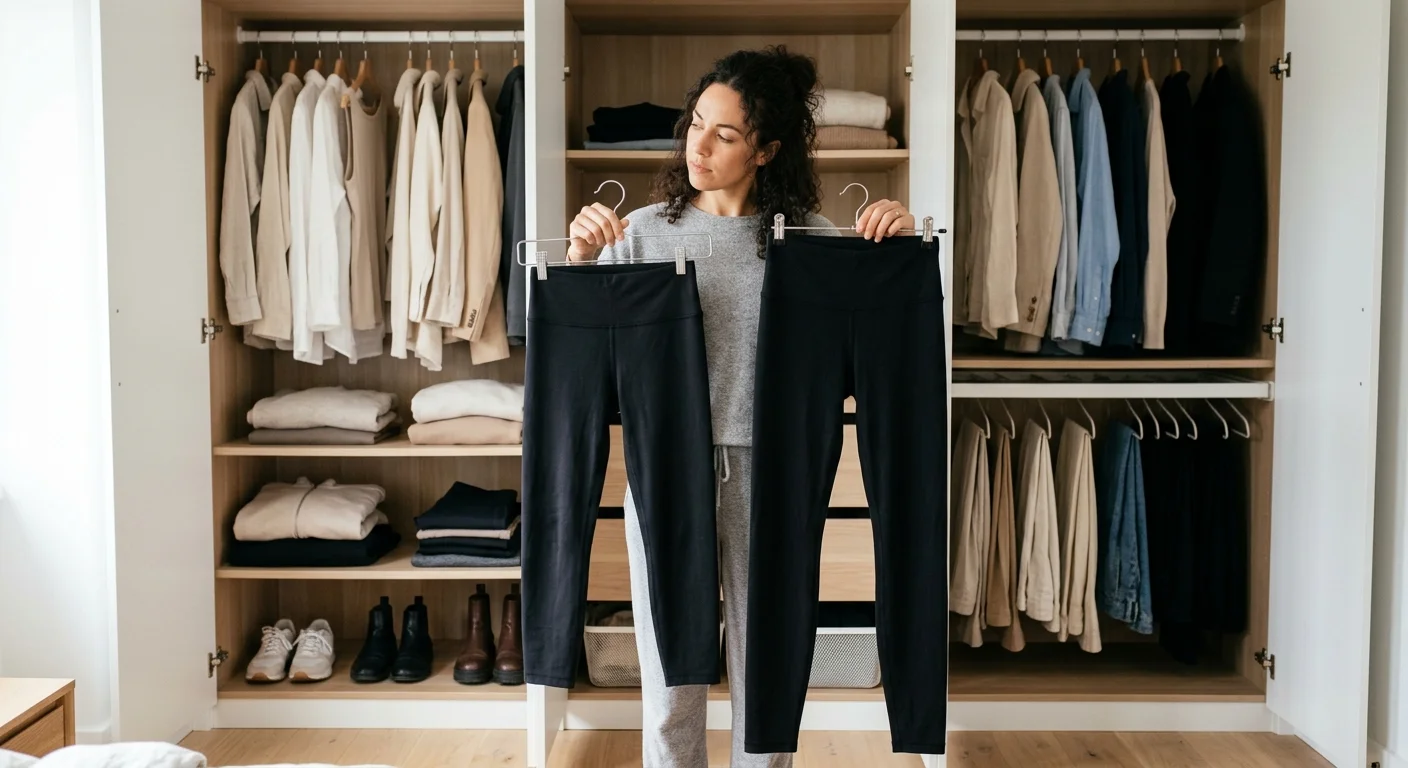
5-Minute Closet Audit: Existing Gym Gear That Works vs. Gear That Fails
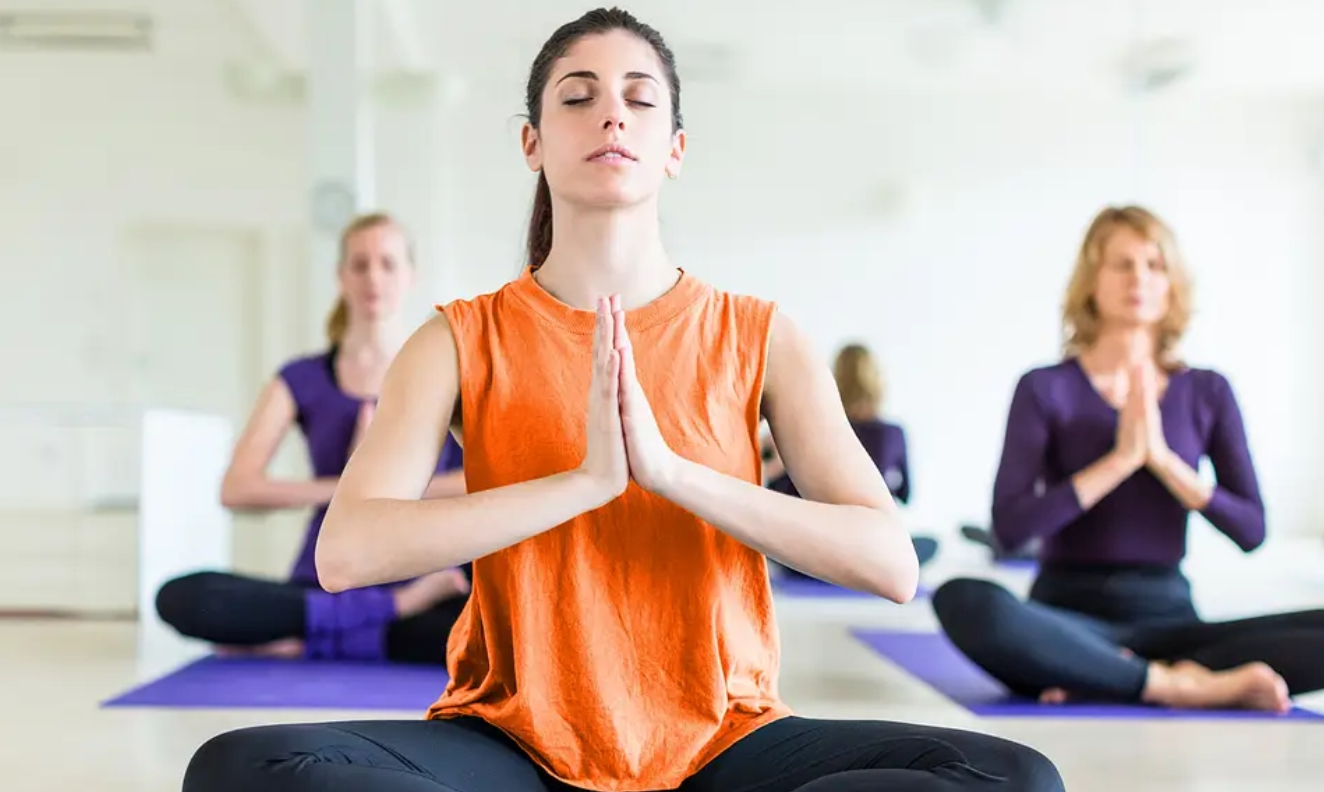
Before you spend a dollar, check what's already in your drawer. You probably own two or three pieces that are yoga-ready right now. You also likely own one or two items that will wreck your first class without warning.
Here's how to sort them out in five minutes flat.Experienced activewear suppliers often recommend starting with moisture-wicking basics already in your gym wardrobe.
What Passes
Tops
Flip the tag. Polyester, nylon, elastane, spandex — any of these in the blend means you're starting strong. These fabrics pull sweat away from your skin and dry two to three times faster than cotton. They also stretch as you reach overhead, which matters more in yoga than in almost any other workout.
Do two quick tests before you commit:
Raise both arms straight up. Your midriff should stay covered. No gap, no pass.
Stretch the hem sideways. It should snap back without bagging. Saggy hem means discard pile.
Fail either test and it's out.
Bottoms
Basketball shorts can work. The catch: you need moisture-wicking compression boxer-briefs underneath. Skip that layer and hip-opening poses like pigeon and lizard turn into an exposure problem fast. Keep the inseam at nine inches or under. Longer than that and the fabric flaps like a sail during downward dog.
Tapered joggers with an elastic waistband and cuffed ankles are often the best option already in your closet. The cuffs hold the legs in place during inversions. The elastic waist won't dig into your hip bones as you fold forward.
Underwear
For under any unlined shorts, go with mid-thigh compression boxer-briefs in a polyester-nylon-elastane blend. Do five bodyweight squats in them right now. The waistband rolls or rides up more than an inch? They won't hold up through a yoga class.
What Fails — Cut These Now
100% cotton anything. Cotton soaks up to 27 times its weight in water. By the halfway point of class, that shirt feels like a wet paper bag stuck to your chest. Every sweat patch shows up in full detail.
Loose cotton boxers under loose shorts. This combo guarantees an exposure incident during any deep hip opener. No exceptions.
Tops with shoulder seams that droop past your shoulder, or hems that hang below your mid-hip. In downward dog, that fabric falls forward and covers your face. It sounds funny. It's not.
Anything with zippers, buttons, or snaps on the back pockets or fly area. Lying on your back in bridge pose with a metal button pressing into your tailbone is as unpleasant as it sounds. Hard pass.
The 3-Move Quick Test
Run each item through these three moves before your first class:
Squat and forward fold — check for sheerness at the seat and waistband drift.
Arms overhead, then side bend left and right — the hem should stay put and the waistband should hold its place.
Extend one leg back into a simulated pigeon pose — confirm the inseam still covers what it needs to cover.
Clear all three moves and the item is yoga-approved. Fail any one of them and it stays in the gym — or goes in the trash.
Direct Answers to 5 Male-Specific Outfit Panic Points
Every man heading into his first yoga class has a mental list of worst-case scenarios. Leading yoga apparel manufacturers now design men's gear specifically around stretch, opacity, and movement stability.Most are easy to fix. Here are the five that matter — answered straight, no hedging.
1. Can Men Wear Compression Tights to Yoga?
You can — and it's the smarter choice. In 2026, full-length compression tights are standard across running, CrossFit, weightlifting, and yoga. Nike Pro, Adidas Techfit, Under Armour HeatGear, and Lululemon's License to Train Tight all sell men's tights as regular product lines. Nobody in that studio will look twice.
Not ready to go full tights? Try this setup: compression tights underneath, a pair of 3–5" inseam training shorts on top. You get complete coverage of the groin and seat. Plus, you keep full range of motion. This is the go-to combo for most men who practice yoga on a regular basis.
One thing to check before you buy: the squat test. Put on skin-tone underwear. Stand under a bright light. Do a deep squat, then a forward fold. Check in a mirror or with your phone camera. See the underwear pattern through the fabric? Those tights go back on the rack. Go for dark colors — black, charcoal, navy — in opaque nylon or polyester with 12–20% elastane. Matte finish beats shiny. Also look for gusseted crotch seams. They cut down on pressure points and stop the fabric from bunching in wide-legged poses.
2. Do You Wear Underwear Under Yoga Pants or Shorts?
It comes down to one thing: does your bottom have a built-in liner?
Built-in compression liner? Skip the extra underwear. The liner is there to replace it. A second layer underneath traps more heat, creates visible lines, and works against what the liner is built to do.
No liner? Wear mid-thigh synthetic compression boxer-briefs — 6–9" inseam, poly-nylon blend with spandex, flatlock seams. That layer is what stops exposure issues in pigeon pose, lizard, and wide-legged inversions.
What to skip: loose cotton boxers. The leg openings flare in deep squats. The fabric bunches in all directions. Cotton soaks up sweat and holds it. The rule is simple — built-in liner means no underwear. No liner means compression boxer-briefs. Loose woven boxers are never the right call.
3. Will You Sweat Through and Turn Transparent?
Yes — but only with the wrong fabric or color. The fix is simple.
Stick to dark, opaque nylon or polyester blends with elastane. Skip light gray, pastel, khaki, or thin heather fabrics. Those colors show crotch and seat sweat within ten minutes of a moderate flow class.
Before class day, run the spray test at home. Mist a little water on the upper thigh of your bottoms. The fabric darkens a lot and you can see skin tone or underwear through it? That garment is too thin. Also run a 15-minute bodyweight circuit at home. That will show you exactly where sweat maps around the seat and crotch — before you find out in front of a room full of strangers.
4. Will Your Shirt Fall Over Your Face in Inversions?
Yes — a shirt that's too long, too loose, or made of heavy draping cotton will do exactly that. The fix is in the cut.
Pick a fitted or semi-fitted athletic top that sits at mid-fly while you're standing. A tapered cut — a bit more fitted through the waist than the chest — stays in place during downward dog. Raglan sleeves (seam goes from collar to underarm) take pressure off your shoulder seams and give you cleaner overhead movement. A drop-tail hem adds rear coverage in forward folds. Side hem splits stop the front from riding up your torso.
For handstands or shoulder stands, tuck the shirt into your waistband, or go with a light compression top that grips the torso. What to skip: wide crew necks and boxy oversized tees with low armholes. Both carry enough loose fabric to swing forward and cover your face before you notice it happening.
5. What Do You Wear on Your Feet?
Barefoot on the mat. That's the default, the tradition, and the practical answer. Shoes come off at the studio entrance. Socks come off too, for the most part — direct contact with the mat gives you grip and balance feedback that footwear removes.
Two exceptions worth knowing:
Cold floors or hygiene concerns: Use grip socks with silicone or rubberized traction pads on the sole. Look for a snug midfoot band so they don't spin mid-pose. Toeless styles give better mat contact. Full-toe styles offer more warmth.
Getting to and from the studio: Bring flip-flops or slides for the locker room and bathroom. Keep your gym shoes in a separate bag to keep studio floors clean.
One rule, no exceptions: running shoes stay off the mat. They kill grip, scuff the surface, and put you at a balance disadvantage in every standing pose.
Hot Yoga Outfit Blueprint & Price Tiers: Beat the Heat
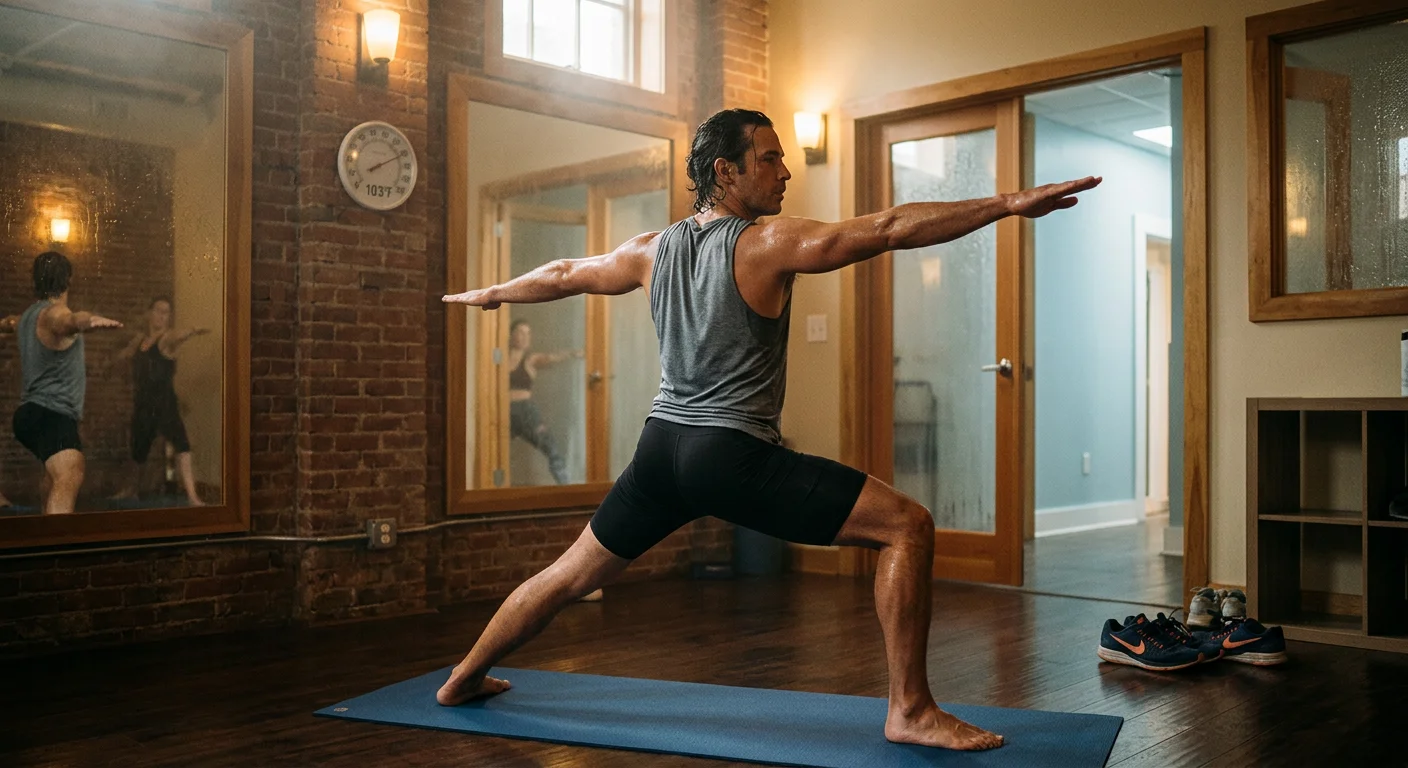
Hot yoga is a different animal. The room sits at 95–105°F with 40–60% humidity. You'll be in there for sixty to ninety minutes holding Warrior II until your quads shake. What works in a temperate flow class will fail you in here — and it fails fast.
The wrong outfit doesn't just make you uncomfortable. It becomes a liability. Cotton soaks up sweat until it weighs twice what it should. Baggy shorts bunch between your thighs. A rope drawstring digs into your abdomen every time you come into cobra. These aren't minor annoyances — they pull your focus out of every pose for the entire class.
Here's what to wear instead.Many performance brands rely on OEM yoga clothing production to develop lightweight fabrics for high-humidity studio conditions.
The Top: Semi-Fitted, Synthetic, Ventilated
One rule applies without exception in hot yoga: no cotton, not even a blend . Even 10–20% cotton content slows dry time enough to matter at 100°F. The garment gets heavy, stays wet, and starts chafing your underarms within thirty minutes.
Go with a semi-fitted synthetic tank or tee . It needs to be fitted enough to stay in place during inversions. It also needs to be loose enough that it doesn't compress your chest on a deep breath. The fit profile matters as much as the fabric. Slim armholes prevent gaping when you reach overhead. A hem that hits just below your hip bones stays tucked through forward folds.
Look for these specific features:
Fabric : 88–95% polyester or nylon + 8–18% elastane. Four-way stretch.
Tech labels worth trusting : Adidas AEROREADY or HEAT.RDY, Nike Dri-FIT with mesh back panel.
Ventilation : A full mesh back panel — spine to hem — dumps heat faster than any other single design feature. Mesh underarm gussets are a bonus. Side hem vents (1–3 cm) add mobility and airflow.
Seams : Flatlock at shoulders, sides, and underarms. Tagless or heat-transferred labels at the neck.
The Bottom: Two Options That Work
Option A — Fitted 5–7" Inseam Shorts with Built-In Liner
This is the best all-rounder for hot yoga. The outer shell is lightweight woven polyester — close to the thigh but not compressing it. The built-in compression liner is a poly/spandex or nylon/spandex brief that grips mid-thigh. It handles coverage and stops sweat from pooling on the mat.
The waistband detail most people overlook: go flat and wide (1.5–2 inches), with a low-profile internal drawcord. Rope-style knots and bulky external ties press into your abdomen in cobra, sphinx, and bow. That contact point is all you think about by minute forty.
5" inseam: maximum cooling, a bit less coverage
7" inseam: more coverage, less skin contact with the mat in Triangle and Half Moon
Option B — 7/8 Capri-Length Hot Yoga Pants
You run cold. You prefer full leg coverage. Or sweat-slick thighs keep slipping on your mat. Capri-length tights fix all three. Go with lightweight nylon or polyester/spandex blends — not fleece-backed or brushed fabrics. Those hold heat and soak up sweat like a sponge. A high waistband (3 inches or more) keeps coverage through twists and forward folds without rolling down.
Base Layer: Simple Decision
Shorts have a built-in liner? Skip the base layer. A second layer underneath traps heat and defeats the purpose of the liner.
No liner? Wear mid-thigh synthetic compression briefs — 80–90% polyester or nylon, 10–20% elastane, flatlock inner-thigh seams. Cotton underwear in hot yoga chafes and holds moisture. It's the wrong call, every time.
Price Tiers: What You Get at Each Level
Tier 1 — Under $20 (Functional Starting Point)
A generic poly/spandex tank ($7–12) and compression liner shorts or bike shorts ($8–15) cover one to two sessions per week. Wicking works, but you get fewer mesh zones, no anti-odor treatment, and basic stitching throughout. Total outfit: $15–25 . Good enough to test whether hot yoga is for you before spending more.
Tier 2 — $20–50 (The Practical Sweet Spot)
A branded wicking tank with Dri-FIT or AEROREADY technology runs $20–35. Add lined shorts with a 5–7" inseam from Nike, Adidas, or Under Armour at $25–40. You get reliable moisture management, better patterning — no gaping armholes, softer waistbands — and stronger durability over multiple washes. Total outfit: $40–70 . This is where most regular practitioners land.
Tier 3 — $50+ (Built for Daily Use)
High-end technical tanks hit $40–70+. Premium shorts or capri tights with laser-cut ventilation, bonded hems, and anti-odor treatments (Polygiene, silver ion) run $50–100+. At this level, seams are bonded or kept to a minimum for zero chafe. Knits stay matte and opaque at full stretch. The garments hold up to daily hot yoga without breaking down. Worth it at four or more sessions per week, or if you're teaching.
The Hot Yoga Never List
Cotton or cotton blends above 20% — gets heavy, cold, and abrasive fast
Baggy basketball shorts — ride up in Warrior and Pigeon, bunch between the thighs, drag on wet mats
Rope-style or bulky drawstrings — guaranteed to bruise your abdomen during floor poses
Brushed or fleece-backed fabrics — overheat within minutes, trap sweat, slow to dry
Thin, unlined light-colored bottoms — go transparent when soaked. You'll regret it in a room full of people
The hot yoga kit in summary : semi-fitted synthetic tank with mesh back ($10–40) + 5–7" lined shorts or 7/8 capri tights ($15–60) + compression brief base layer only if there's no liner ($10–25). Dark colors. Matte finish. Flatlock seams. Everything else is optional.
Flow & Power Vinyasa Blueprint & Price Tiers: Secure for Inversions
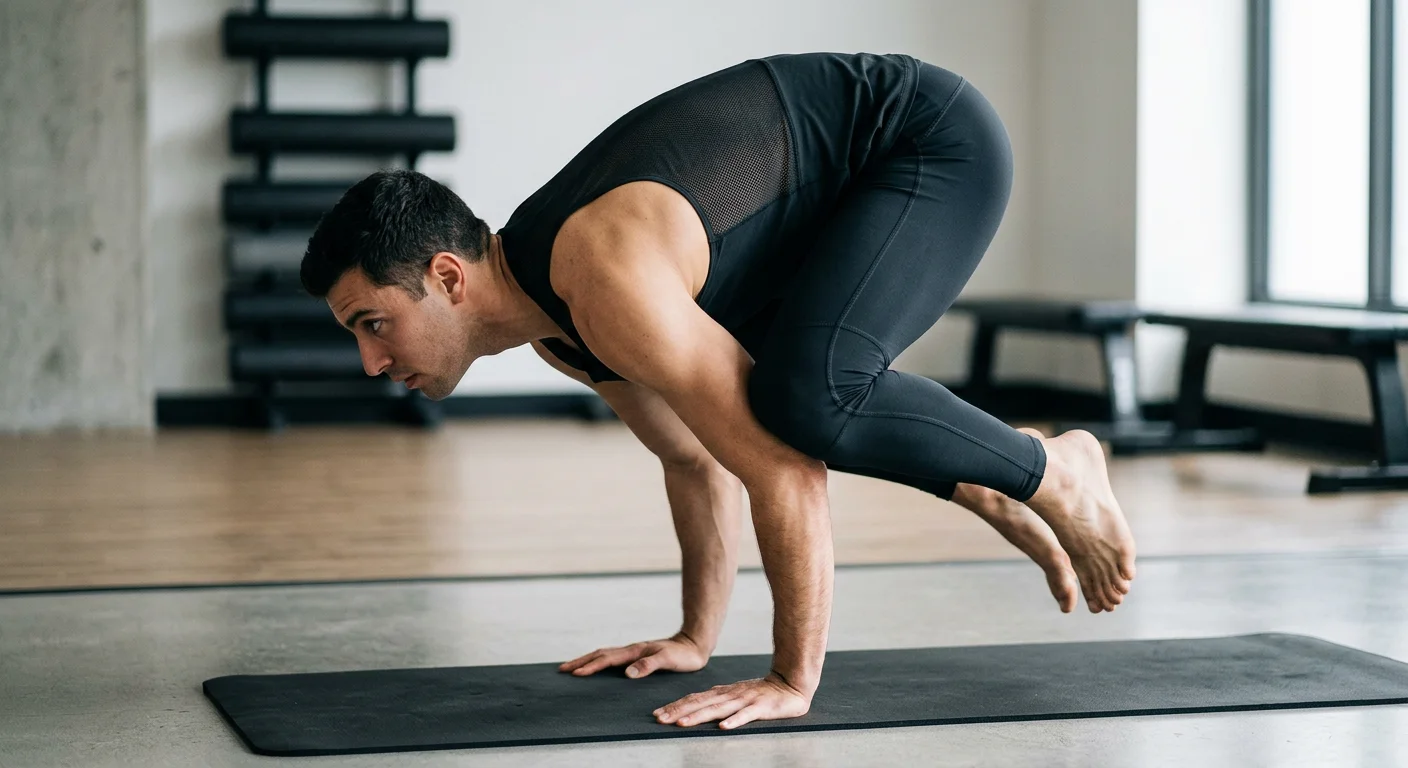
Flow yoga punishes bad gear in ways a gentle hatha class never will. Jump-throughs, crow pose, tripod headstands, wide-leg forward folds — your outfit gets stress-tested on every transition. The goal is simple: nothing shifts, nothing bunches, nothing falls over your face. You move. The clothes follow.
Here's the blueprint that makes that happen.Buying through a trusted activewear wholesaler also makes it easier to build separate outfits for hot yoga and flow sessions.
The Top: Cut and Fabric That Stay Put
The single most important feature on a flow yoga top isn't the brand — it's the hem length and sleeve cut . Get those two wrong and you'll spend half the class yanking fabric off your face.
What to look for:
Raglan sleeves — the seam runs from collar to underarm, not across the shoulder. You get full arm elevation for chaturanga-to-upward-dog transitions and clean handstand lines.
Drop-tail back hem — 2–4 cm longer at the back than the front. Keeps coverage during down dog and forward folds without the shirt hanging loose in front.
Side splits or scalloped hem vents — 4–7 cm of side opening at the hip. Without it, the hem bunches at your hip crease in deep lunges and malasana.
Shallow crew or V-neck — wide, deep necklines fall forward over your face in inversions. Avoid them.
Fabric specs that matter:
80–90% polyester or nylon + 10–20% elastane — go below 10% stretch fiber and you'll feel the fabric fighting your overhead reach.
140–180 g/m² fabric weight — lightweight to midweight. Heavier fabrics pool and shift in headstands.
4-way stretch rated at ≥120–140% of original length — this lets you move from a wide lateral stretch into a twist without the shirt riding up.
Flatlock seams at shoulders and sides — standard overlock seams chafe the underarm. A 60-minute vinyasa flow repeats that shoulder motion over and over. Flatlock seams don't rub.
Price tiers:
Under $20: Decathlon/Domyos men's dry-fit tees — around 87% polyester, 13% elastane, raglan cut, 150–160 g/m². Solid mechanics at a fraction of the cost. Stitching is basic and side vents are minimal, but the stretch is real.
$20–50: Uniqlo DRY-EX crew neck (~$25) hits most of the checklist — poly/spandex blend, drop-tail on select models, anti-odor treatment. Nike Dri-FIT Legend or Pro Tee adds engineered stretch panels. Both are workhorses.
$50+: Lululemon Metal Vent Tech or License to Train Tee ($68–88) uses engineered knit zones — denser at high-abrasion areas, more open-knit at the back. The construction holds up to hard, frequent use. Rhone and Vuori performance tees with raglan sleeves and scalloped hems run $58–78. Close to Lululemon performance, without the Lululemon price.
The Bottom: Two Setups That Work
Option A — 5–7" Training Shorts
The workhorse choice for power vinyasa. Keep the inseam between 5 and 7 inches (13–18 cm). Go shorter than 5 inches and you lose coverage in wide-leg poses. Go longer than 7 inches and the fabric catches on your calves during jump-backs and deep lunges.
Three details separate a good pair from a frustrating one:
Gusseted crotch — a diamond or panel gusset spreads tension away from a single central seam. Without it, deep horse stance and frog pose test the stitching every class.
Wide flat waistband — at least 3.5–4 cm tall, with a flat internal drawcord you can double-knot and forget. A narrow elastic band with no drawcord slips the moment you kick up into handstand.
No bulky pockets — metal zip heads and thick pocket bags press into your hip bones in low lunge and pigeon. Go pocket-free, or choose a flat zip in the rear yoke.
Option B — Tapered Ankle-Exposed Joggers
For non-heated flow classes, tapered joggers beat shorts on one key point: the cuffed ankle keeps the hem above your feet. Pants that cover your heel cut mat friction and raise slip risk in warriors and jump-backs. The ankle cuff removes that problem. Look for fabric around 120–200 g/m², 86–90% polyester with 10–14% elastane, and a smooth knit feel. Stiff canvas or heavy French terry twists around the legs in seated work.
Fabric minimum for either option:
≥15% elastane content — this is the floor for solid stretch recovery after 30–60 minutes of repeated squats and lunges. Drop below this and the seat starts to bag by the halfway point.
4-way stretch — non-negotiable for the hip rotation demands of lizard, skandasana, and malasana.
Base Layer: The Exposure Insurance Policy
Under any unlined shorts in flow yoga, mid-thigh compression boxer-briefs are the answer. Not optional. Not "probably fine without them." Required.
Get the specs right:
Inseam: 6–9" — long enough to stay in place through tripod headstand B, Prasarita Padottanasana, and twisting chair. Short enough that they don't bunch at the knee.
70–85% nylon or polyester + 15–30% elastane — the higher elastane content compared to outer shorts is on purpose. The base layer needs to grip skin, not slide over it.
Flatlock seams at the groin and inner thigh — standard seams here chafe through the repeated step-throughs of a vinyasa class. Flatlock seams don't.
Wide waistband, 3–4 cm, soft-backed — the waistband holds position in an inverted pose. A narrow band rolls. A soft backing stops the elastic from cutting in.
Your shorts already have a built-in compression liner? Skip the separate base layer. A second layer underneath traps heat and works against what the liner was built to do.
Price Tiers: Bottom Half
Under $20: Repurposed running shorts with a built-in liner, or basic compression shorts paired with a polyester tee. Fabric runs around 100% polyester or 92/8 poly-spandex. Waistband security is fine if the band is firm. Seams are standard overlock — chafe risk goes up on longer sessions. Common sources: Decathlon, Amazon Essentials, Target and Walmart house brands. Good for one to two classes a week while you figure out if flow yoga is a habit.
$20–50: Purpose-built training shorts with 4-way stretch, flatlock seams, and a proper gusseted crotch. Decathlon's Men's Fitness 4-Way Stretch Shorts run $25–30 and check most boxes. Nike and Adidas training shorts with 5–7" inseams land at $30–45. GapFit and Old Navy Active joggers with gusset construction run $35–45. At this tier the patterning improves — internal drawcords, minimal pockets, better hem design.
$50+: Yoga-specific construction built for inversions and deep range of motion. Lululemon's Pace Breaker, License to Train Shorts, and Commission Joggers ($68–128) use proprietary Warpstreme fabric with articulated knees and contoured seat panels. Vuori's Kore Short, Banks Short, and Sunday Performance Jogger ($68–98) run softer with a similar gusset and stretch profile. Rhone, Olivers, and Ten Thousand sit in the same $68–120 range. At this level, the garments carry stretch-recovery guarantees — the waistband holds its shape after years of regular practice, not just months.
The Flow Yoga Failure List
Five gear mistakes that show up in power vinyasa and inversion-heavy classes:
Loose woven boxers under shorts — they shift, ride up, and cause exposure problems in tripod headstand and wide-leg folds. Compression boxer-briefs fix this.
Pants that cover your heels — cuts mat friction, kills your footing in warriors and jump-backs. Ankle-exposed joggers or shorts ≤7" inseam solve it.
Oversized tops — baggy fabric falls over your face in downward dog. Athletic cut with a drop-tail hem is the fix.
Bulky pockets or metal hardware — presses into hip bones in pigeon and low lunge, snags on the mat. Go pocket-free or flat zip.
Narrow elastic waistband with no drawcord — slips in jump-backs and arm balances. Minimum 3.5 cm wide, flat drawcord, double-knotted.
A power vinyasa class is unforgiving on gear that wasn't built for this range of motion. Get the fabric weight, the hem length, the waistband security, and the base layer right — and you stop thinking about your clothes the moment class begins. That's where your attention belongs.
Room-Temp & Restorative Blueprint & Price Tiers: Comfort & Layering
Restorative yoga demands something different from your wardrobe than any other class format. You're not sweating through a flow sequence. You're holding a supported reclined twist for four minutes while your nervous system unwinds. The real challenge isn't heat management — it's staying comfortable across two very different thermal states in one sixty-minute session.
Most room-temperature studios sit between 68–72°F. Restorative-specific spaces can drop to 60–67°F — the range that supports deep relaxation and savasana-style stillness. That cooler air feels fine during cat-cow. Lie still in a bolstered fish pose for six minutes with no body heat going, and that same air feels cold. One removable layer fixes this.Some premium studios now partner with ODM activewear developers to create layering systems tailored for restorative yoga environments.
The Top: Light, Removable, Stays Out of the Way
Start class in a lightweight polyester long-sleeve or a soft fitted tee — either works. Add a zip hoodie in a sweat-wicking synthetic knit for the warm-up and opening poses. The room gets warm? Unzip it and drape it beside your mat. Put it back on before savasana.
Two things to skip: heavy cotton fleece and oversized pullovers.
Fleece holds heat too well during warm-up transitions. It also feels dense and bulky in supine poses.
A thick pullover you can't pull off mid-class traps you. You overheat through the active portion or freeze through the still portions. No middle ground.
The right zip hoodie won't cost much. A $25–35 lightweight athletic zip from Nike, Adidas, or Uniqlo does the job. The sweat-wicking fabric keeps you from feeling clammy during any brief flow segments. The zip keeps your options open — you're never locked in.
The Bottom: Stretch, Drape, No Binding
Tapered 7/8-length joggers are the right call here. They came up earlier in the flow section as an inversion-proof option, but they suit restorative work even better. The 7/8 cut keeps the hem off the floor — nothing pools around your ankles during reclined poses. The tapered ankle stops the leg from riding up your calf as you shift position on the mat.
Fabric matters more in slow yoga than most men expect. Lie in a reclined twist with your hip pressing into the floor for a few minutes, and a thick seam at the crotch or waistband becomes the main thing you notice. Go with poly/spandex knits — smooth-faced, no interior brushing.
Bamboo/elastane blends are worth the upgrade for two groups:
- You run warm
- Synthetic textures bother your skin
These fabrics drape well, breathe better, and stay comfortable through long static holds.
Avoid oversized lounge pants with wide, uncuffed legs. They bunch at the hip during seated forward folds and hide your alignment. You lose sight of your knees and feet. So does the instructor.
Base Layer: Keep It Simple
Go with mid-thigh moisture-wicking boxer-briefs in a polyester-nylon-elastane blend. Same as every other yoga format. Heavy cotton underwear traps moisture during active segments. It stays damp through the long floor holds that follow. That clammy feeling pulls your attention at the exact moments restorative yoga is trying to settle your nervous system.
Price Tiers
Under $20 — Home Practice or Mild Studios
Basic cotton-poly lounge shorts work as an outer layer — but pair them with a synthetic wicking base layer underneath. This combo holds up fine in a warm living room. In a cooler studio, savasana will feel underprepared.
$20–50 — The Practical Starting Point
A soft-knit athletic jogger ($25–35) plus a lightweight polyester tee or long-sleeve ($15–25) covers everything restorative yoga needs. Add a zip hoodie in the same price range and your total kit lands at $50–75. You get reliable drape, light stretch, and enough sweat management for the active segments.
$50+ — Built for Long Holds
Premium eco-blends — bamboo-elastane, Tencel-spandex — and reinforced seams at the knees and crotch come at a higher price for good reason. The drape is softer. The interior faces are smoother. The construction holds up through years of regular floor work. Make restorative yoga a weekly practice, and this tier pays off in comfort per class.
Conclusion
Here's what nobody tells you before your first yoga class: the guy obsessing over his outfit in the parking lot stands out far more than the guy who just walks in wearing basic athletic gear.
You don't need a full wardrobe overhaul. You need three things:
One pair of stretchy workout pants that stay put during a forward fold
A moisture-wicking shirt that won't betray you mid-sweat
The confidence that comes from knowing those choices are solid
Check your closet first. Buy what's missing. Purchasing yoga apparel at wholesale price can help new practitioners build a reliable starter kit without overspending.Hot yoga on the agenda? Budget for a liner — your classmates will appreciate it.
The mat is the great equalizer. Nobody's checking your men's yoga shorts while they're flat on their back trying to hold Warrior III.
Now stop researching. Roll out the mat.