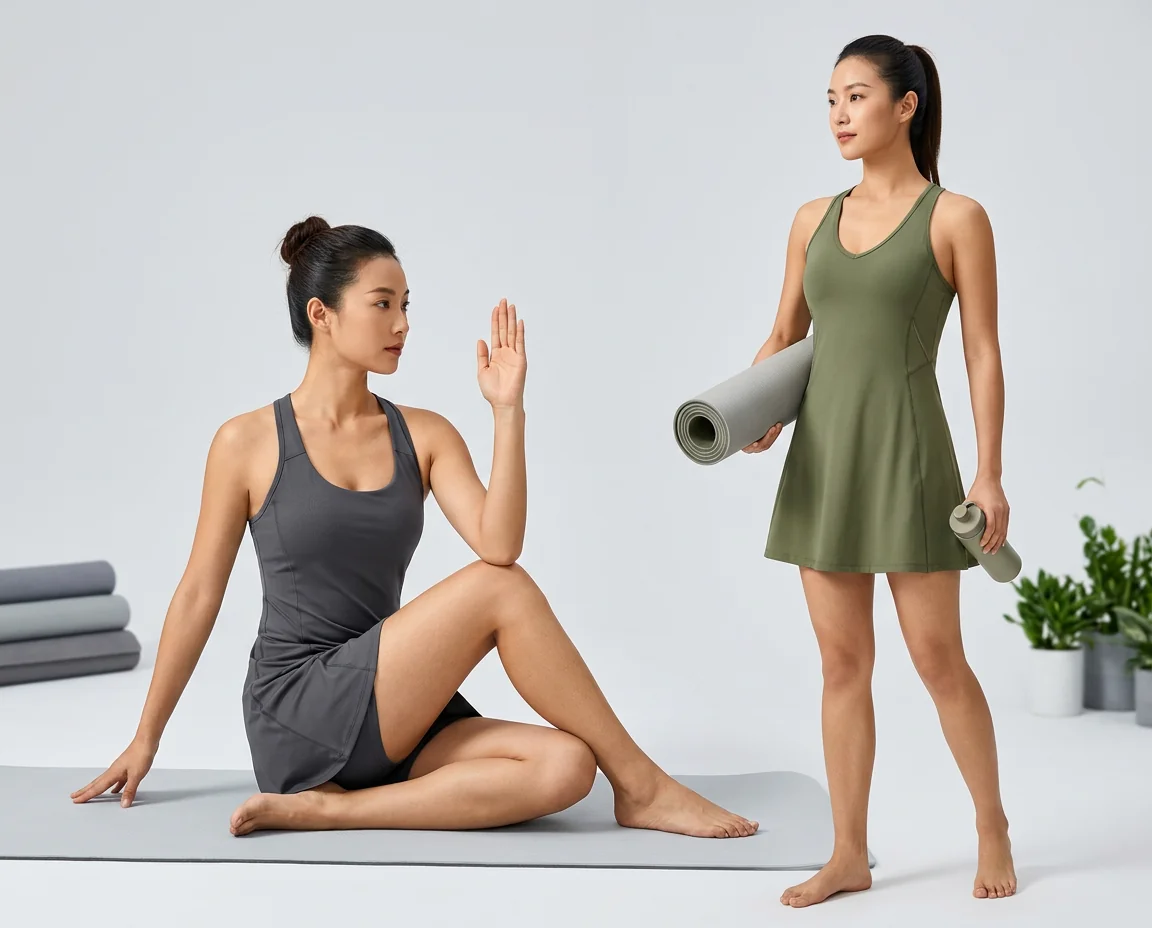
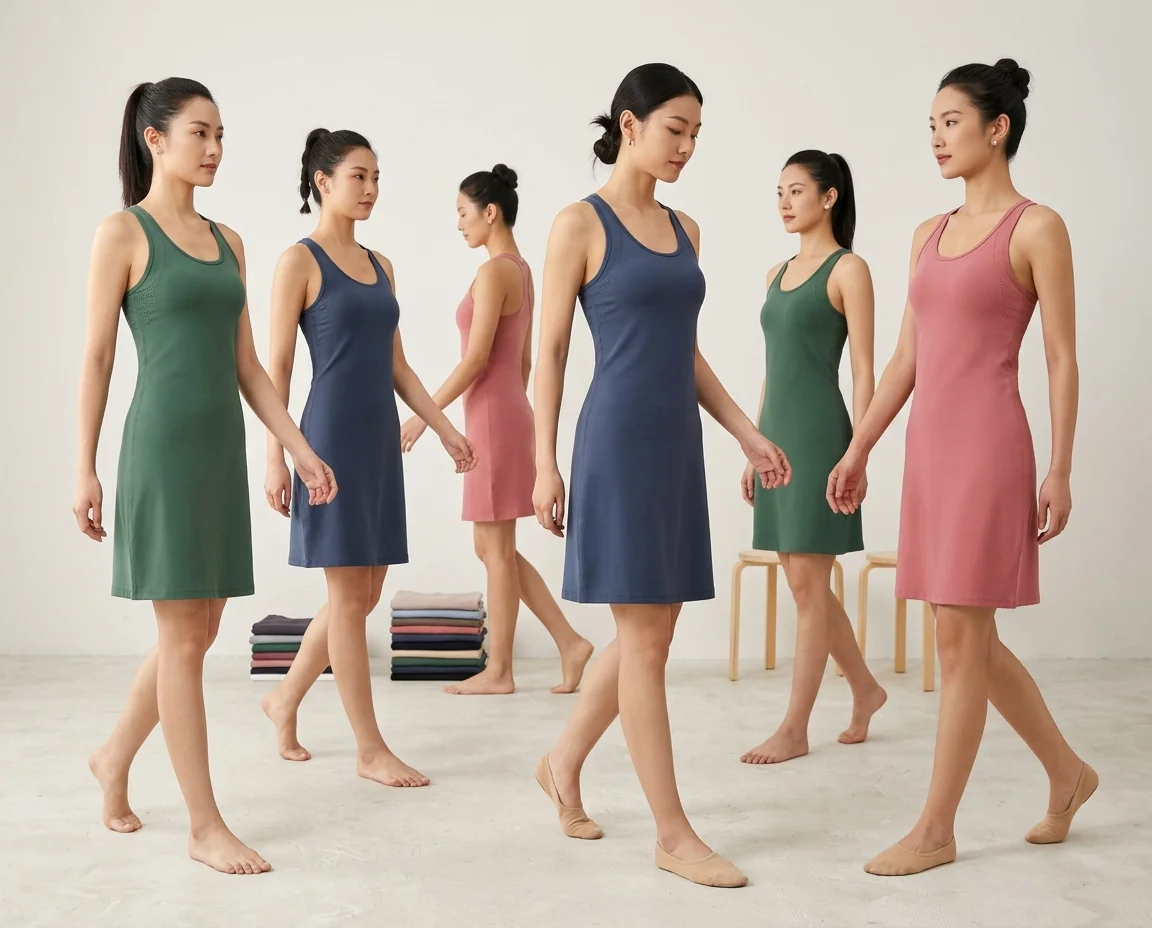
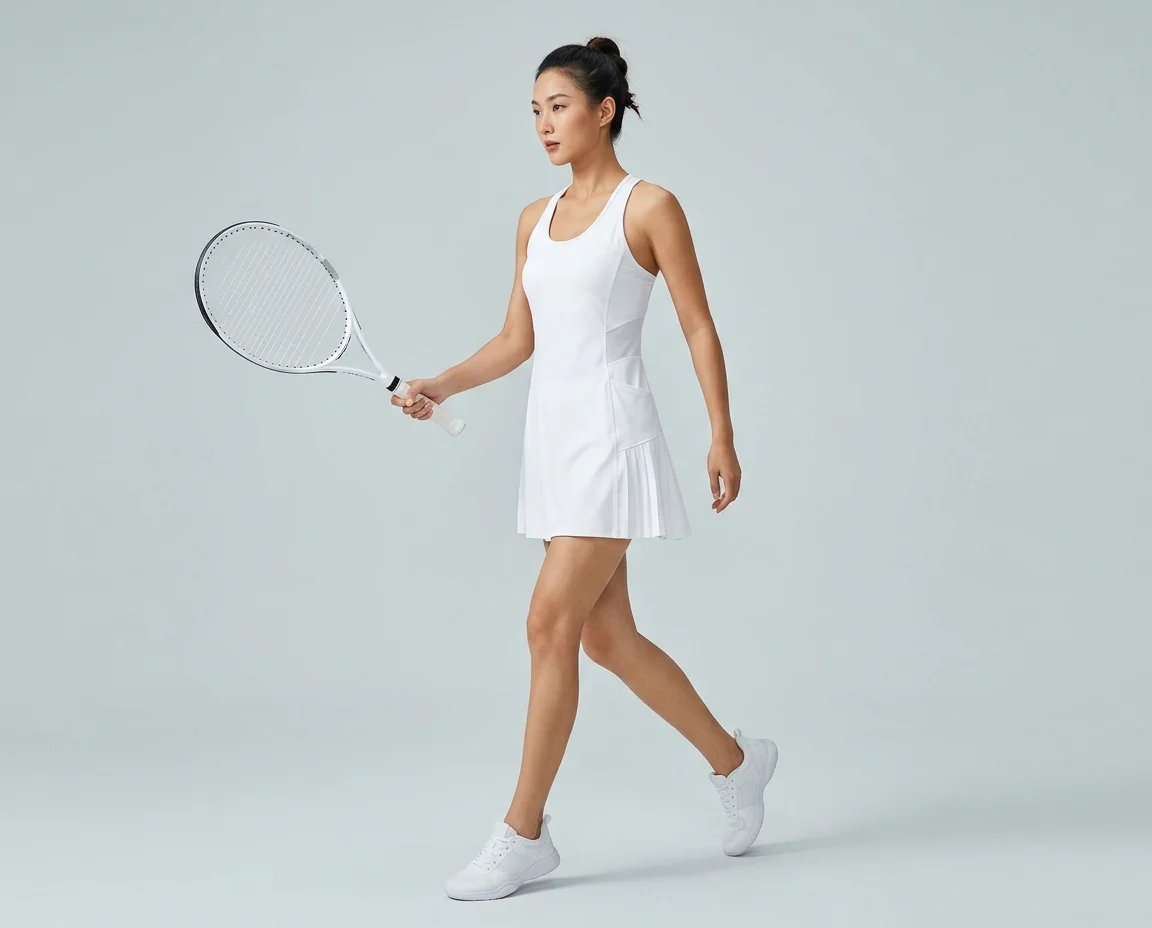
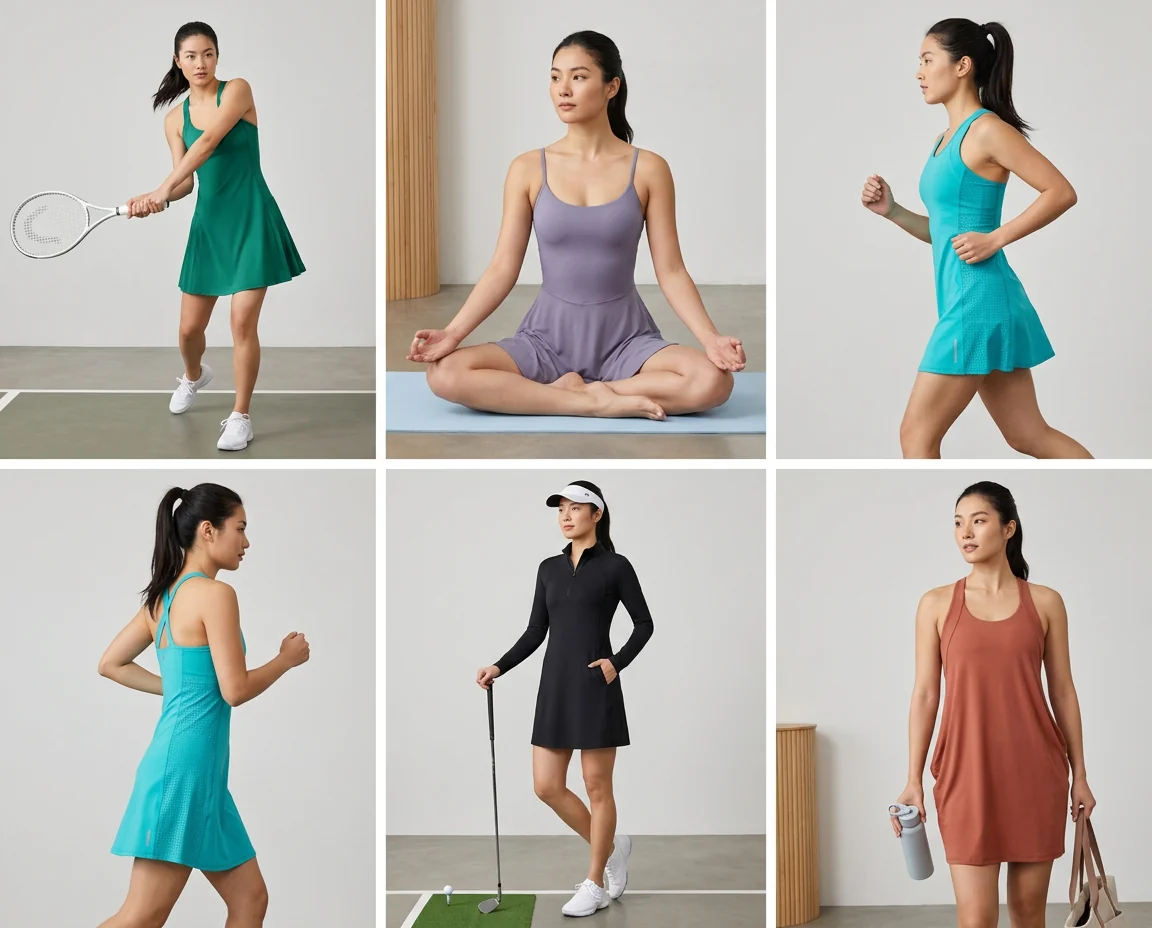
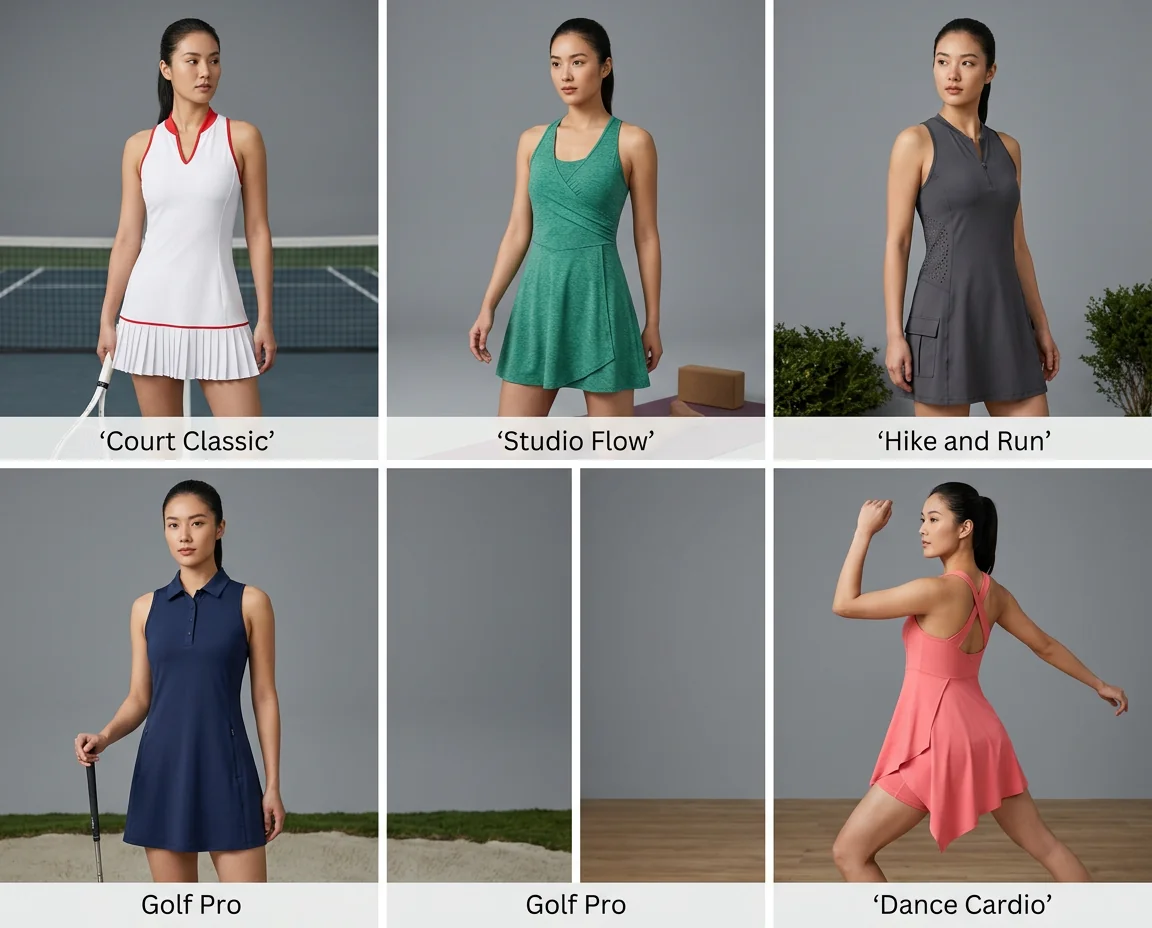
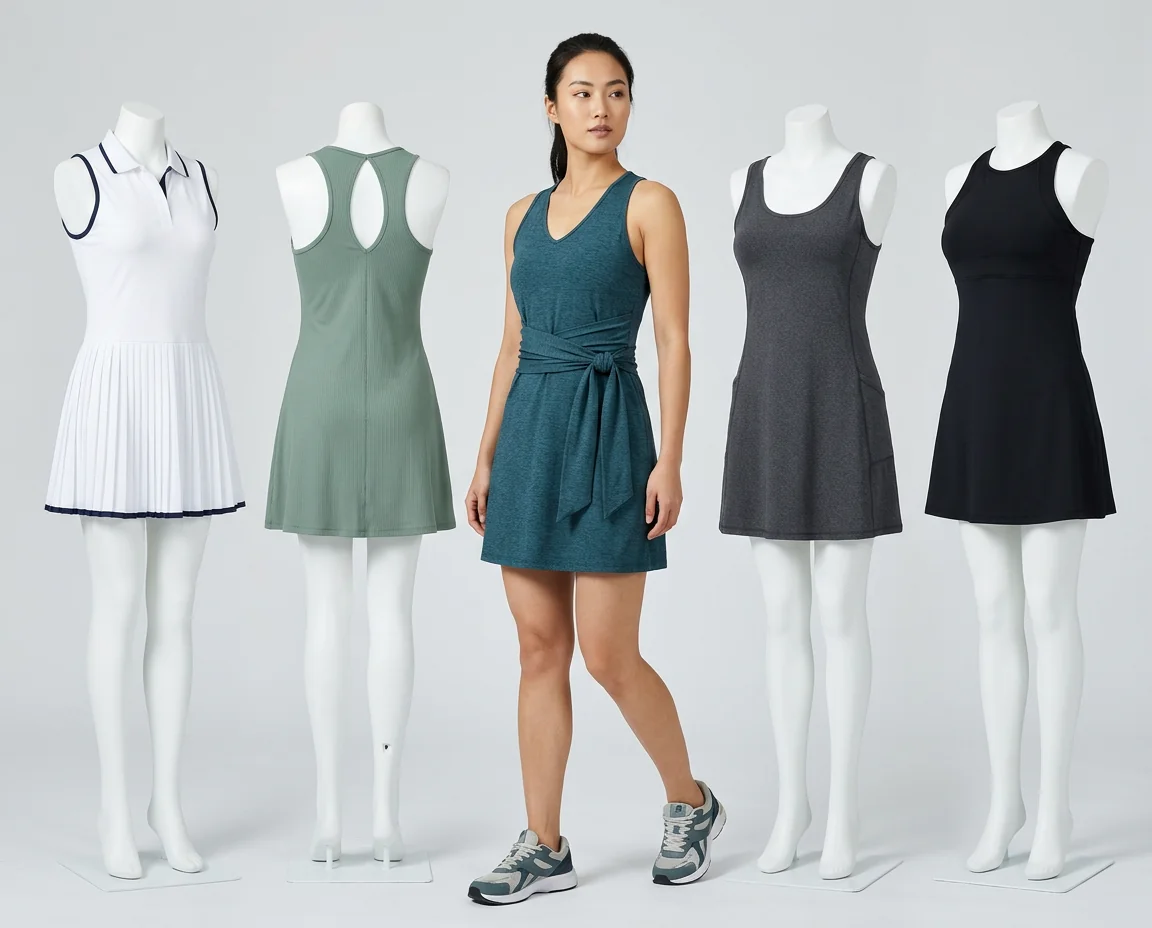
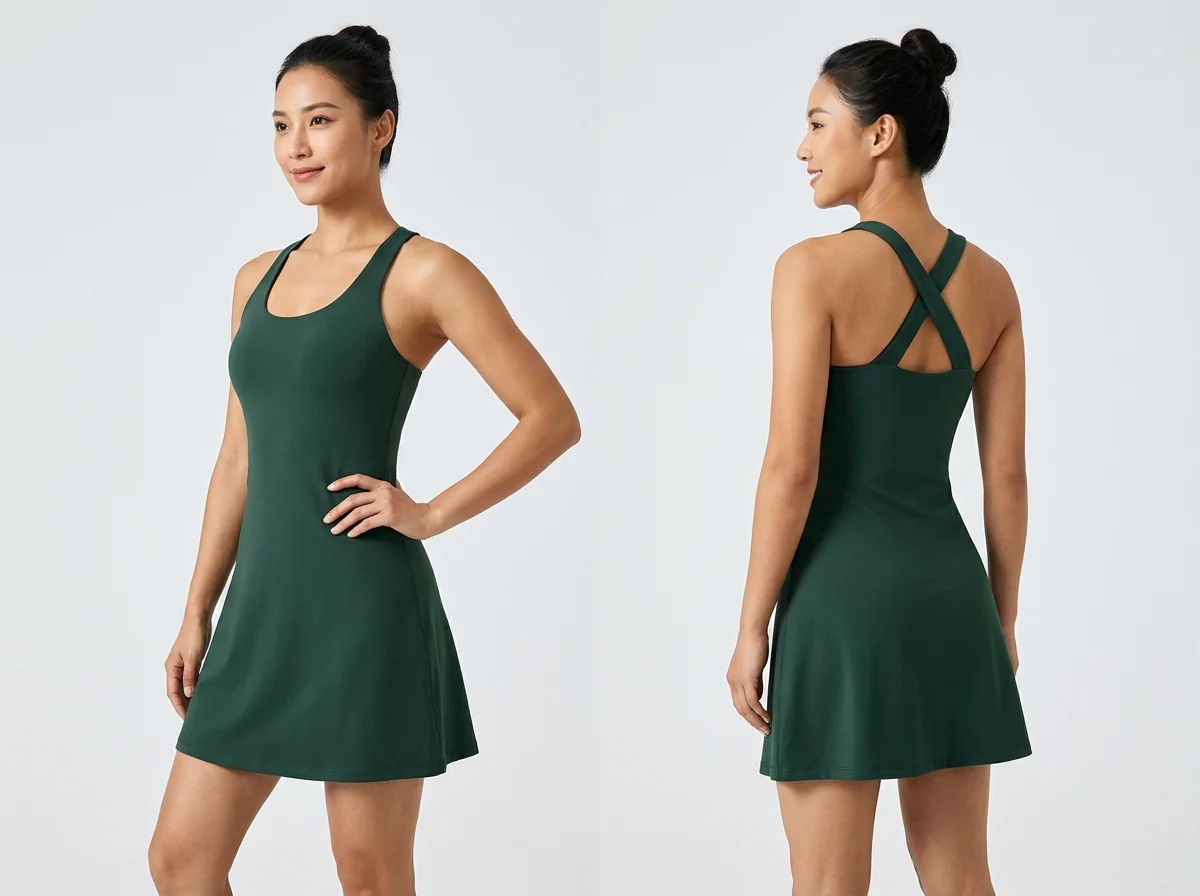
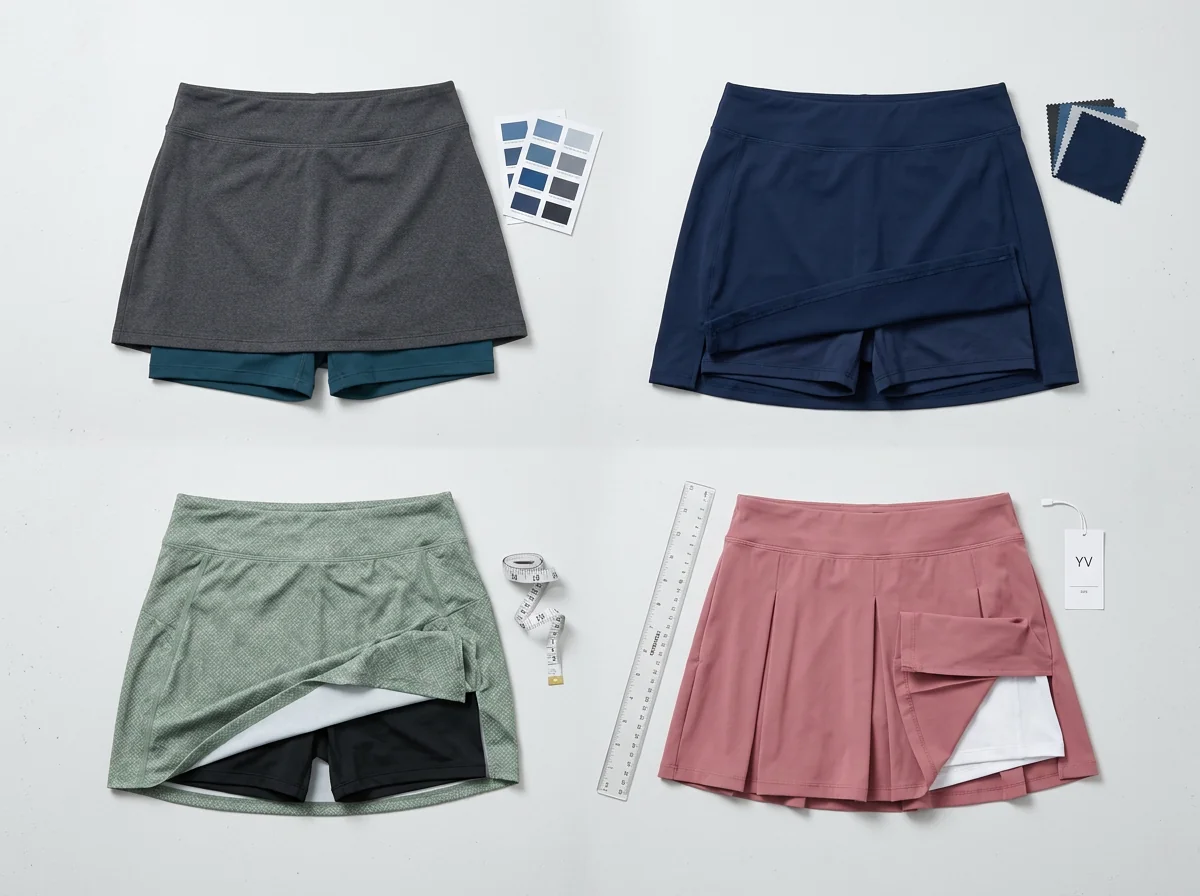
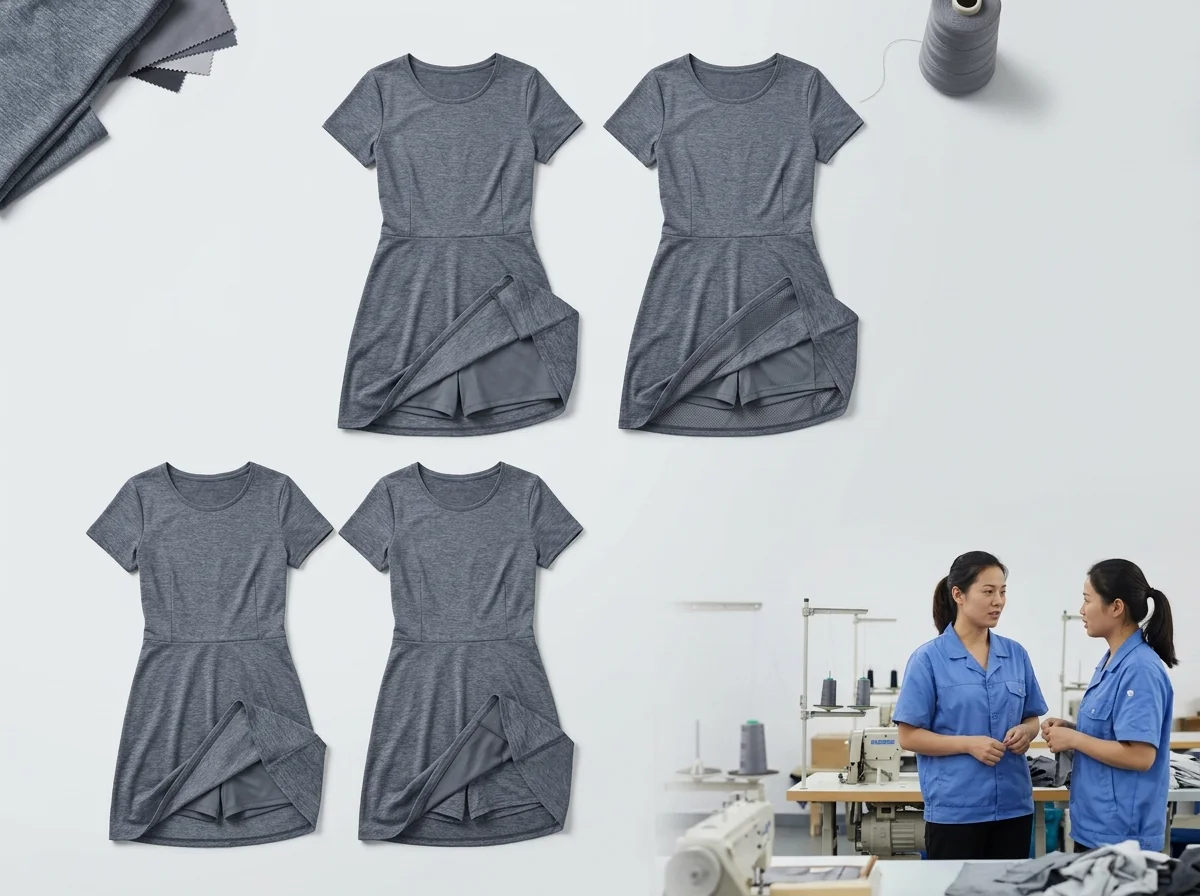
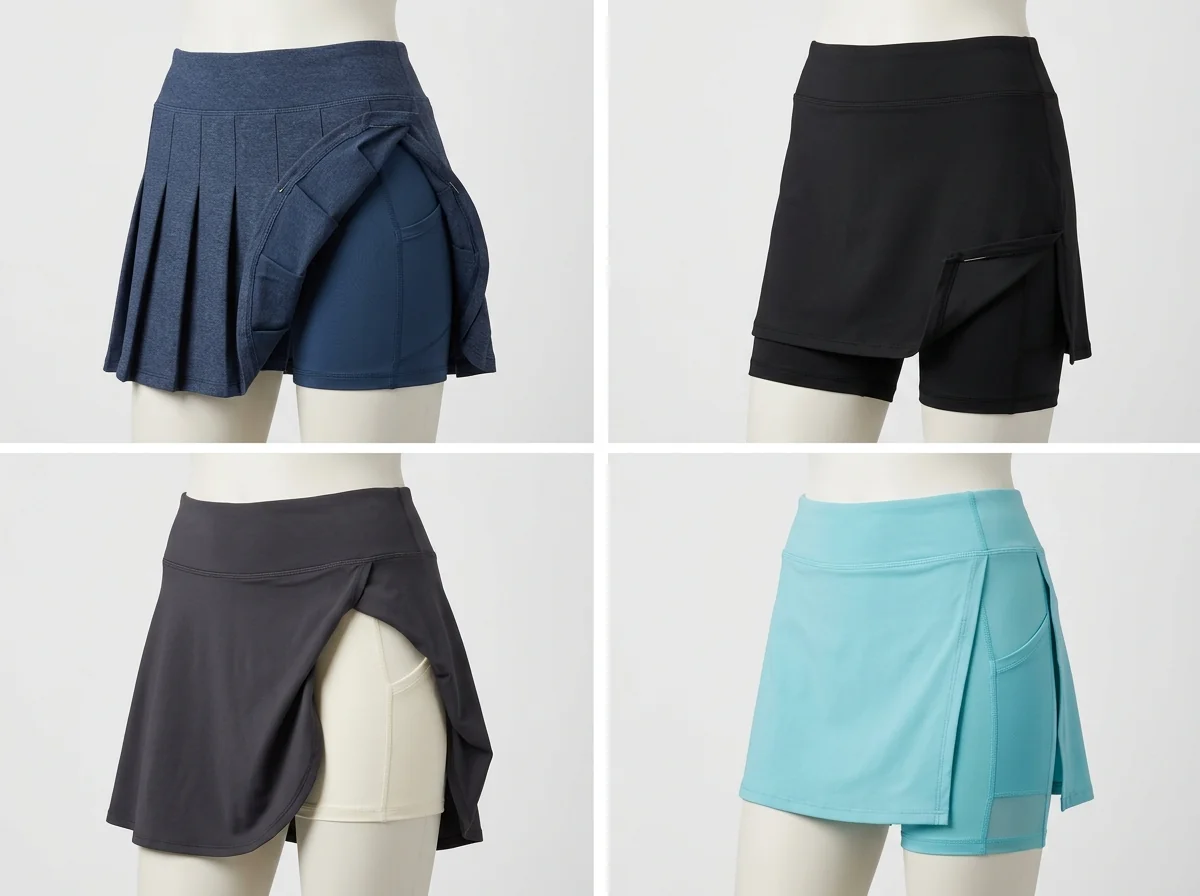
Build the dress as three garments around one seam — shell for drape, bra layer for hold, short liner for coverage. Quick-dry stretch knits, with mix-style order planning so a boutique rack never has to bet on a single silhouette.
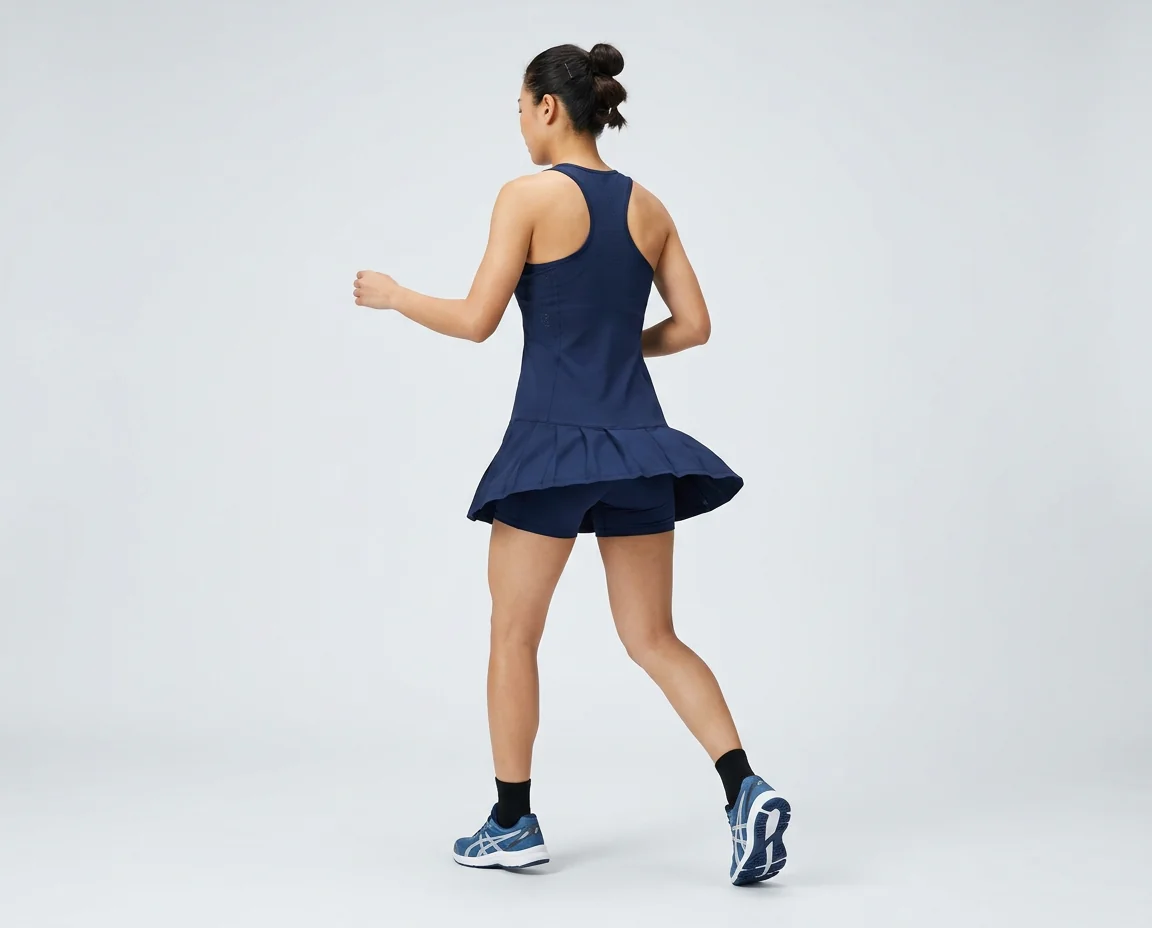
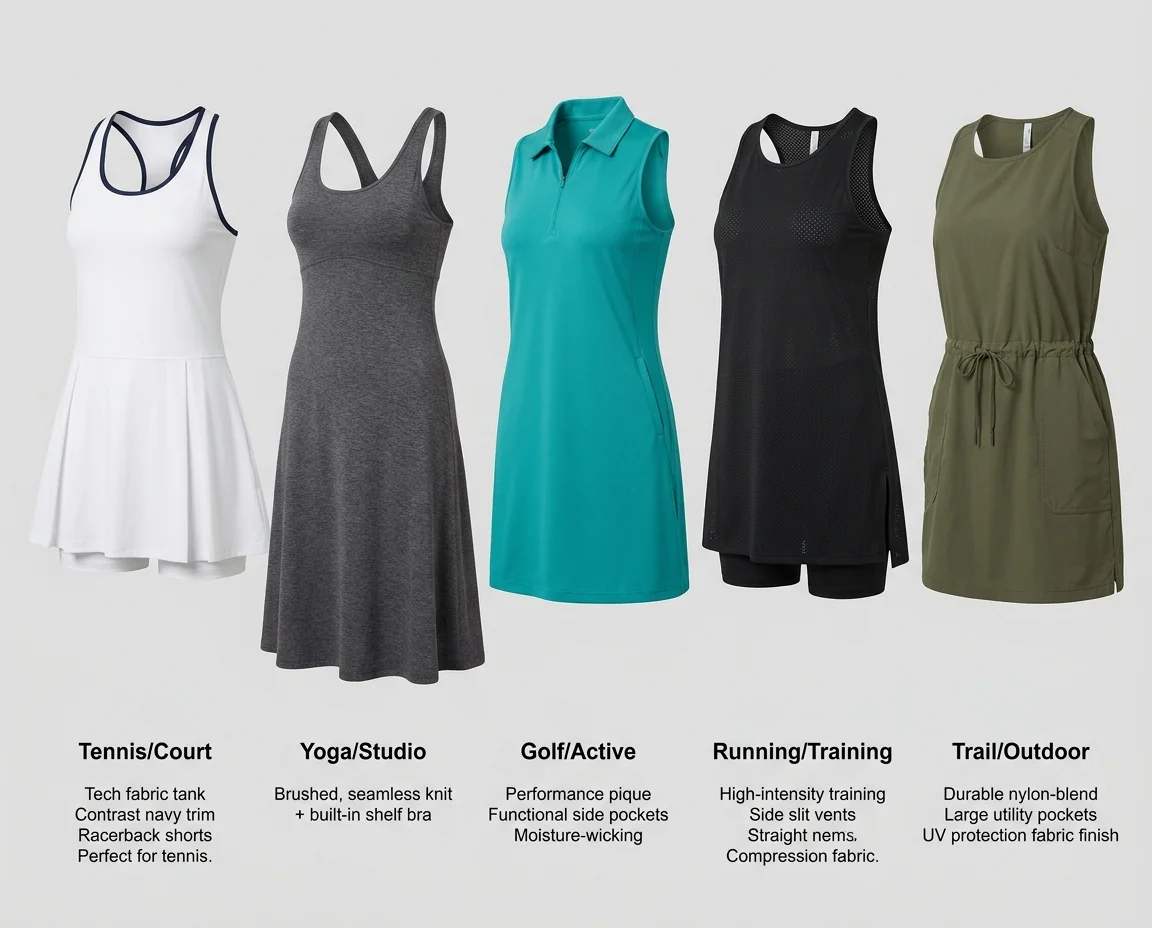
Tennis Dress
Yoga Dress
Tank-Dress
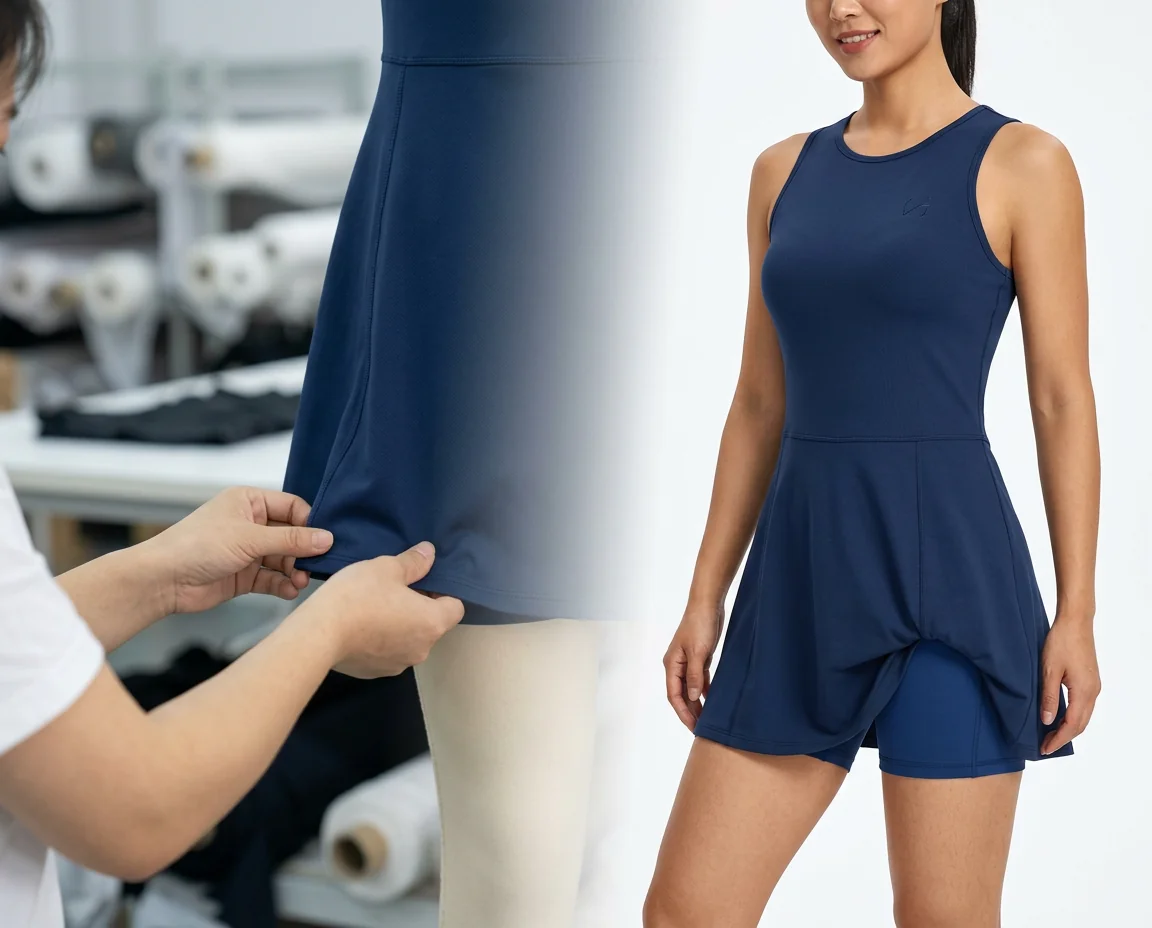
Skort Hybrid
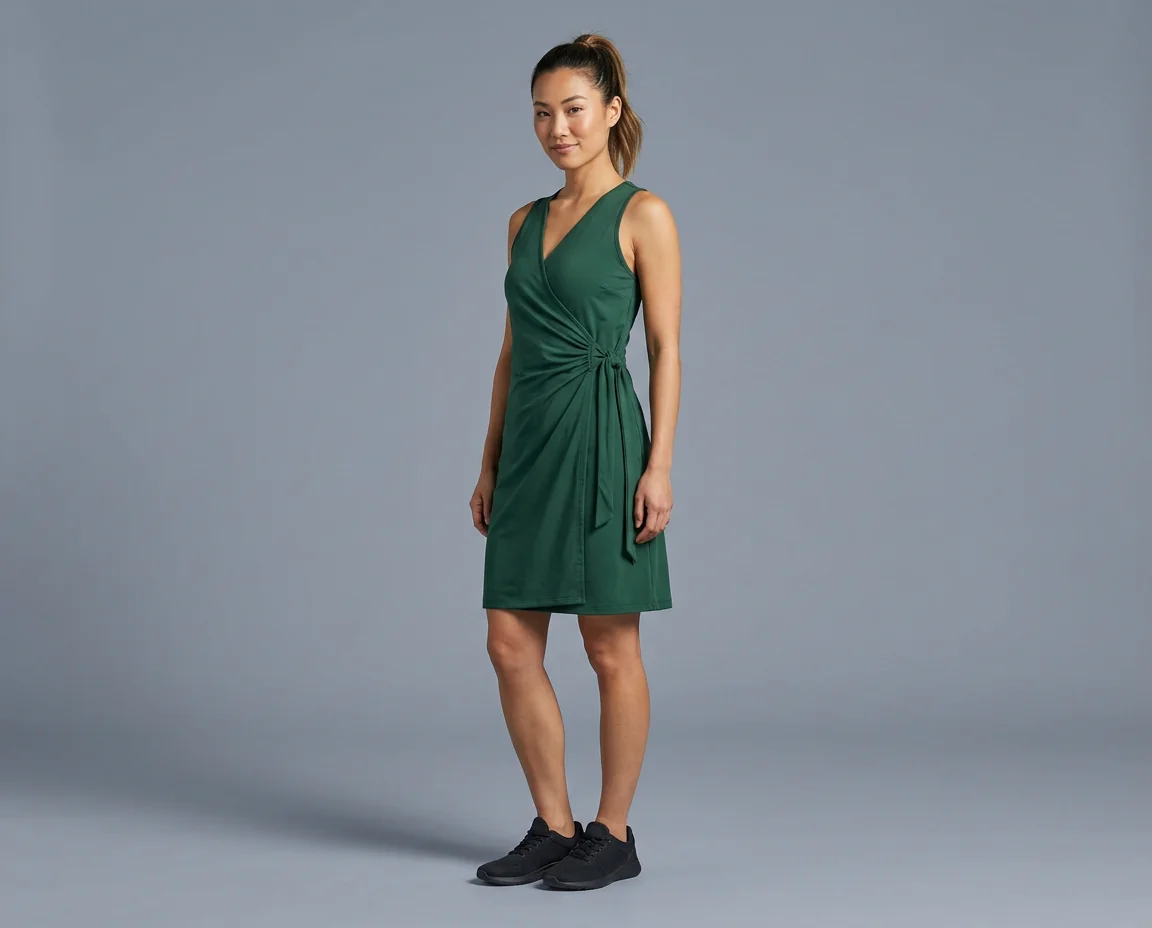
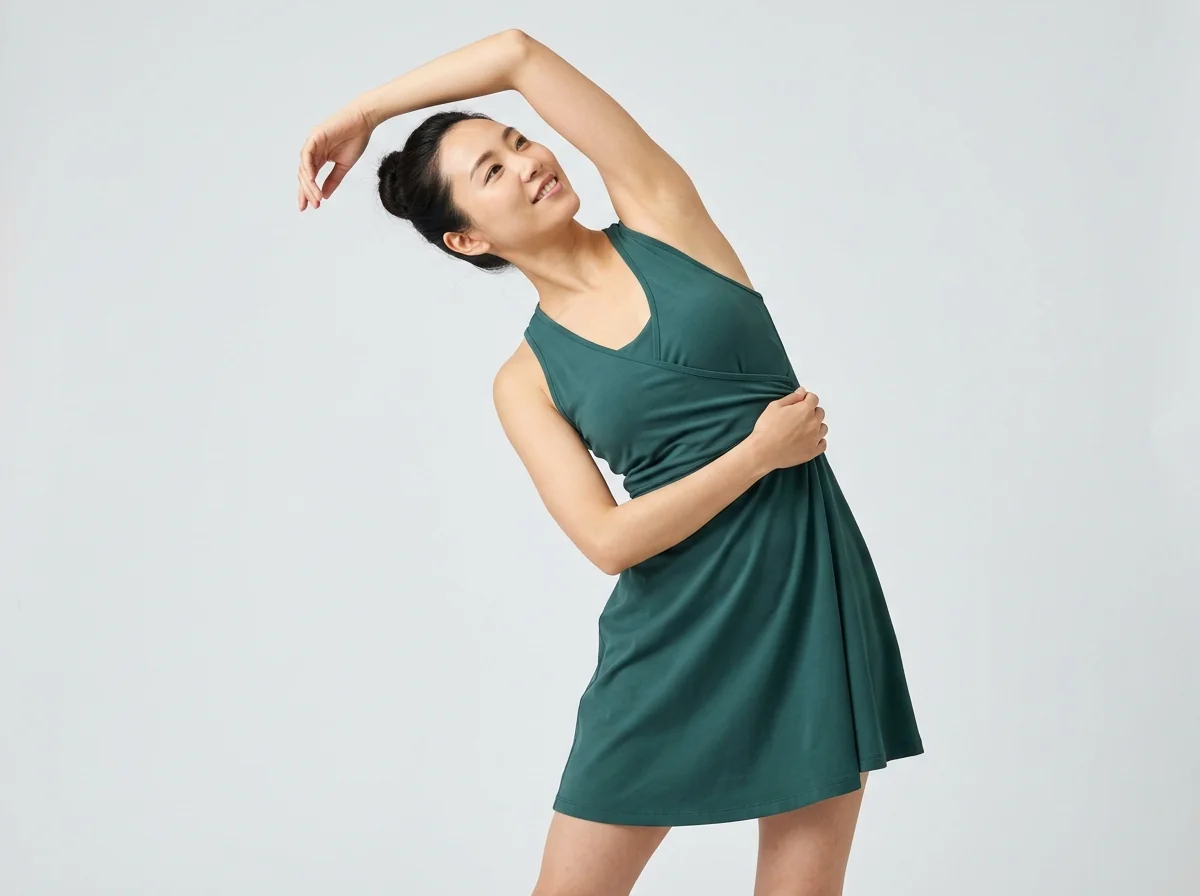
Wrap / Tie
Each style has a different silhouette and use-case positioning. The built-in short is standard across all five. Bra-shelf availability varies by fabric base and style — confirmed during tech-pack review.
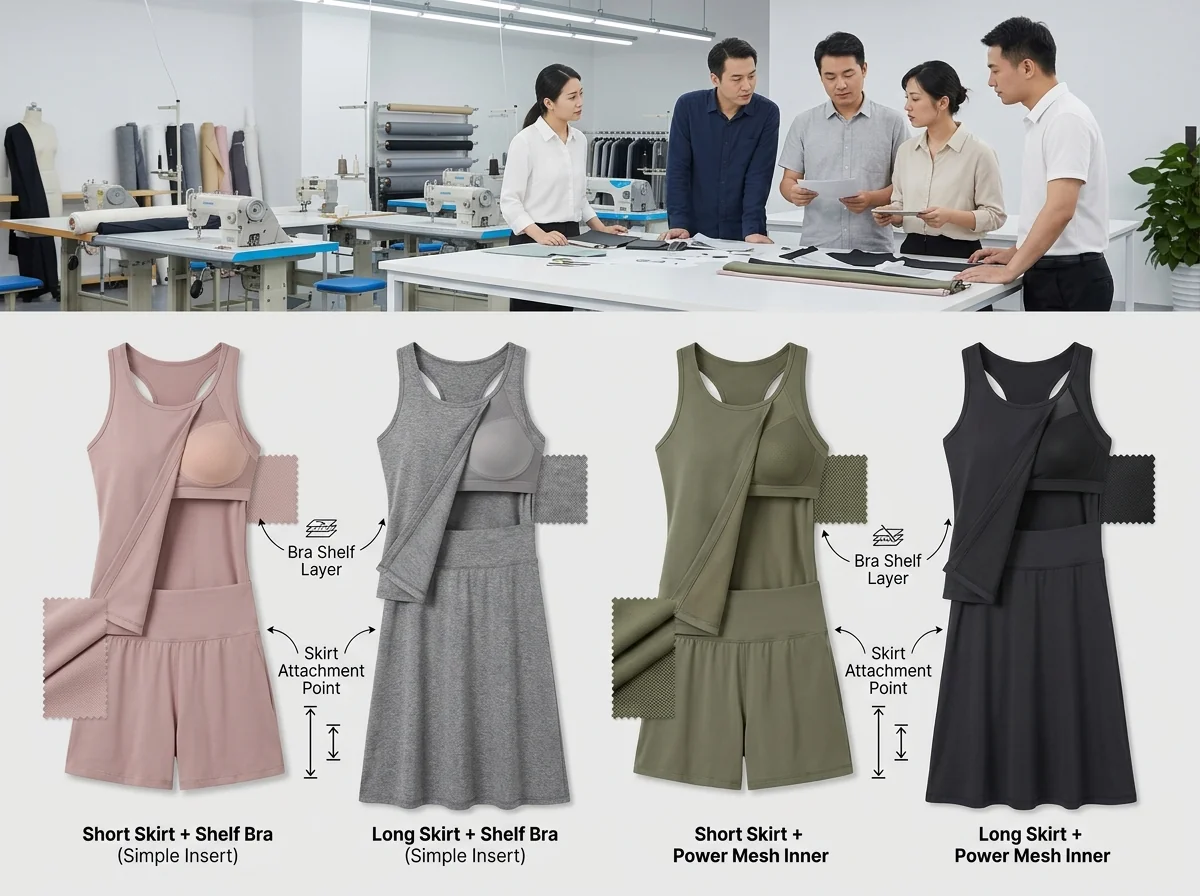
A fully built activewear dress is three garments sharing one body: the shell, the bra layer, and the short liner. Almost all of its construction risk concentrates where those layers converge — and so does most of what separates a factory-engineered dress from a re-labelled commodity one.
Shell, bra underband, and liner waist all join in a single operation sequence. Stacking three seam allowances at the identical point creates a ridge you can see through the shell, so each layer's allowance is stepped a few millimetres apart — a cutting-room decision that's invisible in a sketch and obvious in a side-lit product photo.
The shelf-bra elastic is tensioned to suspend the bust through low-impact movement without leaving a rib mark after a long brunch — this is a dress, not a training bra. Pad-pocket openings sit at the side seam so removable cups can't migrate forward, and the band is joined before the layers marry so its tension can be verified in isolation.
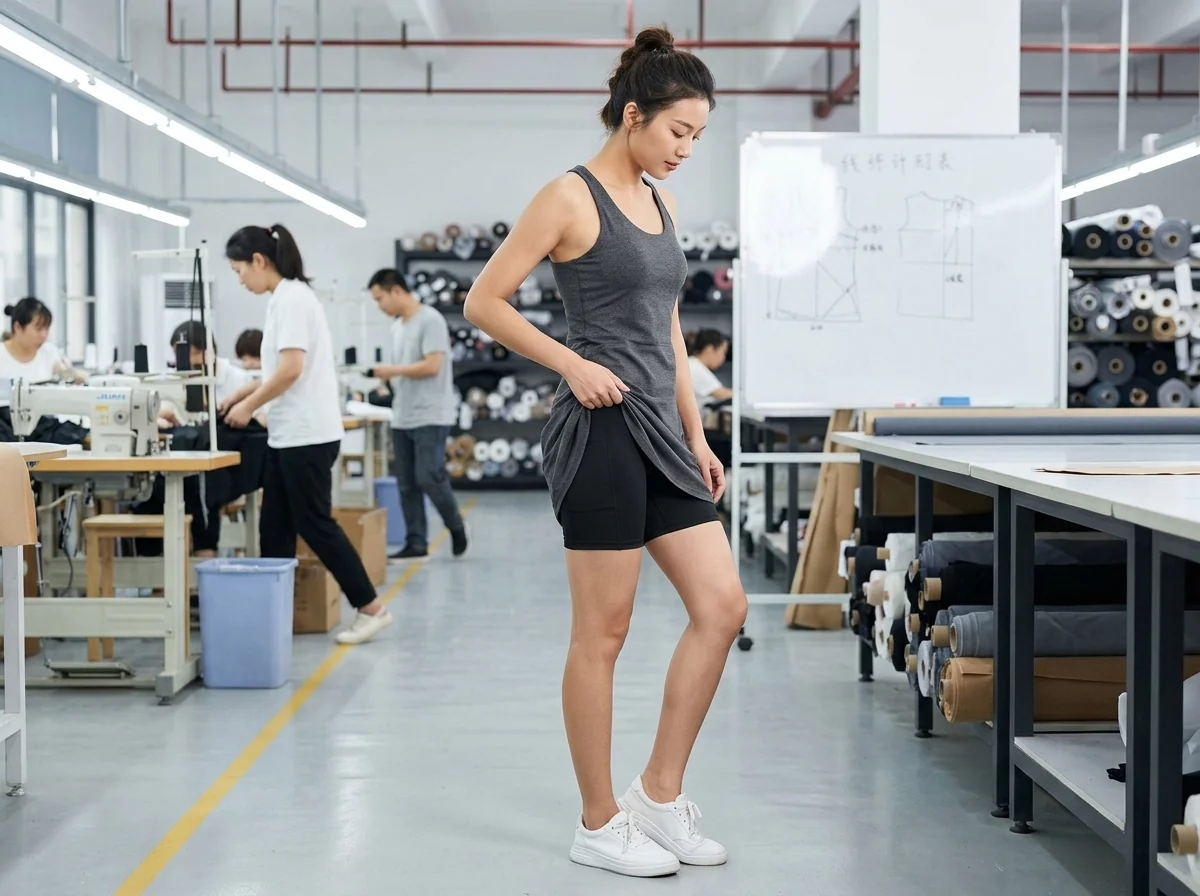
The inner short attaches at the waist seam and nowhere else. Tacking it to the shell's side seams — a shortcut that makes sewing easier — couples the two layers, so every stride tugs the skirt sideways. Left free, the shell swings over a liner that stays planted, which is the entire point of the hybrid garment.
During assembly audits, the garment is lifted by the shoulders and dropped on a form: the skirt must settle level while the liner hem stays fully hidden at every point of the circumference. Liner length is then verified against the graded chart — its mid-thigh coverage rule holds in every size even as outer hems vary by style.
Layered garments age at different rates if their elastics age differently. Underband and liner waist elastics are scored on the factory's 100-cycle stretch-and-wash recovery protocol as a pair, so the bra layer doesn't slacken two seasons before the short does — the failure pattern behind most "it lost its shape" reviews.
Every layer you build in is a styling decision your end customer no longer has to make, and a return reason you've deleted: nothing to pair, nothing showing through, nothing to adjust mid-class. That's what lets one dress SKU cover studio, court, and brunch on a single linesheet row.
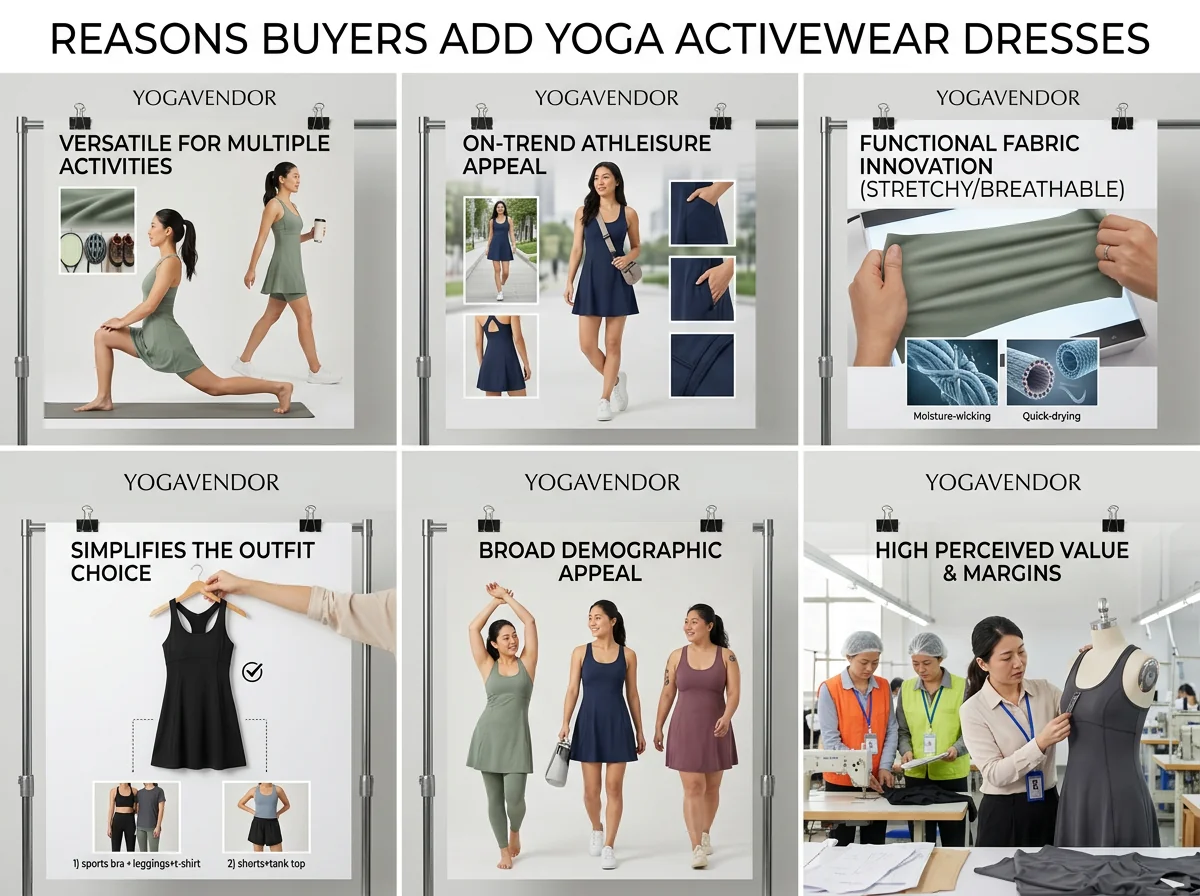
A one-piece dress with built-in shorts converts faster than a top-and-skirt set — fewer SKUs to merchandise, lower return rates, and a silhouette that reads polished without styling effort. Six commercial signals below.
Buyers wear it as-is. Lifts conversion versus 2-piece sets that need a matching top decision; ideal for boutique merchandising and lookbook flats.
Inner short layer locks coverage during forward folds, court rotation, or wind. Eliminates the "what to wear under it" friction your end customer otherwise solves with returns.
Four-way stretch knits with moisture-wicking. Holds shape after wash 30+, dries in studio heat or beach sun without hanger sag.
One silhouette that crosses studio, racket sports, beach, and weekend wardrobe. Single-SKU sell-through across seasonal storylines.
Princess-line shaping under the bust, slight waist nip, and skirt flare smooth midsection volume. Reads flattering across XS-3XL on the same pattern logic.
Brushed knits and rib bases give natural drape without bind. No waistband digging — the elastic hits at rib, not at the navel pinch line.
Use this matrix to plan your linesheet by customer occasion — not by garment SKU. Each scenario lifts a different fabric and length combination.
Brushed knit outer + above-knee length. Built-in short prevents exposure on inversions and forward folds. Pairs with bra-shelf for a true one-piece.
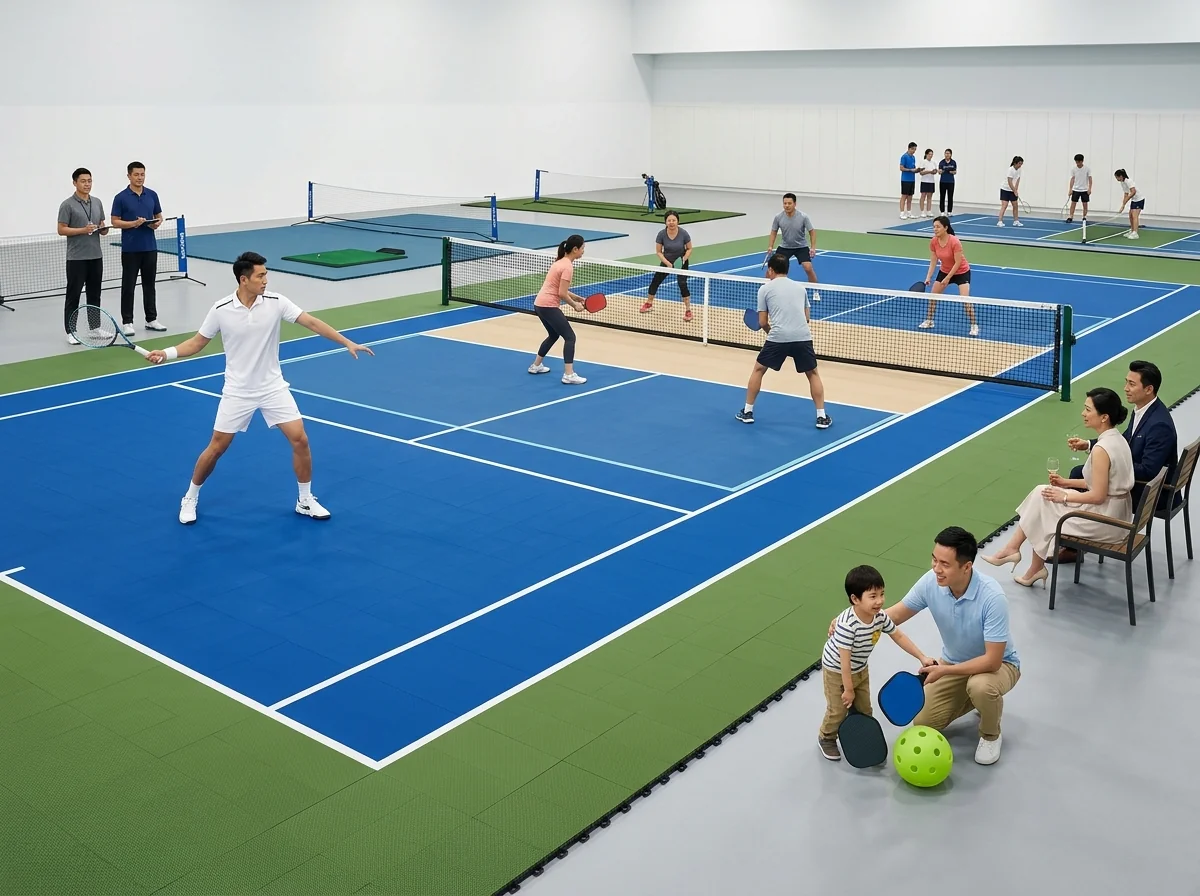
A-line skirt + nylon-spandex outer. Optional ball pocket on inner short. Pleated or flat skirt panel — both pattern-locked for court rotation.
Wrap or tie-waist style + lightweight rib base. Reads as polished daywear over swim or as a standalone resort dress at restaurant evening pairing.
Tank-dress in rib base + above-knee length. Replaces leggings-and-tunic without sacrificing comfort; reads polished for school run, market, or office casual.
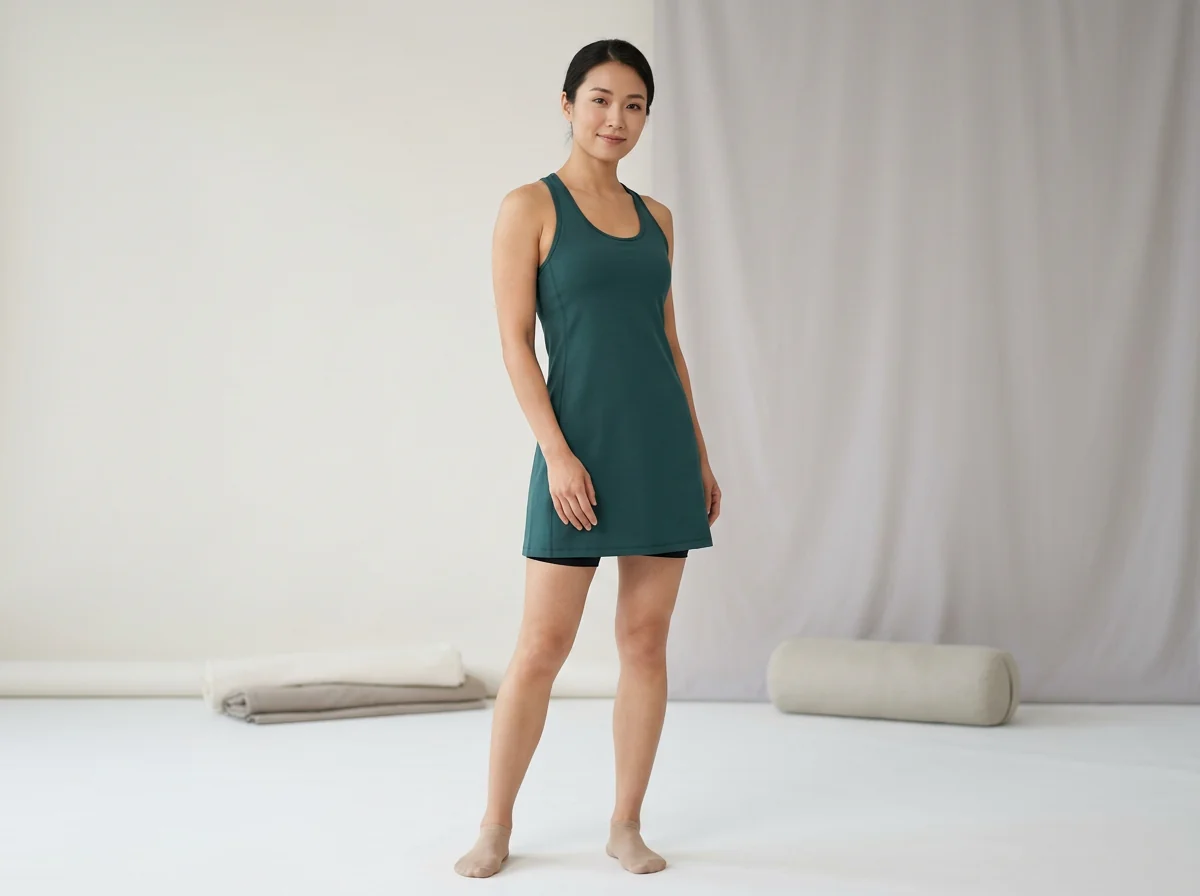
Brushed knit yoga dress + knee length. The "I-can-still-do-yoga-after-brunch" SKU. Sells well to studio members as a transition-out-of-class garment.
Stocking choice for yoga studios, women's boutiques, and athleisure capsules. Cross-merchandises with leggings and bra tops without cannibalizing them.
The outer dress and inner built-in short don't always use the same fabric. A softer brushed outer with a performance nylon inner short is a common combination — specify both at tech-pack stage to avoid a revision cycle.
The shell of an activewear dress is judged by how it falls; the liner is judged by what it hides and holds. Speccing both from one roll is the classic shortcut that breaks the silhouette — here is the pairing logic we apply instead.
Premium athleisure shells run on Tencel™-modal (50% Tencel™ / 45% polyester / 5% spandex) at 200–260 GSM, or ribbed cotton-modal (60% cotton / 35% modal / 5% spandex) at 220–280 GSM. Both are 2-way knits — the limited stretch is a feature here, because it lets the skirt swing instead of clinging through the hip.
The inner short does athletic work the shell never sees, so it's cut from 4-way nylon-spandex (78–82% nylon / 18–22% spandex) at the firmer end of its 180–260 GSM band, where the opacity grade reads A to A+. The liner is the layer that has to pass a deep-bend test in daylight; the shell only has to look good doing it.
Shell and liner weights are chosen as a ratio, not independently: a liner heavier than its shell drags the skirt inward and prints its hemline through the outer cloth on camera. When a buyer's two fabric picks violate that ratio, we flag it at tech-pack review and propose the nearest compliant pairing from the library.
Two variables drive nearly every dress brief: how long the skirt sits and what's underneath. Length is graded proportionally per size, so XS and 3XL keep the same coverage ratio rather than the same absolute hem.
Order of operations is a quality decision on a three-layer garment: once the layers are married at the waist, two of them become unreachable. This is the sequence our sewing line follows, and why each step sits where it does.
The short liner is completed as a finished mini-garment — gusset set, leg hems bound — before anything joins it. Any liner fault found after the marriage seam means opening the whole dress to reach it.
The shelf-bra band is sewn and tensioned as its own closed loop, then gauged off-garment. Verifying band tension in isolation is the only way to know whether a later fit complaint belongs to the band or to the shell.
Shell, band, and liner meet at the waist in a single seaming operation per size, with each layer pre-notched so nothing creeps during the join. One pass, one needle path — re-entering this seam is what we sequence the whole garment to avoid.
The outer hem is finished last, with the assembled garment hanging on a body form — because three joined layers redistribute weight, and a hem levelled flat on the table will not hang level once the liner and band are pulling from inside.
"Built-in short" is not one component. The liner block changes with the outer silhouette, because what the shell does to the eye decides what the layer beneath must do for the body.
A flat-profile short keeps the A-line skirt swinging clean through court rotation. The optional ball pocket is set on the right leg and bar-tacked at both mouth corners so a held ball never distorts the skirt line.
A longer-inseam, legging-derived block with a wider gusset for floor work. It borrows its pattern logic from our bottoms line, scaled to live invisibly under a softer outer cloth.
Under a body-hugging shell, the liner's own seams become the enemy. This block minimises seam crossings on the visible zones and faces outward with the smoother side of the knit so nothing prints through the silhouette.
The adjustable-waist style ships unlined by default, keeping its one-size-flexible appeal. Add a liner on the tech pack and the wrap front is re-balanced to carry the extra layer without gaping at the crossover.
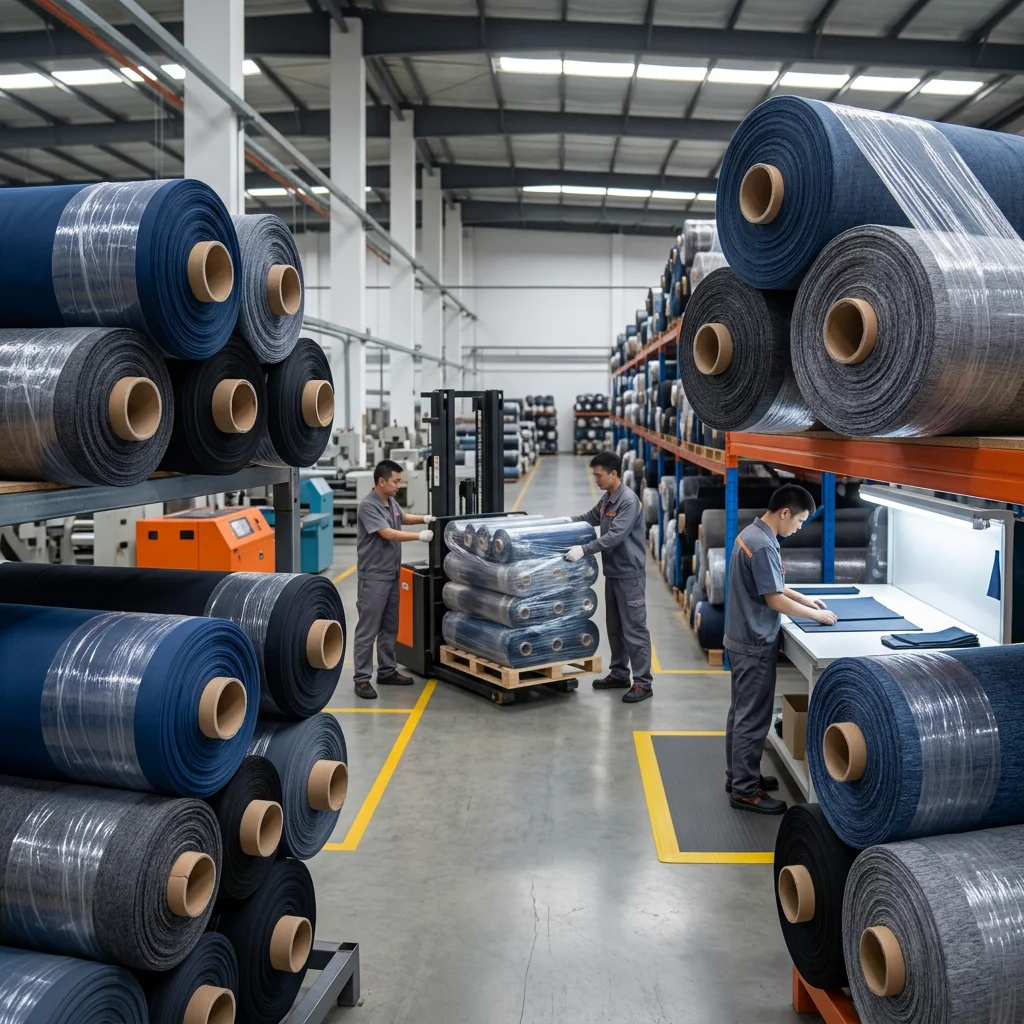
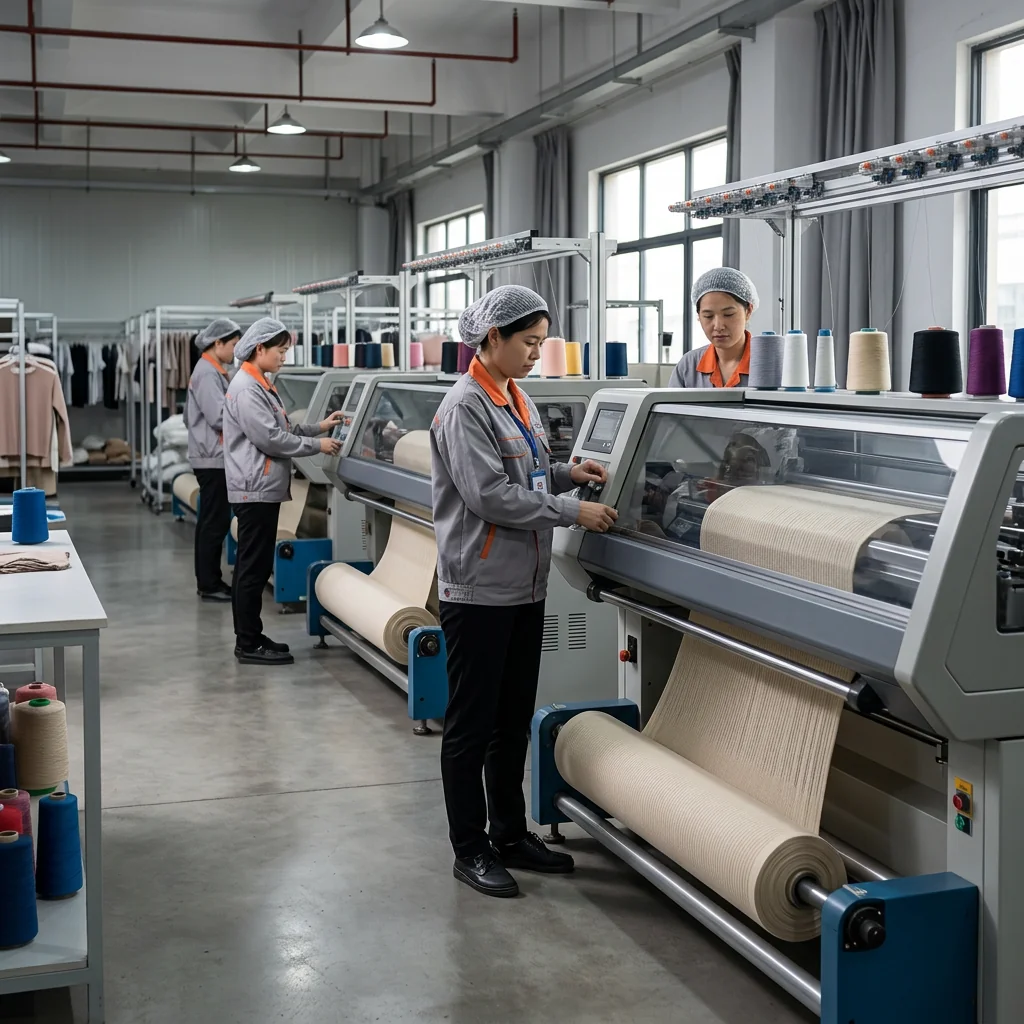
Stable knit-line capacity, ready stock fabric pool, and reorder logic let you trial small, scale fast, and replenish without a 90-day fabric lead-time wall.
Core nylon-spandex and rib bases held on standby — your first sample cuts day one, not day fourteen.
Combined monthly capacity of our four production lines. Bulk scheduling stays predictable even when floors elsewhere face peak-season slow-down.
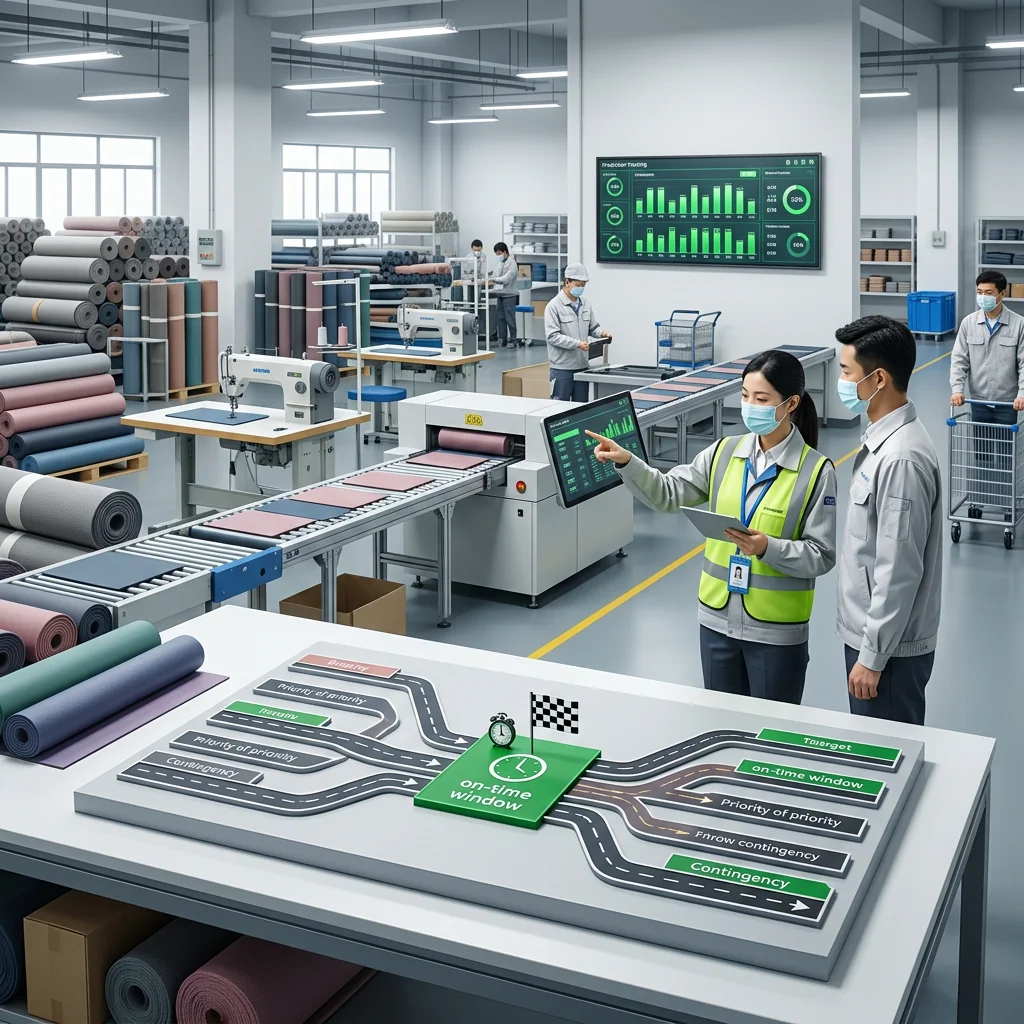
Mix-style order planning keeps trial-line risk low. Test the silhouette in market before committing reorder volume.
Shipped-order returns hold under that ceiling, backed by a daily WIP report shared from day one of cutting.
Single point of contact tracks samples, bulk, and reorders. WhatsApp + email reply window held under one business day.
Edge cases unique to activewear dresses — built-in liner, anti-exposure, mix-style splits, neckline tweaks, private label routing, and stock-color reorder cycles.
Yes — built-in shorts are standard on tennis, yoga, tank-dress, and skort hybrid styles. Wrap/tie style ships without a built-in short by default. The inner short attaches at the waistband seam during sewing and is not removable post-production. If you want a no-liner build on a normally-lined style, flag it on the tech pack and we adjust the cut file.
Three controls: inner short hem reaches mid-thigh regardless of outer skirt length, gusset width is tested in lunge and pigeon poses during PPS, and skirt panel weight is tuned so the hem falls back without floating. Sample wear-test reports are issued for retail door programs on request.
Order scope is reviewed per SKU (one style + one colorway counts as one SKU). You can mix multiple SKUs in one purchase order. Mixed-style orders ship as one consolidated carton-pack to keep freight simple.
Yes for V-neck, scoop, square, and U-neck variants on the tank-dress and yoga dress styles. Yes for A-line, straight, and tulip hem on the tennis dress style. Tweaks above two dimensions trigger a new pattern fee and add 5–7 days to sample lead time. Confirmed during tech-pack review.
Logo files (AI/EPS), neck label artwork, care label content, and hangtag artwork due at brief stage. We re-tag at the cut-and-sew line — main label, side seam care label, hangtag, polybag sticker — all under one PO. Sublimation logo on inner short or hem is optional and runs through our print partner.
Black, navy, oat, sage, and brick rust held in our core fabric pool for tennis and yoga dress styles. Reorders against stock colors skip the dye stage entirely, so they ship materially faster than a brand-new dye-lot — exact windows per tier are listed on our pricing & MOQ page. Useful for fast-moving boutique replenishment cycles.
Give us the silhouette, hem length, whether shelf bra and shortie are included, plus units per style. Our reply sets out the sampling calendar and dollar FOB cost.
Need a full-length one-piece? Our wholesale yoga jumpsuits page covers long-body silhouettes.
Share the styles, hem targets, and layer choices you've settled on — costed sampling terms arrive the following workday.