Sourcing a custom yoga wear manufacturer seems simple. Then three months pass. You're sitting on 500 units of leggings that pill after two washes — and your supplier has stopped responding.
The painful truth? Most of these setbacks aren't bad luck. They're predictable mistakes. Brands repeat them at every stage of the sourcing process, from the first factory inquiry to the final shipment inspection.
Launching your first private label yoga line? Scaling an existing activewear brand? Either way, the gap between a manufacturer that lifts your product and one that bleeds your margins comes down to a few decisions. Most buyers don't even know they're getting these wrong.
Here's a no-fluff breakdown of the 11 most damaging mistakes in yoga apparel manufacturing — and what to do instead.
Mistake #1: Treating Custom Yoga Wear Like Generic Activewear
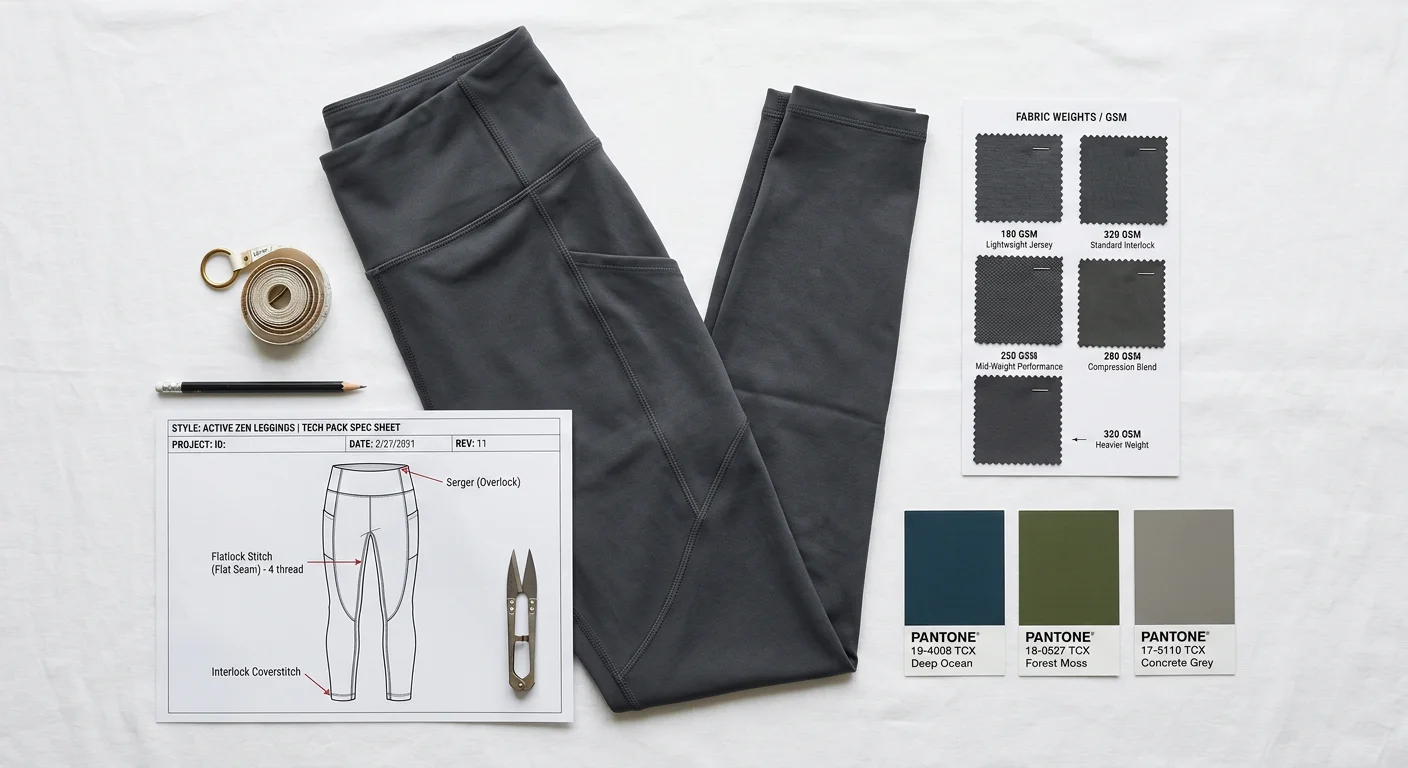
Yoga wear is a technical product. Most activewear manufacturers don't treat it that way.
Here's what a running-tee factory does to a yoga leggings order. The fabric GSM lands between 150–180. It should be 190–260. Spandex content comes in at 3–5%. Professional yoga pants need 15–25%. The seams are standard lockstitch. The crotch panel needs four-needle six-thread construction to survive a deep split.
The result? Waistbands that roll during downward dog. Knee fabric that pills after 10 classes. Crotch seams that blow out mid-warrior pose.
The technical gap is real and measurable:
Stretch recovery must hit ≥90% after repeated cycling — generic activewear fabrics top out around 85%
Pilling resistance should test at ≥Grade 3–4 (Martindale ≥40,000 cycles) — standard gym fabric scores Grade 2–3
Dry time on professional yoga fabric runs under 20 minutes — generic polyester blends exceed 30–40 minutes
Vetting a yoga apparel manufacturing partner? Ask for fabric spec sheets. You want fiber composition, GSM, and directional stretch data. No spec sheets? That's a generic activewear OEM supplier with a yoga label slapped on it.
Mistake #2: Submitting Incomplete Tech Packs or Skipping Them
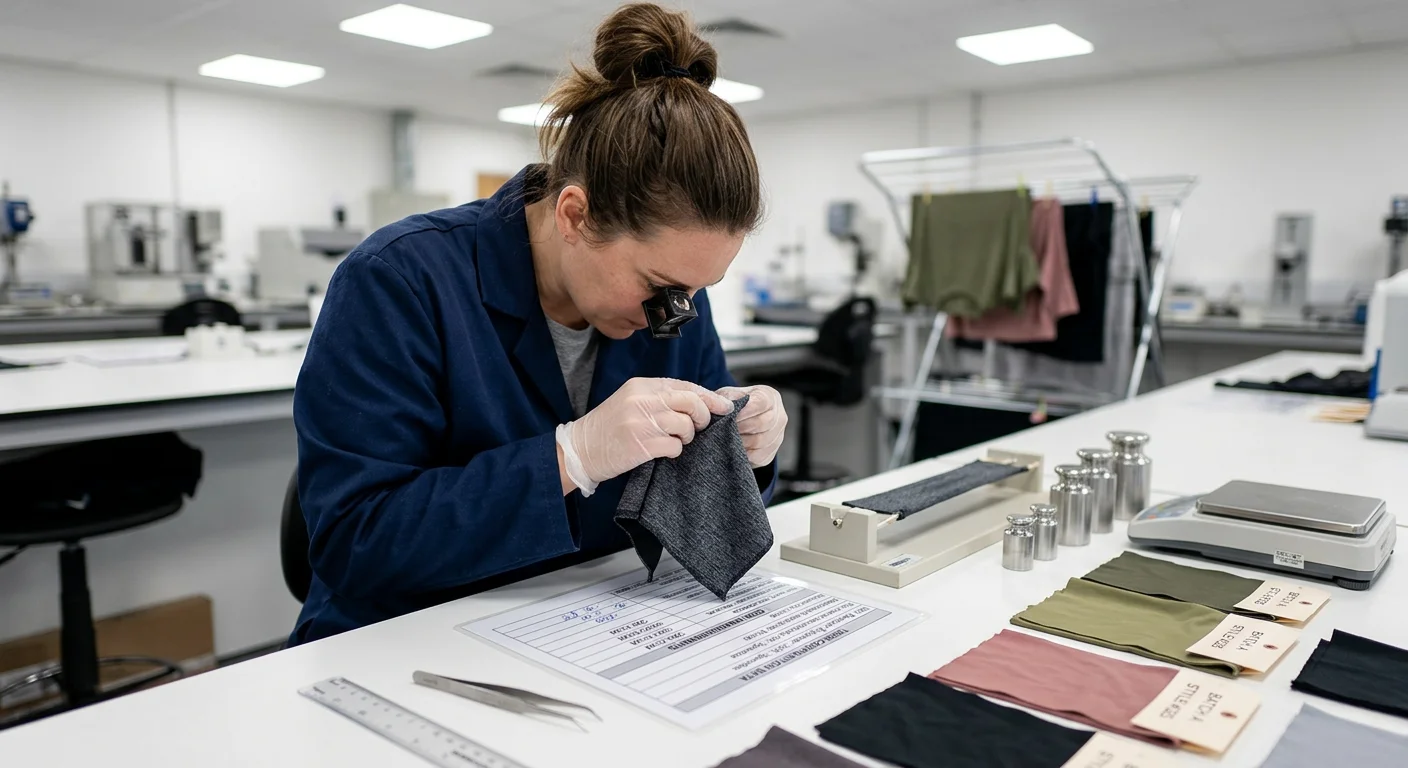
A vague brief doesn't become a great garment. It becomes a dispute.
Brands skip the tech pack — or hand over a rough sketch with a few notes — and think they're saving time. They're not. Every critical decision gets pushed to the factory floor. Factories fill in the blanks with whatever is cheapest and fastest. Not what your brand needs.
A complete yoga wear tech pack isn't optional paperwork. It's the one document standing between your vision and a miscut, wrong-fabric, off-spec bulk production run.
At minimum, your tech pack must include:
Front, back, and side flat sketches with construction callouts
Bill of Materials (BOM): main fabric, lining, thread, labels, hangtags, packaging
Full measurement table across every size, with grading rules and tolerances
Construction page: stitch types, seam placement, fasteners, special finishes
Colorway and variant codes — separate codes per color to prevent mix-ups
QC/approval notes with a revision log
For custom yoga wear , don't just list fabric type. Spell out fiber composition, GSM, stretch zones, and exact seam placement . Those details decide whether the waistband holds during a vinyasa flow or rolls down by the second sun salutation.
Two failure modes take down more yoga clothing private label launches than anything else:
Version confusion — An update gets talked through verbally. The factory samples from the old revision. You don't catch it until 500 units land on your doorstep.
Responsibility ambiguity — Fit is off. Fabric is wrong. Nothing got documented, so no one can be held accountable.
The fix is simple. Build a reusable Excel + PDF template with eight fixed tabs: Style Summary, Sketch Page, BOM, POM/Size Chart, Construction Notes, Colorway Page, QC Tolerances, and Revision Log. No special software needed. The goal is consistent codes, clear measurement points, and proper revision numbering — not a polished design file.
One smart upgrade for small brands: add a reference sample photo next to your measurement table. Factories match against physical samples far better than sketches alone. That one addition closes more spec gaps than pages of written description ever will.
No tech pack means no accountability. Full stop.
Mistake #3: Rushing Into Bulk Production Without Locking a Golden Sample
Here's a number that should stop you cold: a 25–30% return rate on a single size.
A brand skips the full sample confirmation process and jumps straight into bulk. That's how it happens. One yoga wear startup ordered 5,000 units across multiple colorways with no proper pre-production sample. The first and second fabric batches came from different dye lots. Color deviation hit ΔE≈1.8–2.0 — well above the industry-acceptable threshold of ΔE≤1.0. Retailers rejected 40–60% of the shipment. Planned gross margin: 45%. Actual margin after clearance discounts: under 10%.
That's not a manufacturing problem. That's a process problem.
The sample confirmation sequence isn't optional — it's your financial firewall. A complete cycle runs through five stages:
Proto sample — initial aesthetics and construction review
Fit sample — pattern testing against your tech pack, with live wear testing across 3–5 body types per size
Size set / grading sample — full-size run verification before any bulk commitment
PP sample (Pre-production) — factory floor confirmation with actual bulk materials
Golden Sample — the signed, sealed physical standard every production unit must match
Most brands in a hurry skip straight from proto to bulk. The result? S-size waistbands running 2–3cm too small. XL inseams running 3–4cm too long. Seam open rates of 8–12% at armholes and side seams — against an industry target of ≤2%.
The Golden Sample locks everything in place. It's not just a finished garment. It's a binding physical reference — dual-signed by both brand and factory. It captures the final pattern version, fabric spec, colorway, trims, construction method, and packaging. Any bulk unit that goes beyond agreed tolerances can be rejected by contract.
A solid yoga wear quality control program requires these Golden Sample protocols:
Source 2–3 samples from different production lines before you pick your Golden Sample. A factory that can produce only one perfect piece is a red flag.
Prepare 2–3 identical Golden Sample sets : one for the factory floor, one for your incoming inspection, one for any third-party QC partner.
Establish Limit Samples alongside your Golden Sample. Set an "upper limit" (a shade deeper in color, a step larger in size) and a "lower limit" (a shade lighter, a step smaller) to define the full acceptable tolerance band.
Seal each sample with tamper-evident tags. Assign a unique ID tied to your BOM version, size chart version, and colorway code.
Mandate re-sampling any time fabric suppliers change, patterns get revised, or production restarts after a gap.
One more thing most brands overlook: build wash testing into the sample stage, not the QC stage. Run at least 3–5 wash cycles on your PP sample under your target market's standard conditions — cold machine wash for activewear. Check dimensional change (≤3–5% shrinkage), seam integrity, and colorfastness (target ≥Grade 4 on washing and rubbing tests). Problems caught at the sample stage cost you a revised spec sheet. Problems caught at the bulk stage cost you the entire order.
No Golden Sample means no accountability. In custom sportswear production , no accountability means someone else controls your margins.
Mistake #4: Choosing the Wrong Fabrics for Yoga-Specific Performance Needs
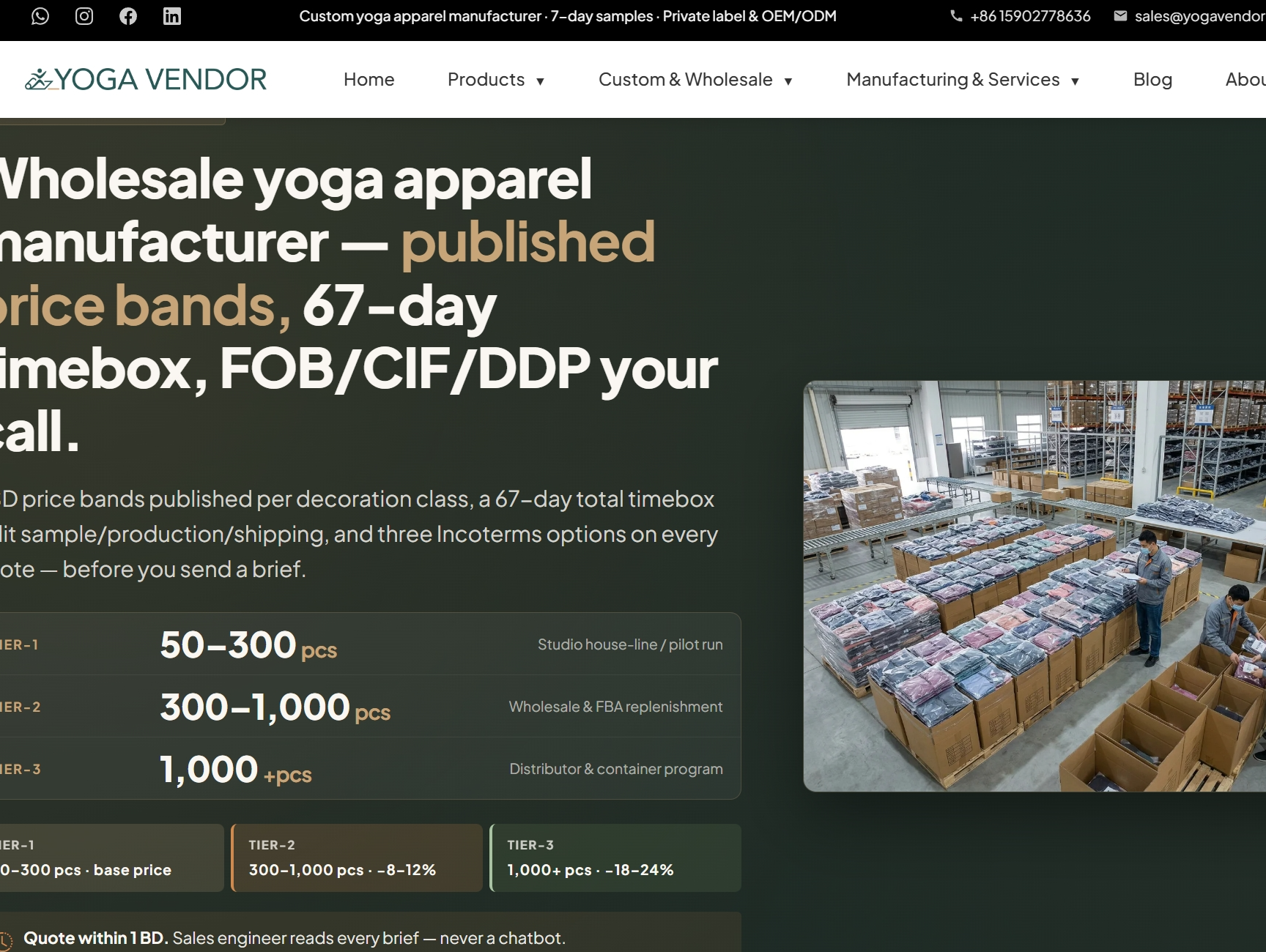
Fabric choice is where most yoga clothing private label brands bleed money — and they don't see it coming until customers start complaining.
The core problem isn't picking a "bad" fabric. It's picking the wrong fabric for how yoga actually moves.
Here's what that looks like in practice:
A brand sources 80% polyester + 10% spandex leggings at under 180 g/m² — low cost, fast production. Fine for a gym top. Catastrophic for a yoga pant. The spandex is too thin to hold a warrior III. The fabric pills against the mat. And in a deep squat, it goes see-through.
On the other end, a brand overcompensates by speccing TPU composite fabric with spandex content above 25% and elastic modulus near 50 MPa. The result? The leggings are so compressive that students report restricted breathing in seated poses. Visible pressure marks show up after a 60-minute yin session.
Both are fabric mistakes. Neither looks wrong on a spec sheet.
The real framework is matching fabric to yoga style:
High-intensity flow / power yoga : 75–80% nylon + 20–25% spandex, 220–280 g/m², four-way stretch with ≥90% recovery rate. Nylon resists abrasion far better than polyester at the same GSM. That matters for constant mat contact.
Hot yoga / high-sweat classes : 80–90% polyester + 10–20% spandex with honeycomb or mesh knit structures. These dry around 40% faster than standard plain-weave fabrics under the same conditions.
Yin / restorative / meditation : Lower compression, softer hand-feel, elastic modulus well below 50 MPa. Fabrics with recovery rates above 95% work against practitioners in long static holds — not for them.
Four-way stretch isn't optional — it's baseline.
Standard two-way knit fabrics stretch in the weft direction only. Lengthwise stretch is limited. In headstands, forward rolls, and deep backbends, that restriction pulls the waistband down, bunches fabric at the crotch, and rolls the hem upward. Four-way stretch fabrics deliver >100–150% extension in all directions at once. Seam stress spreads across the full garment instead of concentrating at weak points.
What to demand from your activewear OEM supplier:
Before sampling begins, ask for documented test data. No data, no deal.
Stretch & recovery : Warp and weft elongation ≥100%, recovery rate ≥90% after one-minute relaxation — with cycle data at knee and hip stress zones
Pilling resistance : ≥Grade 3–4 after 12,000+ Martindale cycles
Moisture-wicking : Water absorption time <3–5 seconds; drying rate benchmarked against plain-weave control fabric
GSM confirmation : Don't accept verbal assurance — request a physical swatch with lab-verified weight
No test data means no verified performance. Unverified fabric specs are where quality problems start — long before the first stitch is sewn.
Mistake #5: Overlooking Compliance Certifications and Material Safety Standards
Customs holds an entire shipment. The platform pulls every listing. Customers post rash photos on Instagram. That's what happens when compliance becomes an afterthought.
Here's the hard reality: certifications aren't bureaucratic box-checking. They're the difference between a product that sells and a product that gets seized at the port.
The certifications that matter for yoga wear:
OEKO-TEX Standard 100 — The non-negotiable baseline. It controls formaldehyde (≤75 mg/kg for adults), azo dyes (≤30 mg/kg), heavy metals, phthalates, and more. European and American retailers require this before issuing a single purchase order. No certificate? Most wholesale yoga clothing manufacturer partnerships worth having will disqualify you on the spot.
REACH compliance — Selling into the EU? SVHC content must stay below 0.1% per component. Go over that limit and mandatory disclosure kicks in — plus a potential RAPEX notification that puts your brand name on a public list.
GRS — Running a recycled-material line? Global Recycled Standard certification blocks "greenwashing" accusations and confirms real recycled content in your yoga wear fabric sourcing.
GOTS — Targeting organic or maternal wellness positioning? This covers the full supply chain — not just the finished garment.
What getting this wrong costs you:
Risk | Impact |
|---|---|
EU customs seizure | Full shipment loss + shipping + storage + disposal fees |
Amazon/Zalando delisting | 30–50% of affected sellers exit the category within 12 months |
Consumer skin reactions | Return rates jump from 8–10% to 15–20%; review scores drop 0.3–0.8 stars |
RAPEX public listing | SKU sales decline 20–40% for months after public notification |
The fix isn't complicated. Before your yoga wear sample order stage, require any activewear OEM supplier to hand over third-party test reports from an ISO 17025-accredited lab. In-house documentation doesn't count. Check certificates on the OEKO-TEX database yourself. Ask which certifications cover the fabric and which cover the finished garment. Those are two separate things. Factories often hold one but not the other.
Compliance isn't a cost. It's insurance on everything you've already put in.
Mistake #6: Weak Vendor Vetting — Over-Relying on Price or Factory Size
The cheapest quote on the table is not the cheapest option once production ends.
Low price means low margin on the factory's end. Factories with thin margins cut corners somewhere. Fabric is the first to go. A 230 g/m² yoga legging spec drops to 180 g/m². Spandex content falls from 20% down to 8–10%. Three-thread overlock replaces four-needle six-thread construction. AQL inspection standards shift from 1.5 to 4.0 or higher. None of these changes appear on a quote sheet. All of them show up in your returns.
Big factory size brings its own trap. A manufacturer running millions of units per year will push your 300-unit order to the bottom of the pile — peak season makes it worse. Junior pattern makers handle your sampling. Lead times slide 1–4 weeks. Account managers take 2–3 days to reply instead of the same day.
Vet every yoga brand supplier against these four measurable dimensions before you commit:
Case depth — Does yoga and activewear make up ≥60% of their order volume? Can they show 10+ verified series with multi-season iteration?
Sample quality — Four-way stretch at ≥150% elongation, ≥90% recovery rate, stitch density at 8–10 stitches per inch, four-needle six-thread coverage across all high-stress zones
Communication speed — Tech docs back within 48 hours, first samples in 7–10 days, clear input on fabric weight and seam placement without you asking
Compliance posture — BSCI/SMETA audit within the last 12 months, third-party test reports on formaldehyde, pH, and azo dyes on hand and easy to access
Price is one data point. It should never be the deciding one.
Mistake #7: No Written Agreements on Materials, QC Standards, or Delivery Terms
A verbal agreement is worth nothing. Your supplier ships 800 units of the wrong fabric — and you have no recourse.
Brands lose real money this way. Not on sampling costs or shipping fees. They lose it on disputes they can't win because nothing got documented. No written contract means no leverage. Full stop.
Three specific gaps that trigger the most damage:
Material substitution. Your contract says 220 g/m² nylon-spandex. No clause requiring written approval before any material change? A factory can swap in recycled polyester at 180 g/m² and claim it meets "industry standard quality." That phrase — industry standard — is legal quicksand. It's vague by design. That makes it unenforceable when you need it most.
QC standards without numbers. "Good quality" is not a QC standard. A binding yoga wear quality control clause needs actual numbers. Like this: AQL 1.5 for critical defects, AQL 2.5 for major defects. Dimensional tolerance ±5mm. Color deviation ΔE≤1.0. Pilling resistance ≥Grade 3. Without those specifics in writing, your supplier's definition of acceptable will never match yours. You'll have no grounds to demand fixes.
Delivery dates without binding language. "Estimated delivery early March" is not a deadline. It's a suggestion. Factories can miss it by four weeks and face zero contractual consequences. The fix is simple: set an exact delivery window — say, March 10–20 — and label it a binding delivery date , not an estimate.
The minimum your written agreement must cover:
Fabric spec: fiber composition, GSM (with ±tolerance), certified test standard
No-substitution clause: material changes require prior written approval
QC framework: AQL level, defect classifications (critical/major/minor), acceptable percentages
Binding delivery window with stated penalties for delay
IP ownership: all designs, patterns, and tech packs stay the brand's property
Documentation isn't bureaucracy. In yoga apparel manufacturing , it's the one thing standing between your margins and someone else's judgment call.
Mistake #8: Poor Communication Practices During Production
Production doesn't fail at the sewing machine. It fails in the chat window three weeks earlier.
Research backs this up: 30% of all project failures trace back to poor communication. In custom activewear production , specs shift, time zones collide, and instructions pass through five layers before reaching a single factory worker. That number gets worse fast.
Here's what the failure chain looks like in yoga apparel manufacturing:
A brand tells the factory to make the waistband "a little tighter." No measurement. No reference photo. No Pantone code for the "brighter blue" they also requested. The factory guesses. The sample comes back with a ±3–4 cm deviation on the chest measurement instead of the expected ±1 cm. The color lands at Pantone 295C instead of 286C. Re-dyeing costs 30–60% of the original fabric cost — plus 5–10 extra days on the timeline. Nobody saw it coming because the feedback was never precise.
Mid-production changes are the second landmine. A brand messages the factory: "Add 2 cm to the sleeve. Switch the inner lining to mesh." No updated tech pack. No revised quote. Each undocumented spec change adds 3–10% to per-unit sewing time and pushes material costs up 5–15%. Pattern adjustments alone run USD 50–300 per revision. Brands that don't track these changes in writing end up paying 10–25% above their original quote — then argue about who owes what.
The third failure mode is the one brands catch too late: information dropout across the production chain. A spec update reaches the sales contact. It never gets to the floor supervisor. Two versions of the pattern run at the same time. By the time QC catches it, 8–15% of the batch is defective — against an industry standard of under 2%.
Three practices that fix this:
Visual-first feedback. Every instruction involving "tighter/looser/longer/shorter" must include a specific measurement (mm or cm) and a reference image. Use Pantone codes — not color descriptions. This cuts colorway disputes at the source. Teams that adopt mood boards with proper color references see first-sample pass rates jump from 40–60% up to 70–85% . That takes one full sampling round off the timeline.
Versioned tech pack updates, every time. Any change — sleeve length, logo size, fabric swap — triggers a formal version increment (v1.0 → v1.1). The factory delivers a cost and time impact assessment within 48 hours. Then you push the new valid version to every production stakeholder. This keeps budget overruns above 10% in under 15% of projects , versus 25–40% with no version control in place.
Weekly video syncs + production progress reports. For cross-timezone wholesale yoga clothing manufacturer partnerships, lock in a 30–60 minute video call each week for anything visual or complex. Set a 24–48 hour response window on all critical decisions — fit approval, color sign-off, delivery confirmation. Teams that run this rhythm cut overall decision cycle time by 20–30% .
Communication in custom sportswear production isn't soft infrastructure. It's where your margin either holds or bleeds out before you ever see the finished garment.
Mistake #9: Ignoring Fit Diversity, Grading Rules, and Real-User Testing
One size does not fit all. In yoga wear, one grading system does not fit all markets either.
The average American woman stands 161.3 cm and weighs 77.4 kg. The average Japanese woman stands 158.3 cm and weighs 53.2 kg. That's a 24 kg gap in body weight. The bust, waist, and hip measurements that come with it are worlds apart. Brands that build one pattern block and push a universal size chart across North America, Europe, and Asia-Pacific at once are creating their own return problem — before a single unit ships.
Here's what the data says: ill-fitting garments drive 40–60% of yoga wear returns. That's not a quality control failure. That's a grading failure.
The fix requires three things working together:
Region-specific grading rules. North American size runs need larger hip and waist increments. Asia-Pacific runs need shorter inseams and reduced torso length. A single "global XL" will sit loose in Tokyo and pull at the hips in Dallas — in the same shipment.
Full-size set testing across real body types. Internal model fittings validate only one or two body shapes. A proper test group covers at least three body types (lean, mid-range, fuller figure) across two to three height bands. That's six to nine testers per core size. For a full XS–XL range, you need 30–50 testers at minimum.
Dynamic scenario testing, not static stand-and-look fittings. A legging can look perfect on a hanger and go sheer in downward dog. Static fittings miss sheerness under stretch, waistband rollover during warrior III, and crotch ride-up in a squat jump. Your test script needs deep flexion poses, jumping sequences, and at least 10–20 burpees.
Skipping real-user testing doesn't save time. It shifts the testing to your customers — at full retail cost. Brands that catch fit failures after launch face four to eight weeks of emergency re-development, 20–50% higher development costs, and gross margin erosion of 10–30 points on already-shipped inventory.
Build the test matrix before bulk. It's the cheapest QC investment you'll make.
Mistake #10: Underestimating MOQs, Hidden Costs, and Inventory Risk
That factory quote of $6 per unit looks profitable — until you run the numbers.
Here's what most new yoga brands find out too late: MOQ isn't just a number on a price sheet. It's a cash trap. A manufacturer quoting 300 units per color per size sounds fine. Run that across 4 sizes and 3 colorways. You're now committed to 3,600 units and $21,600 in inventory — before a single dollar of freight, duty, or platform fees.
And the hidden costs stack fast:
Fabric defect rate : 2–5% of bulk units fail QC. That loss folds into your per-unit cost whether you plan for it or not
Inbound freight : Air shipping on stretch activewear runs $1.50–$2.50 per unit. Sea freight cuts costs upfront but ties up capital for 6–10 extra weeks
Platform fees + FBA : Commission (15%) + fulfillment ($4.75/unit) + seasonal storage surcharges together eat 25–30% of your retail price
Returns processing : Apparel return rates average 12% cross-border. Add $0.50/unit handling plus reverse logistics — that's real margin erosion
The fix isn't negotiating harder. It's planning smarter.
Cap your first wholesale yoga clothing order at 12 SKUs or fewer. Put 60–70% of total units into your two fastest-moving sizes — M and L tend to lead. Offer the factory an annual volume commitment of 10,000+ units. In return, push for a 50% MOQ reduction on opening orders. That one trade drops your inventory exposure from $21,600 to $10,800 — and cuts monthly storage costs in half.
Set your reorder trigger before you launch, not after you sell out. Any SKU that falls below 30 days of conservative sales cover? Place the next run. A SKU with fewer than 50 units sold in two months and a return rate above 15% — stop replenishing it. Clear that inventory at a discount and move the capital into what's selling.
Inventory risk in activewear OEM relationships is a math problem. Solve it before production starts.
Mistake #11: Skipping Incoming Inspection and Relying on Factory QC Alone
Factory QC catches problems after they happen. Incoming inspection stops them before they start. That gap costs brands millions every year.
Here's the data most people ignore: 30–60% of finished garment defects start at the raw material stage . Skip incoming quality control (IQC), and every defective fabric roll, off-spec trim, and substandard elastic band flows straight into production. Your yoga wear quality control team then finds the problem at final inspection. At that point, you're not rejecting a swatch — you're rejecting an entire bulk run.
Factory QC is not the same thing as IQC. Not even close.
IQC intercepts materials before they enter production — batch identification, sampling, accept/reject decisions
IPQC monitors the production process, assuming materials are already good
OQC/Outgoing QC checks finished garments for appearance and basic function before shipment
Skip IQC, and every fabric-related failure gets discovered at the most expensive possible moment.
The four specific failures that follow:
Batch traceability collapse — No incoming batch numbers, no inspection records. A defect surfaces, and the investigation takes 2–3× longer. No one can isolate which material lot caused it.
AQL never applied at source — Most factory self-checks use visual inspection with no standardized sampling plan. Systematic defects slip through. There's no statistical framework to catch them.
Supplier performance data doesn't exist — No incoming defect reports means you can't see a supplier's defect rate climb from 0.4% to 1.5% over six months. It happens in plain sight, undetected.
Zero claims leverage — No IQC report, no photos, no batch numbers means no proof that defects existed on arrival. Your options shrink to discounts and replacement shipments — both weak outcomes.
What IQC checks on yoga wear:
Checkpoint | Standard | Failure Classification |
|---|---|---|
Stitch density (seams, crotch, waistband) | 10–14 stitches/inch | Major if >1 stitch/cm below spec |
Print adhesion (tape peel + wash test) | ≥Grade 4 colorfastness after 5–10 washes | Major if |
Key measurements (waist, inseam, chest) | ±1–1.5 cm tolerance | 100% re-inspection if >10% of sample fails |
Fabric shrinkage post-wash | ±3–5% dimensional change | Reject batch if fabric is new or reformulated |
Critical defects | AQL 0.0 — zero tolerance | Reject on first occurrence |
Factory self-inspection in activewear OEM relationships almost never uses formal AQL sampling. No sample size table. No accept/reject numbers. Just a visual pass by a floor worker who's also responsible for hitting daily output targets. That's not a quality system. That's a conflict of interest built directly into your supply chain.
The fix is clear: require third-party or independent IQC before bulk materials enter production. For new custom sportswear production partners, run 100% print inspection on the first order. Scale back based on historical data after that. Build the incoming defect rate into your supplier scorecard. Any vendor that exceeds 1.0% incoming defects over two back-to-back months gets a corrective action request — and a sourcing review.
Your yoga apparel manufacturing partner controls the factory floor. You need someone controlling what goes into it.
The Right Sourcing Workflow: A Step-by-Step Framework for Yoga Brands
Every mistake in this guide traces back to one root cause: brands jump into supplier conversations before they have a system. The 11 errors above aren't random. They follow a predictable sequence — and a structured workflow closes most of them before they open.
Here's the eight-node framework professional yoga brands use to move from concept to bulk delivery without losing margin at every step.
Node 1 — Define your category and specs before talking to anyone.
Start by capping your debut collection at 10–15 SKUs. Set FOB price targets upfront:
- Yoga leggings: US$8–15 for solids, US$12–20 for complex prints
- Fabric weight: 220–300 GSM for leggings, 160–210 GSM for tops
Have these numbers ready before your first factory call. Not after.
Node 2 — Source factories built for yoga, not factories that tolerate it.
Filter for manufacturers with:
- Dedicated yoga/activewear lines
- In-house cutting and QA
- MOQs in the 100–300 pcs per style range
Request samples from 3–5 factories at the same time. Don't do it one by one. Platforms like yogavendor.com let you filter pre-vetted yoga-specific suppliers by MOQ, lead time, and QC scorecard. That cuts the longlist stage from weeks to days.
Node 3 — Send a complete brief, not a mood board.
Budget US$50–150 per sample round. Plan for at least 2–3 rounds. Lock PP sample approval before you commit to bulk. No exceptions.
Node 5 — Negotiate costs and contract terms together.
Early-stage yoga brands typically work on these terms:
- 30% deposit upfront
- 70% before shipment
Your contract needs three things in writing: a detailed spec annex, a binding delivery date (not an estimate), and AQL 2.5 for major defects.
Node 6 — Control production through milestones, not check-ins.
Set three clear inspection stages:
1. Incoming fabric
2. In-line sewing
3. Final AQL
For your first bulk order with any new activewear OEM supplier , bring in a third-party inspector. Factory self-reporting isn't enough — don't count on it.
Node 7 — Build 2–3 weeks of buffer into every launch date.
Sea freight from Asia runs 20–40 days door-to-door. Port congestion, holidays, and customs delays happen — they're not surprises. Brands that build buffer don't miss launch windows. Brands that skip it, do.
Node 8 — Inspect inbound, then iterate with data.
On arrival, check 5–10% of cartons against your PP sample. Look at:
- Size accuracy
- Color consistency
- Label correctness
After launch, track sell-through every week. Your target is ≥60–70% sell-through per SKU. Any SKU below that threshold with a return rate above 15% gets cut — not reordered.
The workflow itself isn't hard. What costs you money is skipping steps and finding out later.
Yoga Wear Manufacturer Evaluation Checklist (Quick-Reference for Brand Buyers)
Most brands waste weeks in supplier talks — then realize they've been asking the wrong questions. This checklist cuts through that. You get 15 pass/fail checkpoints. Run through them in under 15 minutes, before you spend a single dollar.
Score each item: 0 = Fail, 1 = Partial, 2 = Pass . Total out of 30.
# | Checkpoint | Pass If | Fail If |
|---|---|---|---|
1 | Fabric testing capability | Lab exists + stretch recovery ≥85% after 150% elongation | No test equipment or recovery data <80% |
2 | Compliance certifications | ≥2 active certs (ISO 9001 + BSCI/WRAP) + OEKO-TEX or GOTS | Expired certs or documents not produced within 48 hours |
3 | Yoga-specific machinery | Flatlock + coverstitch visible; organized production floor | Generic garment machines with no yoga-specific equipment |
4 | Three-stage QC system | IQC + IPQC + OQC documented with formal AQL levels | "We check at the end" — no mid-process controls |
5 | Sample accuracy | ≥90% of POMs within ±1 cm across 3 consecutive rounds | Measurement errors repeat after 2+ revision rounds |
6 | MOQ and lead time | ≤300 pcs/style; ≤60-day lead time in writing | MOQ >1,000 pcs or no written timeline commitment |
7 | Yoga-specific fabric range | ≥3 performance fabric families; can explain opacity for hot vs. gentle flow | Generic cotton jersey with no performance fabric options |
8 | Social compliance audit | External audit within last 18–24 months + internal schedule documented | No audit records or reports older than 3 years |
9 | On-time delivery rate | ≥95% on-time rate with tracked data + stated monthly capacity | Cannot quote an on-time percentage |
10 | Defect rate and complaints | ≤1–2% defect rate + written resolution process | No defect data; problems handled case by case |
11 | Opacity and needle detection | Squat/stretch opacity test + metal detection on all lots | No opacity protocol; no needle detection |
12 | Batch traceability | Full fabric and production batch traceable per sample; accurate labels | Frequent label errors or no batch tracking |
13 | Client references | 2–3 verified yoga/activewear brand references confirmed | Refuses references or every reference is unrelated to activewear |
14 | OEM/ODM capability | Co-developed ≥1 performance style; defined sampling SLA (7–21 days) | Cut-and-sew work only; no clear sampling process |
15 | Red flag scan | All answers backed by data and documents; pricing matches spec level | Evasive answers + price far below market with no explanation |
Your score:
- ≥24/30 → Shortlist this factory
- 18–23 → Conditional — request a corrective action plan
- <18 → Reject and move on
How to use it in four steps:
Send items 1–10 as a pre-qualification questionnaire. Ask for certs, test reports, AQL levels, on-time rate, and defect data upfront.
Score every response. Don't guess — no documentation within 48 hours means a zero.
For shortlisted factories, run an on-site or virtual audit. Focus on checkpoints 3, 8, 11, 12, and 15.
Start with a pilot order of 100–300 pcs per style before scaling. Check defect rate, delivery accuracy, and fit consistency against your Golden Sample.
Want the full 40-point factory scorecard? It includes advanced opacity metrics and a traffic-light red-flag matrix that auto-scores your top candidates. Contact yogavendor.com for a custom supplier match and expert validation within 3 business days.
Conclusion
Finding the right custom yoga wear manufacturer isn't one decision. It's a series of decisions. Each one either protects your brand or slowly damages it.
Winning brands don't always have the biggest budgets. They submit clean tech packs. They lock golden samples before scaling. They vet suppliers on more than price. And they never skip incoming inspection. These brands treat manufacturing as a real business function — not just a box to check.
Here's a hard truth: most sourcing mistakes are predictable. They're also preventable.
Before you sign any contract or place a sample order, run through the evaluation checklist in this guide. Compare every activewear OEM supplier you're considering against the 11 failure points covered above. That way, you move forward with confidence — not guesswork.
Your yoga brand deserves a manufacturing partner that meets your standards.
Start vetting smarter. [Explore verified yoga wear manufacturers on YogaVendor →]