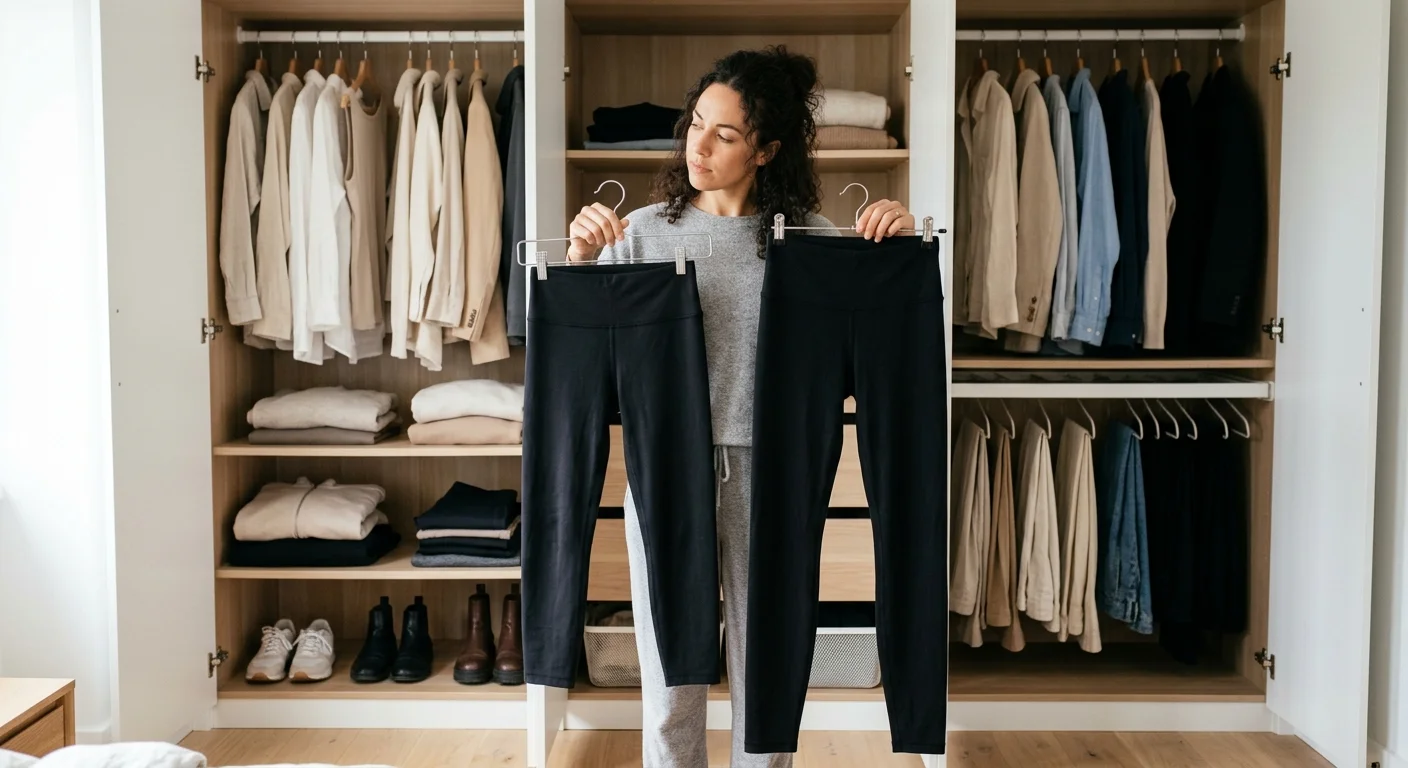
You've stood in a sporting goods aisle — or scrolled through an endless product page — asking the same question: are those pricier compression tights worth it, or just clever marketing?
The honest answer? It depends on what you're doing in them.
Compression fabric benefits are real and backed by science. But they're not a one-size-fits-all solution. Wearing graduated compression tights to a deep-stretch yoga flow can work against you.
Chasing a PR on your next run? Flowing through Sun Salutations? Trying to figure out why your legs feel wrecked after leg day? The right leggings make a real difference. This guide breaks it down workout by workout — so you stop guessing and start moving smarter.The same performance principles also guide how custom compression leggings are designed, helping brands create products tailored for different training styles and athlete needs.
Compression Leggings vs Regular Leggings: Head-to-Head Comparison
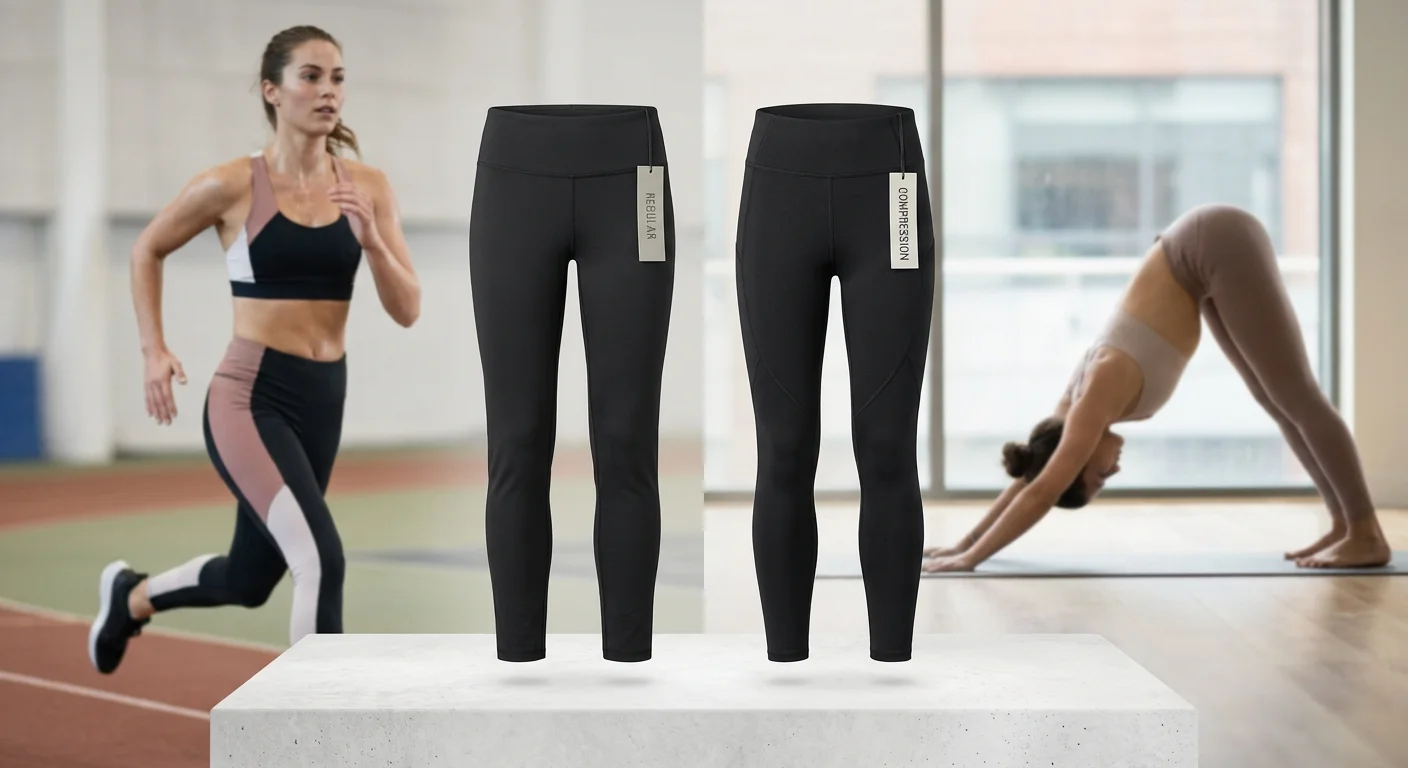
Two leggings can look almost identical hanging on a rack. Same sleek silhouette, same high waist, same price tag of leggings. But inside the fabric — in the fiber ratios, the seam placement, the pressure engineering — they do very different jobs.
Here's what separates them.
Fabric & Construction: More Than Just Stretch
Regular leggings are built around comfort and coverage. Most use a cotton + spandex or polyester + elastane (5–10%) blend. The goal is soft, unrestricted movement. Seams are placed for shape — think lifted seat, streamlined silhouette — not muscle function.
Compression leggings are built differently from the start. The fabric is denser: polyester or nylon combined with 15–25% spandex or Lycra . That higher elastane content keeps steady, active pressure on your muscles through the whole workout. Seams follow muscle group maps — quadriceps, gastrocnemius, hamstrings — to cut down on vibration where it counts during movement.
The biggest structural difference? Graduated compression. True compression leggings put the highest pressure at the ankle. That pressure then drops as the fabric moves up the leg. This gradient pushes blood back toward the heart. Regular leggings just wrap you. No gradient. No measurable venous return effect.
Pressure Levels: The Numbers Behind the Marketing
This is where things get specific — and where a lot of shoppers get misled.
Real compression is measured in mmHg (millimeters of mercury) :
8–15 mmHg — Light daily compression; good for long hours of standing or sitting
15–20 mmHg — Over-the-counter medical grade; targets mild leg fatigue and swelling
20–30 mmHg — Moderate; used for venous conditions and post-surgical recovery
30–40 mmHg — Prescription-level; for serious circulatory issues only
Sports compression brands tend to sit in a "balanced compression" range of 2.5–3.5 out of 5 on a subjective scale. That's enough to support muscle stability without cutting your range of motion.
Regular leggings? No mmHg ratings at all. Labels say "high support" or "tight fit" — that describes how they feel , not what they do to your body.
The rule of thumb: A product uses the word "compression" but lists no mmHg value, no mention of graduated compression, and leans hard on words like sculpt , lift , or tummy control — that's a shapewear-style support legging, not a true compression garment. Support feel ≠ actual venous compression.
Recovery, Circulation & the High Waist Factor
Post-run legs that ache. That heavy, tight feeling after a long day on your feet. Compression leggings target both. The graduated pressure cuts lower-limb swelling and speeds up venous return. People who wear them during and after intense training report "lighter legs" and less DOMS (delayed onset muscle soreness). Clinical data on 15–20 mmHg compression shows reduced fatigue in people who stand for long periods. At 20–30 mmHg, there are documented results in reducing venous expansion for patients with vascular conditions.
Regular leggings don't offer any of this. Any recovery benefit is random — light tissue support, nothing more.An experienced activewear supplier will often recommend different compression levels depending on whether the leggings are intended for recovery, endurance sports, or everyday fitness wear.
One variable that often gets missed: waist construction . High-waist compression leggings create real pressure around your core — sold as "core stability" or "posture support." For squats and deadlifts, moderate waist compression can sharpen your sense of trunk stability. Shift to cardio or distance running, though, and that same pressure can block diaphragm movement and belly breathing. Many runners report feeling "winded" or "tight in the stomach" mid-run in high-compression waistband styles.
High-waist regular leggings? Wider, softer waistbands that stay up without squeezing. Minimal impact on breathing. A better pick for any activity where you need a full, open breath cycle.
Price Reality Check
Type | Price Range (USD) |
|---|---|
Regular leggings (budget–mid) | $10 – $60 |
Entry compression (8–15 mmHg, light) | $30 – $60 |
Sports compression brands (mid-range) | $50 – $90 |
Medical/high-performance compression | $60 – $120+ |
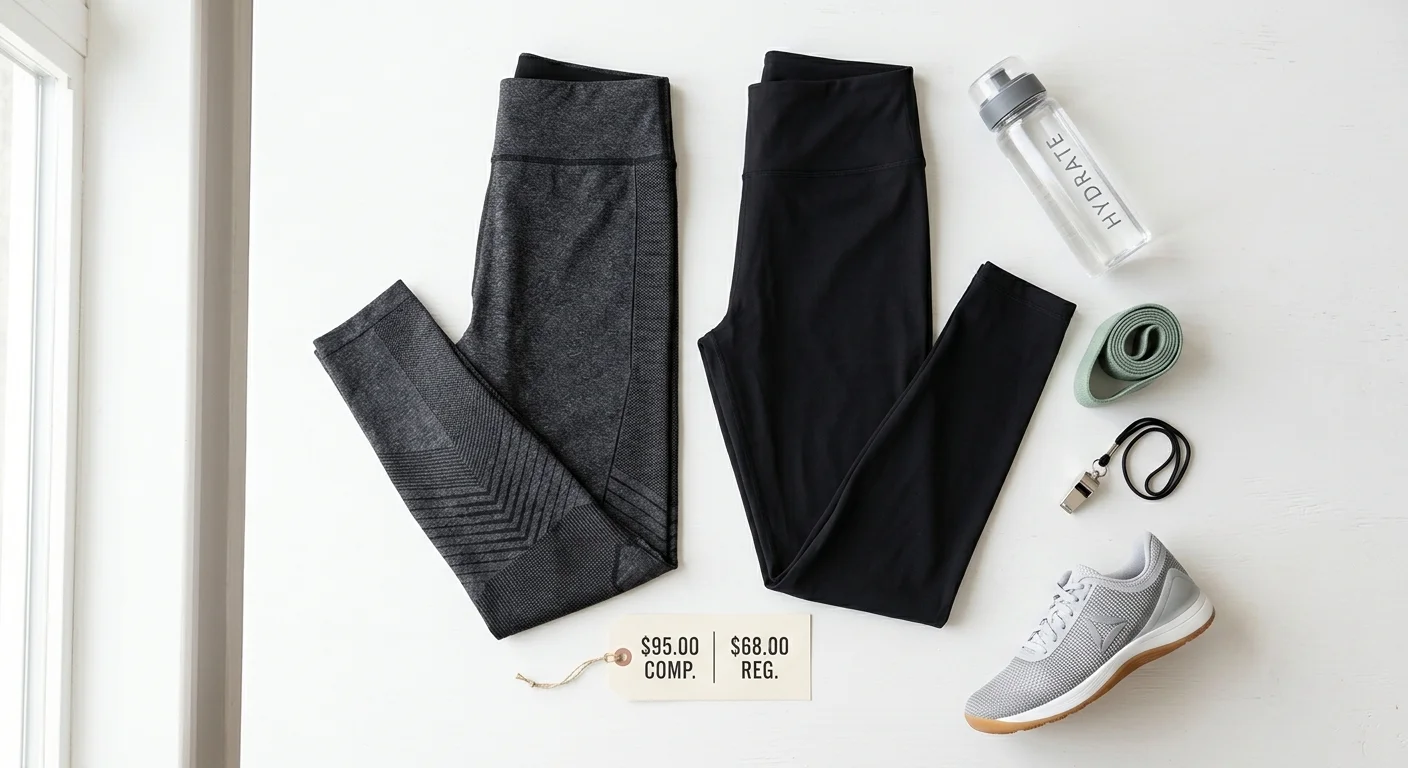
Compression leggings run 50–150% more expensive than comparable regular leggings on average. That price gap reflects real engineering costs — higher elastane ratios, pressure-tested construction, gradient calibration. Whether it's worth paying depends on your training load and recovery needs.
Flowing through yoga three mornings a week? The premium probably isn't worth it. Logging serious mileage or dealing with leg fatigue from long hours on your feet? The difference shows up — both in the data and in how your legs feel the next morning.
Best Leggings for Yoga: Why Flexibility Beats Compression Here
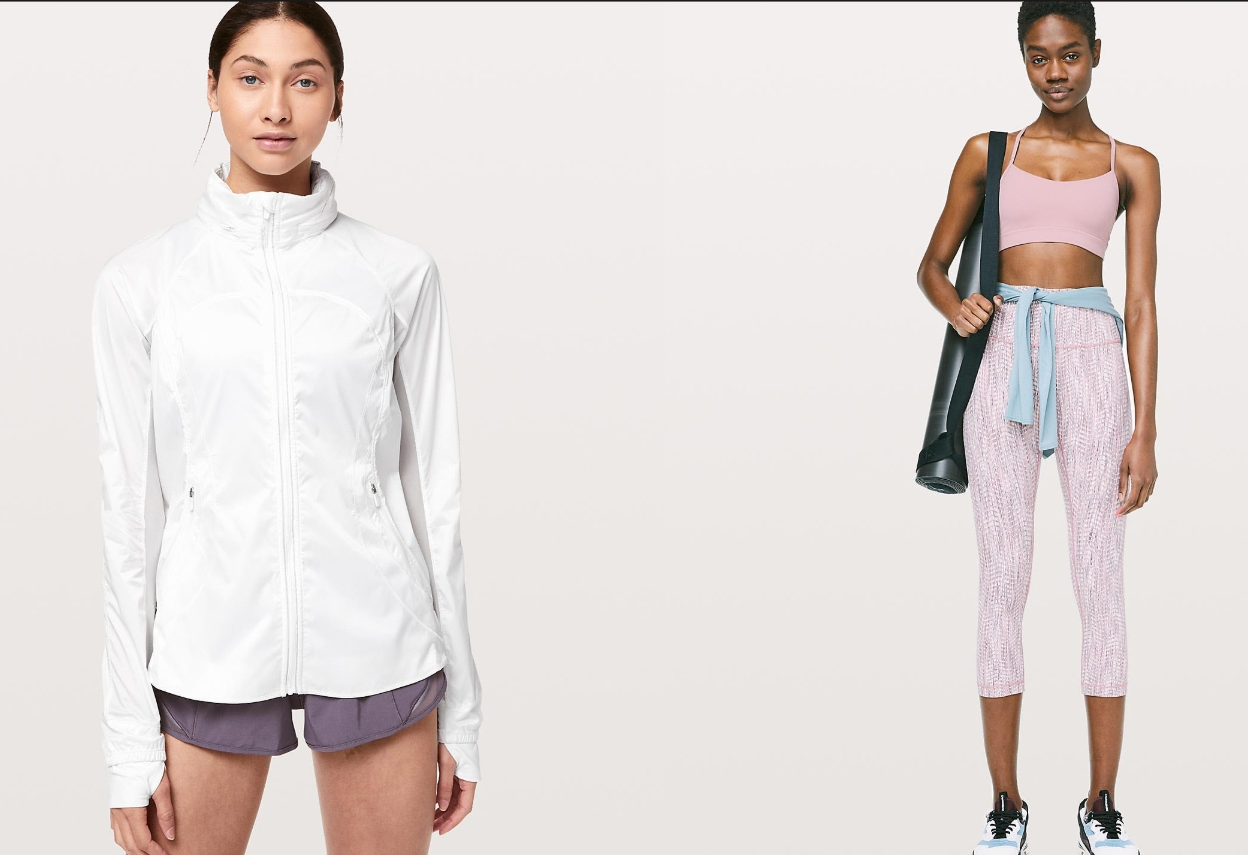
Yoga has a fabric problem — and it's not what most people expect.That's why many OEM yoga leggings are developed with lower-compression fabrics that prioritize unrestricted flexibility over muscle stabilization.
The issue isn't finding something tight enough. Too much compression works against you on the mat. Deep pigeon pose or a full forward fold? High-compression fabric pushes back. That constant resistance at the hip flexors and glutes isn't support — it's friction blocking your range of motion.
Here's the mechanical reality: high-compression fabrics have an elastic modulus above 45 MPa. The higher that number, the more force the fabric pushes against deep bending. For running or lifting, that rebound energy is useful. For a 120-degree hip flexion in lizard pose, it's a problem.
What yoga fabric needs:
4-way stretch — extends in all directions, horizontally, vertically, and at angles, without twisting or pulling off-center during transitions
Elastic modulus in the 30–45 MPa range — supportive enough to hold shape, flexible enough to stop resisting your joints
220–260 g/m² fabric weight — dense enough to stay opaque through deep squats and hip folds, but not compressing
Two fabric families hit these marks well:
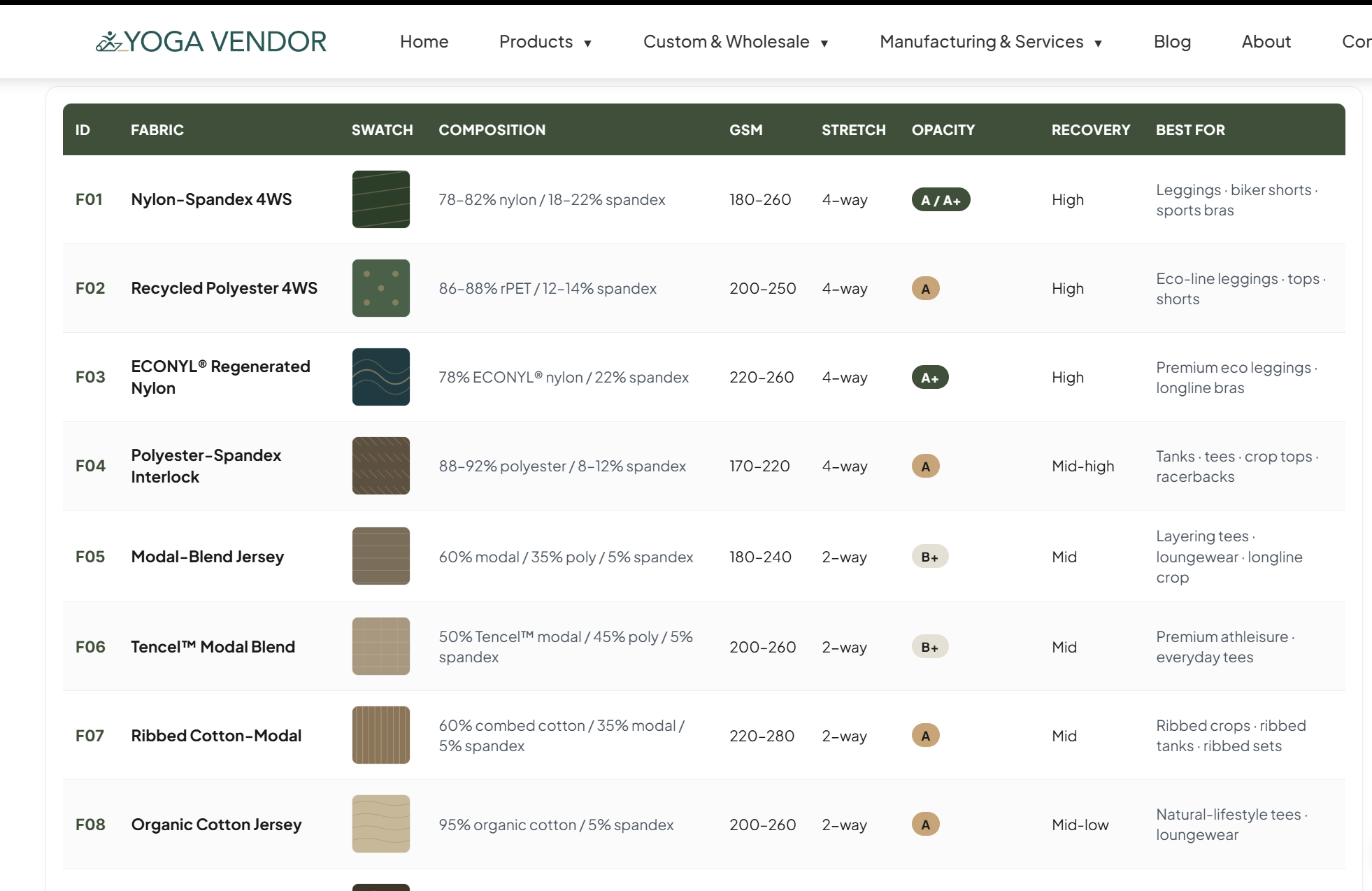
Bamboo blends (60–70% bamboo + 20–30% nylon + 5–10% spandex): Moisture-wicking, antibacterial, and soft against skin during long holds. Compression stays light-to-moderate — enough to stay put, not enough to restrict.
Nylon-spandex (75–85% nylon + 15–25% spandex): The workhorse for flow and Ashtanga. High elongation rate — above 150% stretch — with solid snap-back between poses.
One detail that gets overlooked: waistband construction . High-compression waistbands with stiff elastane structures create shear force during spinal flexion. That's what causes rolling and folding at the waistline in bridge pose or boat pose. Yoga-specific waistbands use a double-layer construction with lower-compression elastane. Everything stays flat without squeezing.
Where Light Compression Makes Sense in Yoga
There are three exceptions worth knowing.
Hot yoga (90+ minutes): Extended heat keeps muscles warm throughout class. That's where light compression becomes useful — it helps cut fatigue buildup. Research on high-elasticity composite knit fabrics shows muscle fatigue indexes drop an average of 15% with moderate compression support. For hot yoga, look for fabrics with a modulus toward the upper end of the yoga range — around 40–45 MPa — paired with strong moisture-wicking construction to handle the heat.
Prenatal yoga: Strong abdominal compression is off the table in the second and third trimesters. But light compression at the hips and lumbar region can reduce lower back strain in a meaningful way. Look for mid-weight bamboo or nylon-spandex fabrics (230–250 g/m²) in a high-waist panel design. The panel lifts without squeezing, and the elastic stays soft enough to accommodate a growing belly.
Beginners and recovery practitioners: A fabric patent from a yoga apparel manufacturer puts it well — fabric that "synchronizes with movement rhythm" and reduces force expenditure during stretching. For anyone managing mild knee discomfort or returning from injury, light compression in the thigh and glute zones adds body awareness. You feel and control your movement range better, without depending on joint-end pressure.
The bottom line for yoga leggings: go with a nylon-spandex or bamboo blend, 4-way stretch, mid-range elastic modulus. Save the graduated compression tights for your next long run. On the mat, soft and responsive beats firm and sculpted — every time.
Best Leggings for Running & HIIT: Where Compression Leggings Earn Their Price
The data is clear. Lab testing of graduated compression tights under real training conditions showed blood lactate levels dropped by 33% , quad blood flow increased by 18% , and elite runners shaved 10.6 seconds off their 5K times — the only change was their leggings.
That's not marketing copy. That's the kind of number that changes a purchasing decision.Many retailers also work with an experienced activewear wholesaler to source running-specific compression leggings that balance performance, durability, and price for different customer segments.
What's Happening to Your Muscles
Your muscles vibrate with every footstrike during a run. That vibration isn't just uncomfortable — it's energy leaving your body without doing useful work. Compression leggings push back with targeted, graduated pressure: tightest at the ankle, tapering upward. Your muscle tissue stays locked in place. Less movement. Less fuel burned on micro-movements that don't push you forward.
The effects build fast:
Explosive power up 5% , endurance up 9% — both tied to reduced muscle vibration and better oxygenation
Lactate clearance up 4.8% — that burning sensation in your quads during interval sprints clears faster between sets
Heart rate drops ~2.5% at the same output — your cardiovascular system works a bit less hard for the same effort
Inter-set recovery strength improves 2% — across multiple HIIT rounds, you hold form longer before technique breaks down
That last point matters more than it sounds. Technique breakdown under fatigue is the exact moment HIIT injuries happen — a sloppy box jump landing, a knee that tracks inward on the tenth burpee. Compression doesn't replace strength or skill. It keeps your muscles aligned and your joints supported long enough for good mechanics to hold.
Choosing the Right Compression Leggings for Running and HIIT
Not all compression leggings deliver these results. A few things genuinely matter:
Length — 3/4 vs. full-length:
- 3/4 (capri) length covers the knee joint and most of the calf. It's the best fit for indoor HIIT and runs under 10K, especially in warmer conditions above 20–25°C. You get better temperature control and easier movement.
- Full-length gives you continuous ankle-to-thigh graduated compression. Go full-length for half-marathon distance and beyond, cold weather training, or if you're dealing with calf tightness or minor venous fatigue.
Fabric construction — what to look for:
High-performance compression leggings use long-fiber nylon combined with high-tenacity elastic fiber in a circular knit structure. The circular knit creates consistent pressure distribution around the muscle group — flat-knit fabrics can't do the same. Look for fabric descriptions that mention "graduated compression," "circular knit construction," or medical-grade compression fabric .
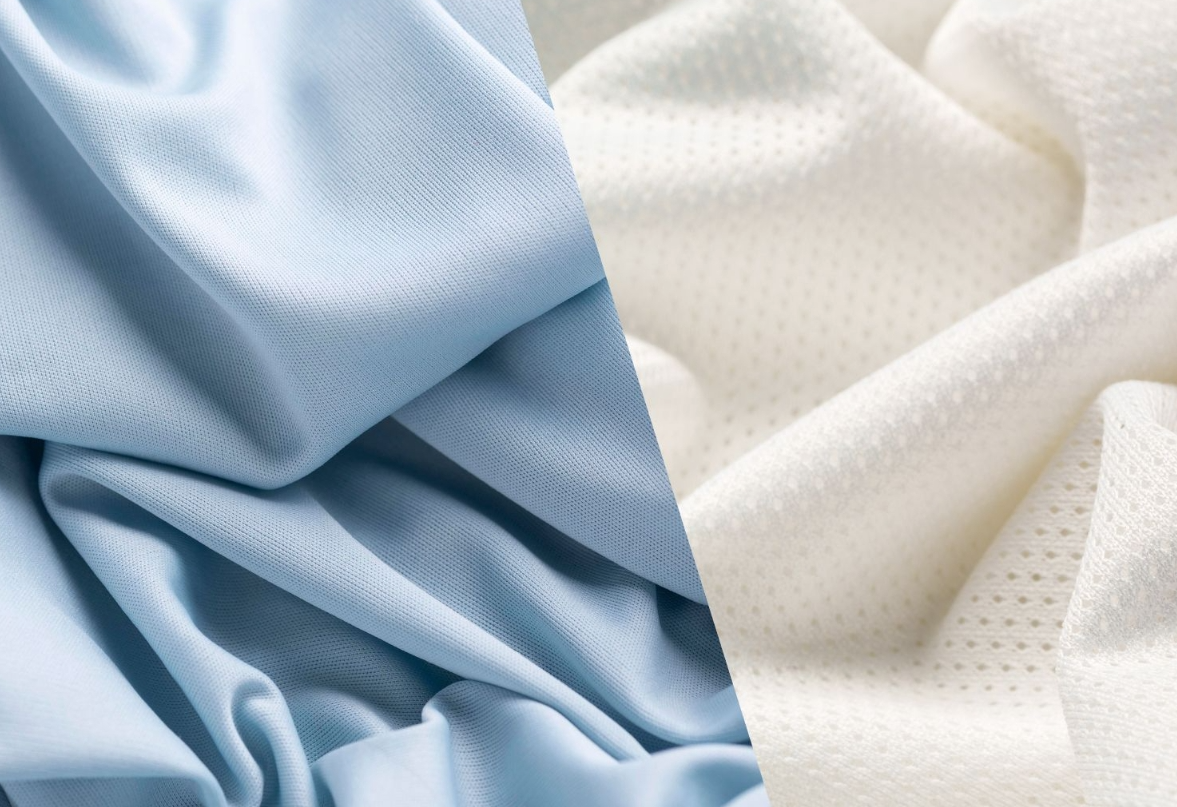
Moisture-wicking matters too. Above 30°C, a legging that traps sweat against your skin breaks the microclimate your body works to regulate. Quality fabric pulls moisture outward fast. You want surface-dry fabric within minutes of finishing — not a wet second skin.
Reflective detailing — easy to skip over until you're running at 6 AM. Check that reflective strips appear on the outer calf, outer thigh, and near the knee. Look at product photos, not just the written description.
One buying rule worth keeping: A product that claims compression but lists no mmHg value and no mention of graduated pressure is a support-feel legging — not a functional compression garment. The performance numbers above apply to true graduated compression tights only.
Getting the Most Out of Your Investment
Put them on before training, not mid-warmup. Check that seams align with your knee and ankle joints — misaligned compression panels lose their muscle-mapping benefit. After running or HIIT, keep them on for 30 to 120 minutes post-workout. That's the window where graduated compression does its recovery work: clearing lactate faster, reducing lower-limb swelling, giving you lighter legs the next morning.
For heavy training loads — marathon prep, daily HIIT, back-to-back workout days — that recovery window is where compression leggings earn back the price premium. The investment stops being about performance during the run. It starts being about showing up to the next session ready to go.
Best Leggings for Strength Training, Cycling & Pilates
Three activities. Three distinct compression needs. One common mistake covers all of them: buying a single pair and hoping it works everywhere.
It won't. Here's what does.
Strength Training: Compression That Works With the Bar
Heavy compound lifts — squats, deadlifts, leg press — demand something specific from your leggings. Not soft. Not buttery. You need firm, locked-in support at 15–25 mmHg . The waistband has to stay flat under pressure when you're three reps into a heavy set.
The fabric spec that delivers this: 70–80% nylon or polyester combined with 20–30% spandex , at a fabric weight of 220–260 g/m² . That weight matters for two reasons — compression recovery and squat-proofing. Lighter fabrics thin out under load. That's not a fit problem. That's a physics problem.
Look for a waistband with a minimum 7–10 cm rise , built with high elastane content. It holds its position through hip hinges without rolling. Flat seams or seamless inner thigh construction cut down friction during bar contact and deep hip drive.
The proprioception effect is real too. Higher compression sends more input to the mechanoreceptors at your skin and joints. That translates to sharper bar path awareness during squats and deadlifts. That "locked-in" feeling lifters describe isn't psychological. It's your nervous system getting better positional data.
A quick note on isolation work: it doesn't need maximum compression. Cable kickbacks, leg curls, machine work — standard performance tights with 10–15% spandex and a lighter 180–220 g/m² fabric do the job fine. Save the firm compression for compound days.
Cycling & Spin: Medium Compression, Full Commitment
Forty-five minutes on a spin bike at 75–80% max heart rate creates a different problem than lifting. Your hip flexors move non-stop. Venous return demand climbs. A waistband that digs into your abdomen makes every standing climb miserable.
The target compression range for cycling: 15–20 mmHg . That's enough to support venous return and reduce muscle oscillation. It's not so much that it squeezes your diaphragm mid-sprint. Riders who pick maximum-compression leggings over medium-support styles often report that uncomfortable "winded" feeling during long efforts. That's the waistband blocking belly breathing.
Fabric priorities shift here too. Stretch recovery after 500+ hip/knee flexion cycles matters more than how the legging feels in the store. Moisture-wicking synthetics — polyester or nylon blends — handle 45-minute sweat loads well. Cotton soaks through and stays wet. Skip it for spin.
For longer classes or sensitive riders: leggings with integrated chamois padding solve saddle pressure issues that no compression level can fix.
Pilates & Barre: Light Compression, Maximum Precision
Pilates is unforgiving of the wrong leggings. Your instructor cues "knee over second toe" in a lateral lunge. You need to see that alignment in the mirror. That means smooth, matte fabric with clean lines. Move into roll-downs, arabesque holds, or hip abduction work — any fabric that resists at end-range becomes a real problem.
Target compression here: low-to-medium, around 10–15 mmHg , built from a 70–75% nylon, 15–20% spandex construction. You get a softer feel and more flex than heavy lifting designs. There's enough "hug" to sharpen body awareness, but not enough to restrict turnout or spinal movement.
4-way stretch with a ≥120–130% stretch ratio in both directions is non-negotiable. Wide, stable waistbands still work best here — just less rigid than powerlifting styles. That keeps core recruitment patterns natural through the full session.
The bottom line across all three: match compression level to your movement demand. Not to how intense the workout feels.
Compression Leggings for Recovery & All-Day Wear: An Overlooked Use Case
Most people pack their compression leggings into a gym bag and forget about them once the workout ends. That's leaving most of the value on the table.
Compression does its best work outside the gym — in the 24 hours after training, not during it. DOMS peaks between 12–72 hours post-exercise. So putting compression on only after your legs start hurting is too late. The smarter move: put them on right after training and keep them on .
The numbers are modest but real:
- Runners see recovery parameters improve up to 6% faster within the first 48 hours with post-exercise compression wear
- A 2025 meta-analysis found compression cut muscle strength decline in the 1–24 hour window — and again after 72 hours
- Target wear time: 3–4 hours minimum after training, up to 12 hours after longer endurance efforts
Compression leggings also pull their weight as everyday wear. Long travel days, desk jobs, hours on your feet — light compression at 15–20 mmHg handles all of it. That pressure range boosts circulation and keeps lower-limb swelling down, without crossing into clinical-level compression.
The fit check is simple: firm and snug, never painful . You should feel even pressure across your legs and breathe with no effort. No tingling, no deep marks, no heat buildup at the waistband. Feels like squeezing rather than supporting? Drop down a compression level.
The practical rule: choose the lowest pressure that still feels supportive. The leggings do the job only if you keep them on.
How to Choose the Right Leggings: A Decision Framework Based on Your Workout Style
Every legging purchase comes down to two things: what you're doing in them, and how much compression you want on your body. Get those two right, and the rest takes care of itself.
Step 1: Match the Legging to Your Primary Workout
Start with the activity you do most — not the one you plan to do more of someday.
HIIT and high-impact cardio need high-waist, 4-way stretch construction with an internal waistband gripper. No gripper means you're pulling your waistband down between every burpee. Go for lightweight, moisture-wicking fabric and flat seams that hold up under repeated stretch.
Strength training needs a wide waistband — 7–10 cm minimum. It should wrap the iliac crest and stay put through hip hinges. Medium compression is the sweet spot here. The fabric should feel body-hugging but not tight. That level of compression gives you body awareness that sharpens your bar path without cutting off your range of motion.
Running calls for a close-fitting style that cuts down on chafe and muscle bounce. Medium compression works well. The fit should reduce muscle movement. It should never restrict your stride or make breathing harder.
Yoga, Pilates, and stretching are where too much compression gets in the way. Over-compressed leggings fight back in deep hip folds and floor transitions. Choose high-elasticity, low-to-no compression fabric with minimal seaming. You need fabric that moves with you, not against you.
Step 2: Factor In Your Compression Preference
Some people love the locked-in feeling. Others find it suffocating. Both preferences are valid — and both can be served well.
Like a firm fit? Go medium-to-high compression for HIIT, lifting, and running. The waistband should hug your abdomen at an even pressure, not dig in at one spot.
Prefer a barely-there feel? Stick with light-support styles for yoga, Pilates, and everyday wear. Check labels for "light support" or "low compression" — not just "sculpting."
The 3-Point Fit Check Before You Buy
Run through these before committing to any pair:
Stand and take a full breath — your belly should rise without any resistance. Tightness here means the waistband is too snug.
Do 10 bodyweight squats — the waistband shouldn't roll down or ride up toward your ribs. Look for zero fabric thinning at the seat.
Walk for 3–5 minutes — no bunching at the crotch, no deep crease lines forming at the hip.
Budget Decision: When the Premium Is Worth It
Three training sessions or fewer per week at low intensity? A mid-range or basic pair covers everything you need. No amount of compression marketing changes that.
Training five days a week with heavy lifts, long runs, or back-to-back HIIT? High-performance compression fabric earns its price tag. You get less fatigue, faster recovery, and construction that holds together through hundreds of hard reps.
The simplest rule: spend more when your training frequency and intensity call for it. Spend less when they don't.
FAQ: Compression vs Regular Leggings — Quick Answers
Still have questions? Good. Here are the ones that matter.
Are compression leggings worth the price?
For most active people — yes. You log serious mileage, stand for long shifts, or need to recover faster between sessions. Graduated compression tights earn their keep. Start with 8–15 mmHg for everyday use. That's the sweet spot between "feels like something" and "cutting off circulation."
Can you wear compression leggings every day?
Yes — as long as the fit is right. The 8–15 mmHg range handles work, travel, and long sitting periods without issue. Compression leggings aren't just gym gear. They work well on long flights and days spent mostly on your feet.
Do compression leggings reduce cellulite?
No clinical proof supports that claim. What compression does deliver: a smoother, more supported appearance. You also get a measurable drop in leg swelling and heaviness. That's real — but it's not the same as reducing cellulite.
Which should beginners choose?
Start light. Try 8–15 mmHg during walking or travel first. Get used to how it feels before moving to higher support levels. Higher compression takes some getting used to.
Do they feel too tight?
They feel snug by design — tightest at the ankle, then gradually looser toward the thigh. That pressure gradient is exactly how they work. Firm is normal. Painful is not. Size up if it crosses into painful.
The short version:
Situation | Better Choice |
|---|---|
Running, lifting, HIIT | Compression leggings |
Yoga, stretching, flow | Regular leggings |
Long travel or standing | Compression leggings |
Post-training recovery | Compression leggings |
Casual, low-intensity days | Regular leggings |
One practical note: compression works at the right fit . Size too large and you lose the graduated pressure. With it goes every benefit on this list.
For yoga practitioners, yogavendor.com 's regular leggings cover your flow needs with the flexibility and softness the mat demands. Travel days or heavy training weeks come up often? Keep a compression pair in rotation alongside them.
Conclusion
Here's the honest truth: there's no single "best" legging. There's the right legging for what you're doing .
For yoga and Pilates, freedom of movement matters more than compression. For running, HIIT, and tough recovery days, graduated compression tights earn their place. They reduce muscle fatigue, improve circulation, and help you show up stronger next session. For everything else? A quality pair of high waist compression leggings with solid moisture wicking technology will take you further than you'd think.
Stop buying leggings on impulse. Start buying with intention.
Browse YogaVendor's curated collection — each piece is chosen with your specific workout demands in mind, not just looks.
The best workout gear doesn't just look good on you. It works with you. Now go find yours.