The wrong hoodie fabric doesn't just hurt your margins. It triggers returns, kills repeat purchases, and erodes the brand trust you've spent months building.
Yet most activewear founders still pick between polyester and cotton based on gut feel or yoga apparel manufacturer defaults. No data. No insight into how that fabric holds up through a 90-minute hot yoga flow.
This guide changes that.
Here's what you'll get: a performance-first breakdown of polyester vs. cotton yoga hoodies built around:
Six real-wear metrics
Scenario-specific GSM recommendations
Fabric blend ratios you can hand straight to your yoga clothing manufacturer
Building a premium studio line? Scaling a DTC athleisure label? Either way, you'll walk away with a sourcing framework — not just an opinion.
Scenario-Based Selection Matrix: Hot Yoga, Restorative Practice, and Outdoor Activation
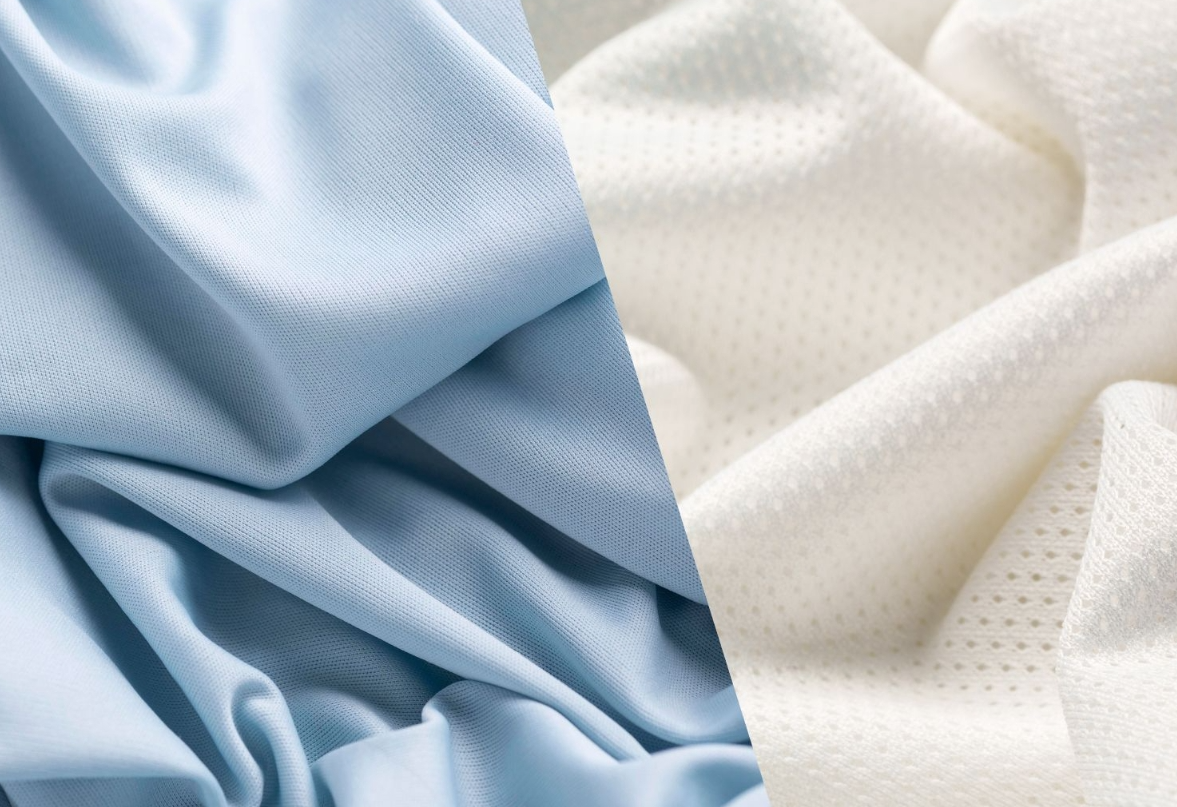
Three yoga contexts. Three fabric requirements that could not be more different. One wrong call and you're dealing with returns.
Here's the breakdown by scenario — with exact fiber ratios, GSM targets, and construction specs you can hand straight to your yoga hoddies supplier.
Scenario 1: Hot Yoga (Bikram / Hot Vinyasa)
Bikram-style studios run at 104°F (40°C) with 40% humidity . Hot vinyasa sits at 90–95°F with humidity climbing to 60%. At those conditions, cotton becomes your enemy fast.
Cotton holds 7–8% moisture by weight. Polyester holds less than 0.5%. That gap is what separates a hoodie that performs from one that gets returned.
Target spec:
- Fiber: 80–90% polyester / 10–20% spandex
- GSM: 180–220 g/m²
- Construction: French terry with 0.8–1.2mm loopback interior. Those micro-channels push sweat outward and speed up evaporation. Circular-knit jerseys with micro-mesh zones at the underarm and back yoke dry 20–30% faster than uniform jersey.
- Seams: Flatlock or bonded — no exceptions. Continuous vinyasa creates shoulder and side-seam chafe that kills reviews.
- Finish: Antimicrobial treatment (silver or biocide) is non-negotiable for 90-minute hot classes.
Avoid: 100% cotton, 60/40 cotton-poly blends, or anything over 260 g/m². Heavy fleece in a hot studio is a sauna suit, not activewear.
✅ Proven formula: 88% polyester / 12% spandex, 200 g/m² French terry, flatlock seams
Scenario 2: Restorative & Yin Yoga (68–72°F)
Restorative practice is a different world. Students hold poses for 5–20 minutes , lying face-up or face-down on bolsters. They generate almost no metabolic heat. Moisture management does not matter here. Comfort and warmth retention are everything.
This is where cotton earns its place — organic cotton brushed fleece, to be precise.
Brushed fleece at 300–320 g/m² raises thermal resistance by 10–20% compared to unbrushed fabric at the same weight. Soft hand feel matters too. Scratchy or slick synthetics create distractions during long holds — and that costs you reviews. The fabric also needs to be quiet. Restorative students lie against bolsters and blankets, and fabric rustle is genuinely disruptive.
Target spec:
- Fiber: 100% organic cotton (GOTS/USDA certified) or 60% cotton / 40% recycled polyester
- GSM: 280–340 g/m²
- Construction: Brushed fleece or heavy French terry. Use raglan sleeves to remove spine seam pressure in floor-based positions.
- Seam placement: No seams at the sacrum, shoulder blades, or spine. Those contact points press hard during floor poses.
Avoid: High-polyester slick fabrics — they feel cold on first contact. Also skip anything under 250 g/m² that forces students to pile on extra blankets.
✅ Proven formula: 100% organic cotton brushed fleece, 300–320 g/m², raglan construction
Scenario 3: Outdoor Activation & Brand Warm-Up Events
Outdoor activations bring a dual-exposure problem : intermittent sweat from dynamic warm-ups, plus wind chill between 50–75°F (10–24°C). Pure polyester alone won't cut it. Pure cotton alone won't either.
The answer is a balanced poly-cotton blend.
63% polyester / 37% cotton is the most stable performance fleece ratio for this use case. You get faster dry time and better colorfastness from the poly side. You get cotton hand-feel for comfort during rest moments. For cooler events or higher-output movement, shift to 80% polyester / 20% cotton — faster drying, crisper structure.
Target spec:
- Fiber: 63/37 or 80/20 poly-cotton
- GSM: 260–300 g/m². Below 250 g/m² and the fabric won't block wind. Above 320 g/m² and it gets too warm moving from outdoor to indoor.
- Construction: Interlock or double-knit with a poly face and cotton inner. The poly side handles durability and print registration. The cotton skin side keeps the wearer comfortable.
- Dry time: 65/35 poly-cotton blends dry 25–40% faster than 100% cotton at the same GSM.
- Colorfastness: Target ISO 105 grade ≥4 for perspiration and UV. Your logo is a brand asset — treat it like one.
Avoid: 100% cotton fleece at outdoor events where rain is possible. Saturated cotton is a brand experience problem. Also keep spandex content below 10% in outer layers. Higher spandex content degrades print registration and causes fabric growth under logo panels.
✅ Proven formula: 63% polyester / 37% cotton double-knit, 280–290 g/m², interlock construction
The Full Scenario Matrix
Scenario | Fiber Target | GSM Range | Construction | Top Priorities |
|---|---|---|---|---|
Hot Yoga (104°F / 40°C) | ≥80% polyester / 10–20% spandex | 180–220 g/m² | French terry, loopback interior, micro-mesh zones | Wicking, quick-dry, anti-chafe, odor control |
Restorative / Yin (68–72°F) | 100% organic cotton or 60/40 cotton-poly | 280–340 g/m² | Brushed fleece or heavy French terry, raglan sleeve | Warmth, softness, hypoallergenic, low seam pressure |
Outdoor Activation (50–75°F) | 63/37 or 80/20 poly-cotton | 260–300 g/m² | Interlock or double-knit, poly face / cotton back | Wind resistance, moderate quick-dry, print stability |
This matrix is not theoretical. These are yoga apparel supplier-ready parameters. Bring them to your fabric sourcing conversation as a starting brief — not a starting question.
Brand Positioning Decision Tree & Unit Cost Architecture

Fabric choice is a pricing decision before it's a product decision.
Your tier determines your FOB ceiling. Your FOB ceiling determines your material options. Your material options determine your performance thresholds — in that order. Brand founders who reverse this logic — picking fabric first, pricing second — end up leaving margin on the table or launching products they can't scale at a profit.
Run your hoodie concept through this decision tree. Get into the right cost architecture before you contact a single yoga apparel supplier.
Step 1: Identify Your Primary Purchase Driver
Q1: Is price the main reason your customer buys?
- YES → Entry-Level / Mass DTC Athleisure
- NO → Go to Q2
Q2: Is performance (stretch recovery, print durability, low pilling) more important than eco-story or luxury handfeel?
- YES → Mid-Tier / Performance Studio
- NO → Go to Q3
Q3: Is your customer paying $98+ for eco-credentials, tactile quality, and a shape-retention guarantee?
- YES → Premium / High-End Technical Lifestyle
- NO → Stop. Go back and revisit your positioning. A product that doesn't fit a defined tier has no defensible price point.
Step 2: Match Your Tier to a FOB Ceiling
Identify your tier first. Then your retail target sets your FOB ceiling — not the other way around.
Tier | Retail Target | FOB Ceiling | Gross Margin Target (DTC) |
|---|---|---|---|
Entry-Level | $38–55 | $6–9/pc | 60–68% |
Mid-Tier | $65–88 | $8–12/pc | 65–72% |
Premium | $98–145 | $10–16/pc | 70–78% |
Landed cost rule of thumb: FOB × 1.25–1.35 (covers freight, duty, and packaging). A $7 FOB lands at about $8.75. At a $45 retail price, that's ~80% gross margin pre-marketing, ~60–65% after.
Premium tiers carry higher COGS. They justify it through lower return rates (target <5–7%) and stronger repeat purchase signals. That math holds only if your quality specs deliver on what you promise.
Tier 1: Entry-Level / Mass DTC Athleisure
Brand archetype: High-volume TikTok or Amazon-native DTC. Price is the conversion lever.
Core fabric spec:
- 60/40 cotton-poly fleece , 280–320 g/m²
- 280–300 g/m² gives a "light" handfeel; go 300–320 g/m² if your market expects a heavier hoodie
Unit cost architecture (as % of FOB):
- Fabric & dyeing: 45–55%
- Cut & sew labor: 12–18%
- Trims (drawcord, eyelets, labels, polybag): 5–8%
- Factory overhead & margin: 15–20%
- QC & compliance: 3–5%
Performance floors — not ceilings:
- Shrinkage: ≤5% after 3–5 washes at 40°C
- Pilling: 3–4 on Martindale after 5,000 rubs
- Colorfastness: Grade 3–4 to washing
Cost adjustments to consider:
- FOB quote above $9? Drop GSM by 20–30 g/m², simplify pocket construction to a single-piece front panel, and switch from 2×2 rib to 1×1.
- Return rate from cotton hoodie shrinkage above 8–10%? Upgrade to pre-shrunk finishing or tighten your shrink spec to 3%. Add $0.20–0.35/pc in fabric cost — that's worth it to protect your reviews.
MOQ benchmark: 300–2,000 pcs per colorway (Bangladesh / China knit factories)
Tier 2: Mid-Tier / Performance Studio
Brand archetype: Boutique studio brands, performance-focused DTC, yoga-specific labels. Your customer is buying fit retention and sweat management — not just a logo.
Core fabric spec (two routes):
- Primary: 88% polyester / 12% elastane brushed-back knit, 220–260 g/m² — the go-to for moisture wicking hoodie fabric with stretch recovery
- Alternative: 80/20 poly-cotton with anti-pill finish, 240–280 g/m² — better handfeel for cool-down layers, and it still qualifies as a breathable activewear material
Unit cost architecture (as % of FOB):
- Fabric + functional finishes (anti-pill, moisture-wicking treatment): 50–60%
- Labor (more panels, athletic fit seaming): 15–20%
- Trims (heat-transfer labels, reflective prints, performance zips): 8–12%
- Factory overhead & margin: 15–20%
Performance requirements:
- Stretch recovery: ≥90–95% after 10% extension — this stops elbow and hood bagging after repeated washes
- Pilling: 4–5 after 7,000–10,000 rubs (Martindale)
- Shrinkage: ≤3% length and width after 3–5 washes
- Print durability: no visible cracking in screen prints after 20 wash cycles at 40°C; sublimation stays clean on an 88/12 polyester base
Decoration cost layer (add to base FOB):
- Front logo screen print: +$0.20–0.40/pc
- Large back graphic or multiple placements: +$0.50–0.80/pc
- All-over sublimation: +$1.00–1.50/pc (requires white polyester base fabric)
Cost adjustments to consider:
- Repeat purchase is your primary retention driver? Lock shrinkage spec at ≤2–3% and pilling at 4.5+. Budget +$0.30–0.60/pc for the fabric upgrade. Add double-needle coverstitch at stress seams for another +$0.10–0.20/pc.
- Selling through studios or boutiques with custom yoga hoddies logos? Split your base body FOB ($7.50–9.50) from a separate decoration line item ($0.30–1.00). Custom yoga apparel orders won't distort your cost model that way.
MOQ benchmark: 500–1,500 pcs per colorway
Tier 3: Premium / High-End Technical Lifestyle
Brand archetype: "All-day technical hoodie." Your customer is paying for organic certification, zero-shrink performance, and a materials story worth sharing.
Core fabric spec (two routes):
- Route A: GOTS-certified organic cotton fleece, 100% or 70/30 blend, 300–380 g/m² — this is where the synthetic vs natural fiber hoodie debate gets resolved at the premium end
- Route B: rPET-spandex (86–90% recycled polyester / 10–14% elastane) with a proprietary soft-hand finish — delivers anti-odor hoodie fabric performance with a real sustainability story behind it
Certification cost reality check:
- GOTS organic cotton yarn: +15–25% vs. standard cotton
- GRS-certified recycled polyester: +10–20% vs. virgin polyester
- Factory certification overhead (spread across units): +$0.15–0.40/pc
- Full certified FOB range: $12–16/pc typical; up to ~$18 for limited capsule runs
Unit cost architecture (as % of FOB):
- Fabric & special finishes: 55–65%
- Labor (complex patterns, taped seams, internal pockets): 15–20%
- Trims & branding (matte eyelets, silicone logos, custom yoga hoddies' pulls, woven labels): 8–12%
- Certification & testing (GOTS, GRS, OEKO-TEX, wash tests): 3–6%
- Factory margin: 10–15%
Quality specs — these are guarantees, not targets:
- Shrinkage: ≤1–2% after 5–10 washes (market this as a "no-shrink" guarantee)
- Handfeel: enzyme + silicone finish on cotton; peached hand on rPET
- Pilling: 4.5–5 after 10,000 rubs
- Colorfastness: Grade 4–5 to washing, perspiration, and light
Cost adjustments to consider:
- Eco-story is your primary price justification? Lock in at least one Tier-1 certification (GOTS or GRS) plus a transparent materials page on your PDP. Budget 2–4% of retail for content that backs the story — on a $120 hoodie, that's $2.40–4.80 per unit.
- FOB quote above $16? Check for over-engineering first. Drop from 360 to 330 g/m², cut seam count, or remove a secondary zip pocket. Any one of these moves can bring you back into range without touching the customer-facing quality story.
Full Tier Comparison: Decision Matrix
Tier | GSM | Fabric Baseline | FOB Target | Retail Target | Shrinkage Spec | MOQ Range |
|---|---|---|---|---|---|---|
Entry-Level / Mass DTC | 280–320 g/m² | 60/40 cotton-poly fleece | $6–9/pc | $38–55 | ≤5% | 300–2,000 pcs |
Mid-Tier / Performance Studio | 220–280 g/m² | 88/12 poly-elastane or 80/20 poly-cotton | $8–12/pc | $65–88 | ≤3% | 500–1,500 pcs |
Premium / Technical Lifestyle | 300–380 g/m² | GOTS organic cotton or rPET-spandex | $10–16/pc | $98–145 | ≤1–2% | 200–800 pcs |
One column tells you more than most yoga apparel supplier conversations will. Your gross margin target and your shrinkage spec together set the minimum FOB you can accept — and the maximum complexity you can build into the garment. Lock those two numbers before you open a sampling conversation.
OEM Sourcing Blueprint: Precision Blend Ratios, GSM, and Construction Specs
Walk into a yoga apparel supplier conversation without exact numbers and things fall apart fast. Vague briefs produce vague samples. Vague samples produce expensive revision rounds, delayed launches, and missed seasonal windows.
Below is a factory-ready spec framework built around three distinct fabric formulas. Each one targets a specific performance zone in your yoga hoodie. Each one includes ready-to-paste tech pack language your factory can use right away.
Formula 1: High-Stretch Performance (Panels & Gussets)
High-motion zones — underarm gussets, raglan sleeves, hood side panels — need a different spec from your main body fabric. The fiber ratio here is fixed. Don't negotiate it.
Target blend: 90–92% polyester / 8–10% elastane
For ultra-compression areas like cuffs and waistbands, push elastane to 15–25%. Keep that ratio to small trim areas only. Use it across full body panels and you'll get fabric growth under logo placements. That kills your print registration.
Construction:
- Interlock knit: 200–260 g/m² for tops; 260–320 g/m² for leggings and track pants. Denier: 75D–100D polyester / 40D–70D elastane. Elongation target: >120%; recovery: >90% after 30 minutes rest.
- Brushed-back fleece: 260–320 g/m² for performance hoodies. Blend shifts to 92–94% polyester / 6–8% elastane. Finish with anti-pill treatment and moisture-wicking. Antimicrobial is optional but worth adding for anti-odor hoodie fabric positioning.
Seam spec: Flatlock or 4-needle 6-thread overlock at all high-stress seams. Seam elongation target: >120% with no thread popping. Add reinforced bartacks at gusset ends and all pocket openings.
Ready-to-paste tech pack language:
"Fabric A: 92% polyester / 8% elastane, interlock, 240 ±3% GSM, 4-way stretch ≥130% warp/weft, recovery ≥90% after 5 cycles, pilling ≥4 (Martindale 10,000 rubs). Flatlock stitching, 20–30 tex thread, needle size 75–80 SES."
Formula 2: Balanced Comfort-Dry (Core Body Fabric)
The 63/37 poly-cotton ratio is the most versatile blend in activewear. It covers the main body panels, hood shell, front and back yokes, pocket bags, and kangaroo pocket lining. These are the zones that define how the garment feels in your customer's hands.
Target blend: 63% polyester / 37% combed cotton
Your mill will also recognize 65/35 PC or 60/40 PC fleece as standard alternatives. Either works if a mill pushes back on the exact 63/37 ratio — but lock the agreed spec in writing.
GSM targets:
- 260–280 g/m²: midweight, 3-season hoodies and joggers
- 280–300 g/m²: heavier premium feel, better drape, reduced fabric show-through
This blend solves the polyester hoodie vs cotton hoodie problem in one formula. The polyester fraction keeps dry time fast and static under control. The cotton fraction removes the "plastic" handfeel complaint that drives negative reviews on pure-synthetic activewear. Keep polyester content below 70% for markets in cold, dry climates. Go above that threshold and static cling complaints follow.
Yarn spec: Cotton at 24s/1 or 20s/1 combed ring-spun. Polyester filament at 75D/72F to 150D/144F for a smooth face with strong pill resistance.
Ready-to-paste tech pack language:
"Fabric B: 63% polyester / 37% combed cotton, brushed fleece, 280 ±3% GSM, cotton yarn 24s/1 ring-spun, polyester 150D/144F, shrinkage ≤3% (AATCC 135), colorfastness ≥4 (ISO 105-B02), pilling ≥3.5 (Martindale 10,000 rubs)."
Formula 3: Premium Natural-Feel (Heavy Cotton Athleisure)
After-yoga pullovers, heavyweight crewnecks, breathable activewear material at the premium end — this is the cotton-forward formula for those products.
Target fiber: 100% ring-spun or combed cotton, sanforized / pre-shrunk. Use long-staple cotton (28–32 mm staple length) where budget allows. That's the single biggest factor behind the "premium" handfeel your $98+ customer is paying for.
GSM range:
- 320–350 g/m²: premium hoodie weight, versatile across seasons
- 350–380 g/m²: luxury heavy hoodie, winter-focused, strong drape
Cotton hoodie shrinkage is the main quality risk with this formula. Even sanforized cotton shrinks 3–5% in length and 2–4% in width after repeated hot washes. Specify dimensional change ≤3% length/width after 3 cycles (AATCC 135). Also mandate the correct care label: "Wash cold, tumble dry low, reshape while damp." That label alone cuts customer-perceived size loss complaints — and it costs you nothing in fabric.
Screen print performance is this formula's hidden advantage. High GSM ring-spun cotton gives better ink laydown and richer colors than polyester. Specify reactive dyeing for the base fabric. Flag discharge-print compatibility if your decoration vendor needs it.
Ready-to-paste tech pack language:
"Fabric C: 100% combed ring-spun cotton, French terry, 340 ±3% GSM, yarn count 20s/1, sanforization pre-shrunk, dimensional change ≤3% length/width after 3 cycles (AATCC 135), colorfastness to washing ≥4 (ISO 105-C06), seam slippage ≤4 mm (ASTM D1683)."
Panel Mapping: Where Each Formula Goes
Don't use one fabric formula across your entire garment. Panel-specific sourcing is what separates a $9 FOB hoodie from one that performs in the real world.
Panel Zone | Formula | GSM Target |
|---|---|---|
Main body (front, back, hood shell) | Balanced Comfort-Dry (63/37 PC) | 260–300 g/m² |
Underarm gusset, sleeve underside, side panels | High-Stretch Performance (92/8 poly-elastane) | 220–260 g/m² |
Hood lining, pocket bags | 60/40 PC jersey or same as body | 200–240 g/m² |
Rib cuffs, hem, collar | 95% cotton or 95% polyester / 5% elastane | 260–320 g/m² |
Drawcords: braided or tubular, 100% cotton or poly-cotton, diameter 5–8 mm. Colorfastness ≥ grade 4. Thread throughout: 100% polyester ticket 40–60. Minimum seam strength ≥200 N on tensile test for all main body seams.
Non-Negotiable QC Tolerances
Before bulk ships, your QC team pulls swatches from 10% of rolls — not just the pre-production sample — and checks these numbers.
Fabric metrics:
- GSM tolerance: ±3% of nominal (280 g/m² target = 272–288 acceptable range)
- Width tolerance: ±2 cm per roll
- Blend ratio tolerance: ±2% per fiber by third-party lab test
Performance floors:
- Pilling (Martindale, 10,000 rubs): ≥3.5 for fleece and blends; ≥4 for interlock
- Abrasion resistance: ≥15,000 rubs for tops; ≥20,000 for bottoms
- Shrinkage: ≤3% length and width after 3 home-laundry cycles across all fabric types
- Spirality after wash: ≤3° for all knit constructions
- Colorfastness to washing (ISO 105-C06): grade ≥4
- Colorfastness to light (ISO 105-B02): grade ≥4
- Shade variation vs. approved lab dip: ΔE ≤1.0–1.5
Build these into your purchase order as rework obligations — not polite requests. A bulk lot that misses your shrinkage or pilling spec requires contractual recourse. A conversation won't fix it.
The 5-Step Sourcing Flow
Send your tech pack with all three fabric formulas — exact GSM ranges, yarn counts, and test standards included.
Request 2–3 mill options per formula at different price tiers. Ask for lab dips and knit-downs at your specified GSM and yarn counts at the same time.
Approve one final fabric per formula. Lock specs and tolerances into the purchase contract before sampling starts.
Approve a pre-production sample made in bulk-approved fabric. Cross-check GSM, shrinkage result, and handfeel against your approved standard — not against memory.
Bulk QC: Cut swatches from 10% of rolls. Re-measure GSM. Run a wash cycle to confirm shrinkage and pilling stay within contracted tolerance.
The difference between a 4.8-star product and one that generates a refund pattern your customer service team can't explain often comes down to this process. Your fabric specs are not a starting point for negotiation. They are the minimum acceptable outcome.
Industry Benchmarks: Fabric Engineering Strategies from Leading Activewear Brands
Three brands. Three different fabric philosophies. All of them winning in their own lanes.
Lululemon, Alo Yoga, and Gymshark didn't land on their current fabric strategies by accident. Each choice reflects a clear trade-off between performance, handfeel, margin, and the target customer. Breaking down those decisions gives you a real benchmark — not inspiration, but actual data points to stress-test your own sourcing brief.
Lululemon: Technical Knit as Brand Architecture
Lululemon's product system runs on polyester-spandex technical knits . Four-way stretch. Anti-pill surface treatment. Lightweight thermal regulation that takes a garment from studio to street without looking like gym gear.
The core engineering goal is zero performance drop over time . High-flex zones — elbows, knees, seat panels — hold their shape after 50 wash cycles. Anti-pill finishing protects appearance at a $118–148 retail price point , where customers expect lasting quality. That level of fabric QC investment wouldn't make financial sense at a lower price tier.
One operational note worth knowing: advanced digital garment simulation — the kind that reaches up to 95% accuracy in replicating technical activewear mechanics — can cut design-to-shelf timelines by as much as 60% . That speed advantage adds up fast at scale.
Alo Yoga: Cotton-Rich Positioning as Luxury Signal
Alo Yoga runs the opposite playbook. Their hoodie and sweats category leans cotton-forward : French terry and brushed fleece blends in the 70/30 or 60/40 cotton-poly range. Matte finishes and soft brushed interiors give these pieces an elevated loungewear feel — not performance gear.
GSM benchmarks are consistent here: 260–320 g/m² for midweight studio hoodies, 320+ g/m² for premium lounge fleece. Heavier weight sends a stronger "luxury casual" signal. That's what drives influencer adoption in this segment.
The quality risk is the same one every cotton-rich brand faces: shrinkage and post-wash fit complaints . Alo's standard fix is pre-wash finishing plus clear care labeling. It doesn't remove shrink risk — it manages the customer experience around it.
Gymshark: Hybrid Fleece Built for Volume and Durability
Gymshark operates in a different cost structure. Their hoodies and training crossover pieces run 80/20 or 65/35 poly-cotton hybrid fleece , in the 260–320 g/m² midweight band. The engineering focus is durability: reinforced seams at stress zones, colorfastness through reactive dye selection, and wash-cycle shape retention built for an entry-to-mid price bracket.
Market feedback on this formula is steady. Shape retention after repeated washes gets consistent praise. Odor retention on lower-cost blends is a recurring complaint — antimicrobial finishing fixes that, but it adds to unit cost.
There's a manufacturing angle worth flagging too. Gymshark's positioning pushes toward high-volume, low-defect production , with tight tolerances on shrinkage, pilling, and seam failure. Defect-rate targets below 2% are the industry standard for programs built around repeat purchase reliability at this scale.
What These Three Strategies Tell You
Brand | Core Fabric | GSM Band | Engineering Priority | Price Tier |
|---|---|---|---|---|
Lululemon | Polyester-spandex technical knit | 180–260 g/m² | 4-way stretch, anti-pill, shape retention | $118–148 |
Alo Yoga | 60/40–70/30 cotton-poly fleece | 260–380 g/m² | Soft handfeel, matte finish, lounge positioning | $88–138 |
Gymshark | 65/35–80/20 poly-cotton hybrid | 260–320 g/m² | Wash durability, seam strength, volume efficiency | $45–75 |
More polyester means better recovery, lower shrink risk, and stronger wash durability. More cotton gives you softer handfeel, lifestyle appeal, and a "natural premium" feel that supports a higher price — as long as you build the shrink risk out of the product before it reaches your customer.
Your blend ratio isn't just a fabric call. It sets your defect rate, your return rate, and your repeat purchase ceiling. These three brands already proved the math works across all three lanes. Pick the lane that fits your positioning — then spec it with the same level of precision they use.
Pre-Launch & Sourcing FAQ: Shrinkage, Pilling, Care Compliance, and Return Drivers
Fabric complaints don't start with customers. They start in your sourcing brief — or the gap where a sourcing brief should have been.
These four questions drive the most returns, the worst reviews, and the most expensive post-launch fixes. Answer them before you confirm bulk.
Q1: How Do I Prevent Cotton Hoodie Shrinkage Complaints?
Shrinkage is not a cotton problem. It's a spec problem.
Most brands skip shrinkage controls in their mill requirements and their patterns. That's where the issue begins. Here's how to fix both.
At the mill level:
- Specify sanforized or compacted knit fabric with residual shrinkage ≤3% length and width after washing (AATCC 135 or 150). Most mills default to ≤5%. Push for ≤3% on any mid-tier or premium line — it's a negotiable spec, not a fixed limit.
- Cap fabric weight at ≤320–340 g/m² for cotton-heavy blends (80/20 cotton-poly) targeting machine-wash consumers. Above that weight, you're in "lay flat dry" territory — fine for a heritage line, not for DTC basics.
- Require pre-relaxation : fabric steamed and rested for at least 24 hours before cutting. Skipping this step is one of the most common hidden causes of bulk shrinkage variance.
At the pattern level:
- Run AATCC 150 tests at 3 and 5 wash cycles on every proto and pre-production sample. Your bulk fabric shows 2% length / 3% width shrinkage? Add those exact percentages to your patterns — body length, sleeve length, rib heights.
- Lock cutting in a single grain direction. Torque-prone structures at cuffs and hems — cheap single-jersey rib in particular — are a consistent failure point.
On your care label:
- "Machine wash cold, gentle cycle, inside out. Tumble dry low, remove right away." That instruction set, backed by your test data, cuts size-loss complaints by a clear margin.
- For higher GSM or cotton-heavy pieces: "Reshape and lay flat to dry." Add a QR code linking to fit retention guidance. The label is your first line of customer education — use it.
Q2: Why Does My Polyester Hoodie Smell After Two Wears — and How Do I Fix It Before Launch?
Polyester is oleophilic. It pulls skin oils and sebum into the fiber structure and holds them there. Normal home laundry doesn't flush those oils out. Odor-causing bacteria find the residue and build a colony. That's the cycle behind every "smells after two wears" review on a moisture wicking hoodie fabric that performs as advertised on paper.
Brushed-back fleece makes this worse. The interior loft traps sweat, limits evaporation, and creates the warm, moist microclimate bacteria need.
Specify anti-odor finish at the mill:
- Silver ion finishes (silver chloride technologies) tested to ISO 20743 — target ≥99% bacterial reduction vs. control.
- Polygiene-type treatments or quaternary ammonium finishes, targeting ≥90–99% reduction of S. aureus and K. pneumoniae after 18–24 hours of contact.
- Require third-party test reports. "We use an anti-odor finish" is not a spec. ISO 20743 results are.
Control cost without cutting performance:
You don't need full-garment treatment. Target anti-odor finish to high-sweat zones only:
Zone | Anti-Odor Treatment |
|---|---|
Underarm gussets | ✅ Required |
Back yoke | ✅ Required |
Side panels | ✅ Required |
Hood lining (neckline) | ✅ Required |
Front body / sleeves | Optional (premium tier only) |
Treating 30–40% of garment surface area cuts chemical cost by a similar percentage — and still delivers the odor control performance your customer notices.
Three-tier line structure:
- Base: Moisture-wicking only, no anti-odor finish
- Mid: Zoned anti-odor at underarm and back panels
- Premium: Full-garment treatment + merino-blend inserts at high-contact zones
Care label addition: "Wash right after heavy sweat. Avoid fabric softener." Softener damages wicking finish and speeds up odor buildup — two problems you don't want showing up in your reviews.
Q3: What GSM and Construction Specs Keep Pilling Off My Yoga Hoodies?
Pilling isn't random. It's predictable — and preventable with the right spec before bulk.
GSM sweet spot for yoga activewear:
- 240–280 g/m² for double-knit, interlock, or light fleece
- Below 220 g/m²: surface pills faster under abrasion from yoga mats and bag straps
- Above 300–320 g/m²: higher loop height from brushing increases pill risk on visible face surfaces
Yarn and knit specs that reduce pilling:
- Use ring-spun or combed cotton — never open-end — combined with polyester filament in the face yarn. The filament adds abrasion resistance that cotton alone can't deliver.
- Require medium-to-high yarn twist in face yarns (≥1.2 turns per cm). Low-twist yarn lets fibers migrate to the surface under friction. That's where pills form.
- Specify compact spinning or singeing on the face side to remove protruding fibers before the garment ships.
Brushing placement matters:
- Heavy brushing belongs on the inner face only — loopback fleece interior, brushed backside.
- Keep the outer face clean-finished : singed and enzyme-washed. An unbrushed outer face resists pilling far better than a brushed one.
Testing floors — enforce these before bulk confirmation:
- ISO 12945-2 (Martindale): Grade 4+ after 2,000–5,000 rubs for yoga and athleisure tops
- Martindale abrasion: 15,000–25,000 cycles for face durability against mat contact
Fabrics that don't hit these numbers at the pre-production stage won't hit them in the field either.
Q4: Screen Print or Sublimation — Which Holds Up on a Yoga Hoodie?
The wrong print method on the wrong fabric is a return waiting to happen. Matching decoration to activewear fabric durability isn't complicated — but it is specific.
Use screen print when:
- Your fabric is ≥60% cotton
- Water-based inks give softer handfeel and better breathability; plastisol gives higher opacity on dark grounds
- MOQ is ≥200–300 pieces per design (screen costs are fixed; they spread out at volume)
- Avoid large solid blocks across high-flex zones — elbows, shoulder seams, full-chest fills. These crack under repeated stretch and tumble drying.
- Specify stretch-modified inks anywhere the print crosses a seam or sleeve fold.
- Require AATCC 61 / ISO 105-C06 wash testing at 10+ cycles before signing off on any DTC performance claim.
Use sublimation or silicone heat-transfer when:
- Your fabric is ≥80% polyester — sublimation works on light-colored poly-dominant fabric only
- You need allover graphics , cut-and-sew panel prints, or zero-cracking performance under stretch
- Your fabric is dark or non-polyester: go with silicone heat-transfer — high elasticity, strong wash durability, holds integrity on poly-spandex and nylon blends without the cracking risk of PVC transfers
DTC positioning by fabric type:
Fabric Base | Recommended Method | PDP Messaging |
|---|---|---|
≥60% cotton lifestyle hoodie | Water-based or soft-hand plastisol screen | "Soft-hand print, wash inside out" |
≥80% polyester performance hoodie | Full sublimation or silicone heat-transfer | "Sublimated graphics — no cracking, stretch-compatible, wash-fast" |
That last column isn't just customer communication. It's a return-prevention tool. Customers who know what they bought don't file "print peeled" complaints after machine-washing on hot. Set the expectation on the product page, and you cut the support ticket before it exists.
Conclusion
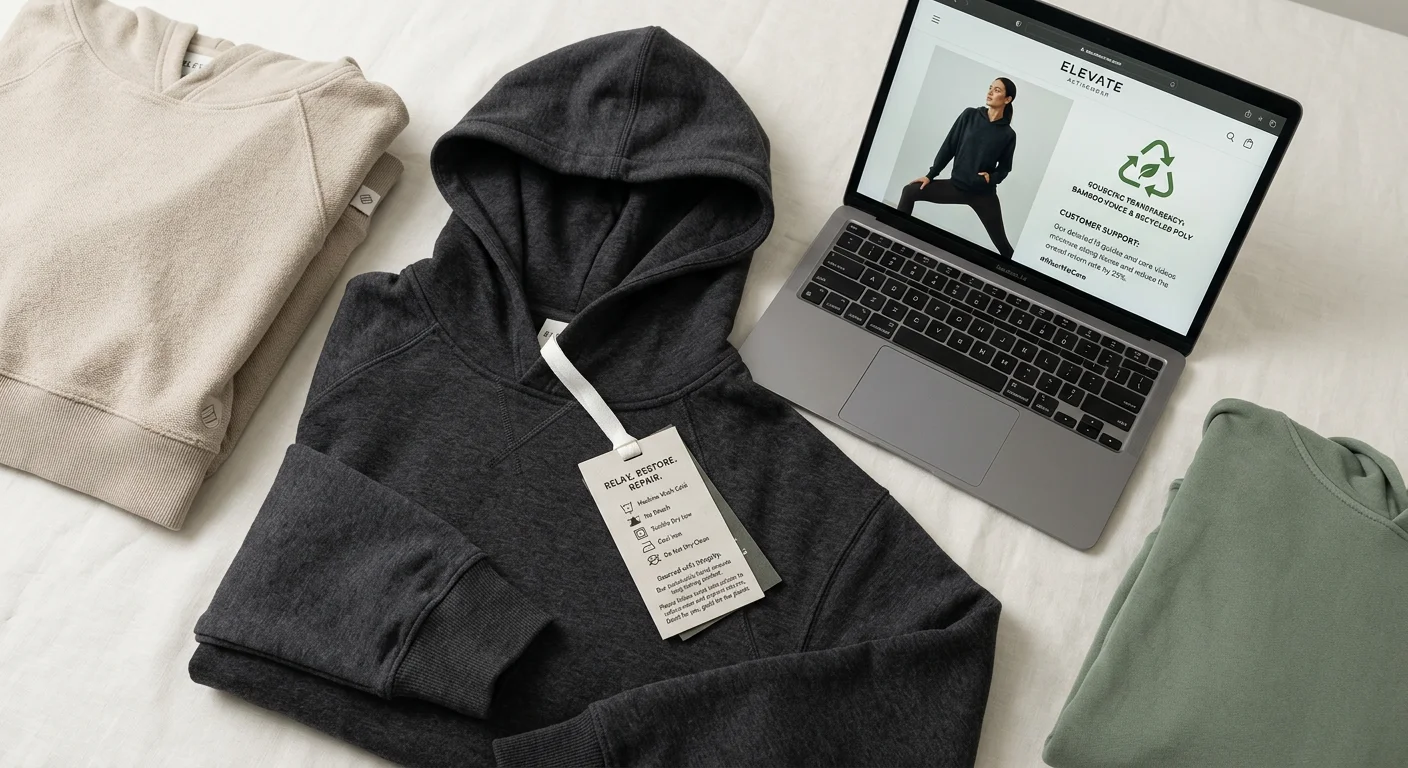
Fabric selection isn't a minor sourcing detail. It's a brand decision — one that shows up in your customer reviews, your return rate, and your repeat purchase curve.
The data is clear. Polyester-dominant blends (80/20 poly-spandex, 63/37 poly-cotton) lead on moisture-wicking performance and durability for hot yoga and high-intensity formats. Natural cotton holds its place in restorative and athleisure lines — but the GSM, construction, and blend ratios need to be chosen with purpose. Don't fall back on habit.
What separates Lululemon-tier brands from forgotten Shopify stores isn't marketing budget. It's a decision made three months earlier. A supplier conversation about fabric weight and fiber composition — that's where it starts.
You now have the decision tree, the blend specs, and the benchmark data.
The next move is yours. Take these parameters straight to your OEM yoga apparel supplier. Request lab samples at your target GSM range. Run real wear-testing to validate the final call — before your customers do it for you.