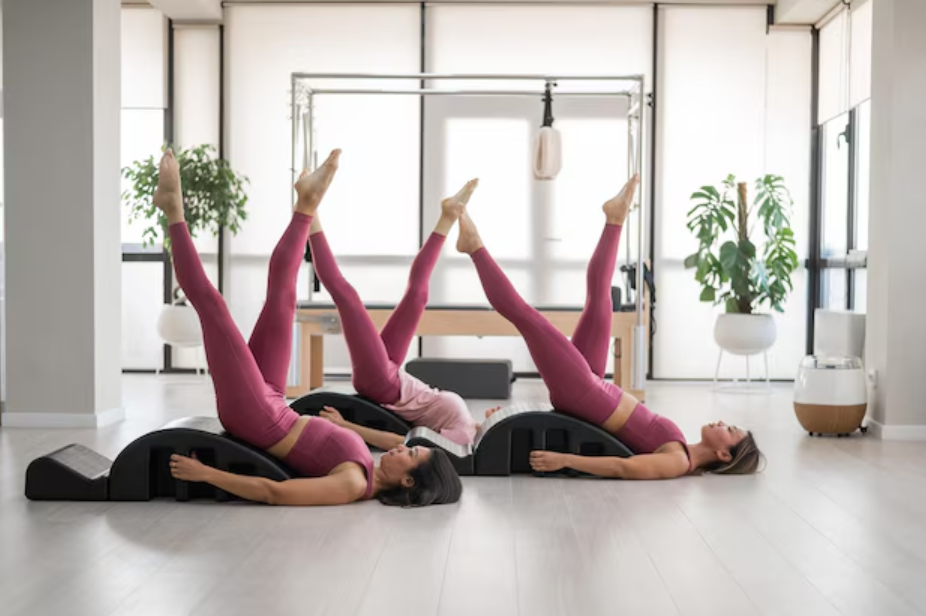
Choosing between yoga and barre is like standing in front of your closet for 20 minutes and still not knowing what to wear. Both are good . Both work. But one is right for where you are right now — and the other isn't.
Maybe you're chasing a longer, leaner look. Maybe you want to touch your toes without wincing. Or maybe you just need a workout that doesn't wreck your joints but still does something .
Here's what most people miss: yoga and barre are more different than they look. Those differences matter — a lot — especially when you're matching a workout to a real goal. For brands developing custom yoga apparel, understanding how each discipline moves is just as important as choosing the right fabrics or silhouettes.This breakdown covers the muscles each one targets, plus the real talk on yoga vs. barre for toning and weight loss . By the end, you'll have everything you need to pick the right one with confidence.
Yoga vs. Barre: Head-to-Head Differences Breakdown
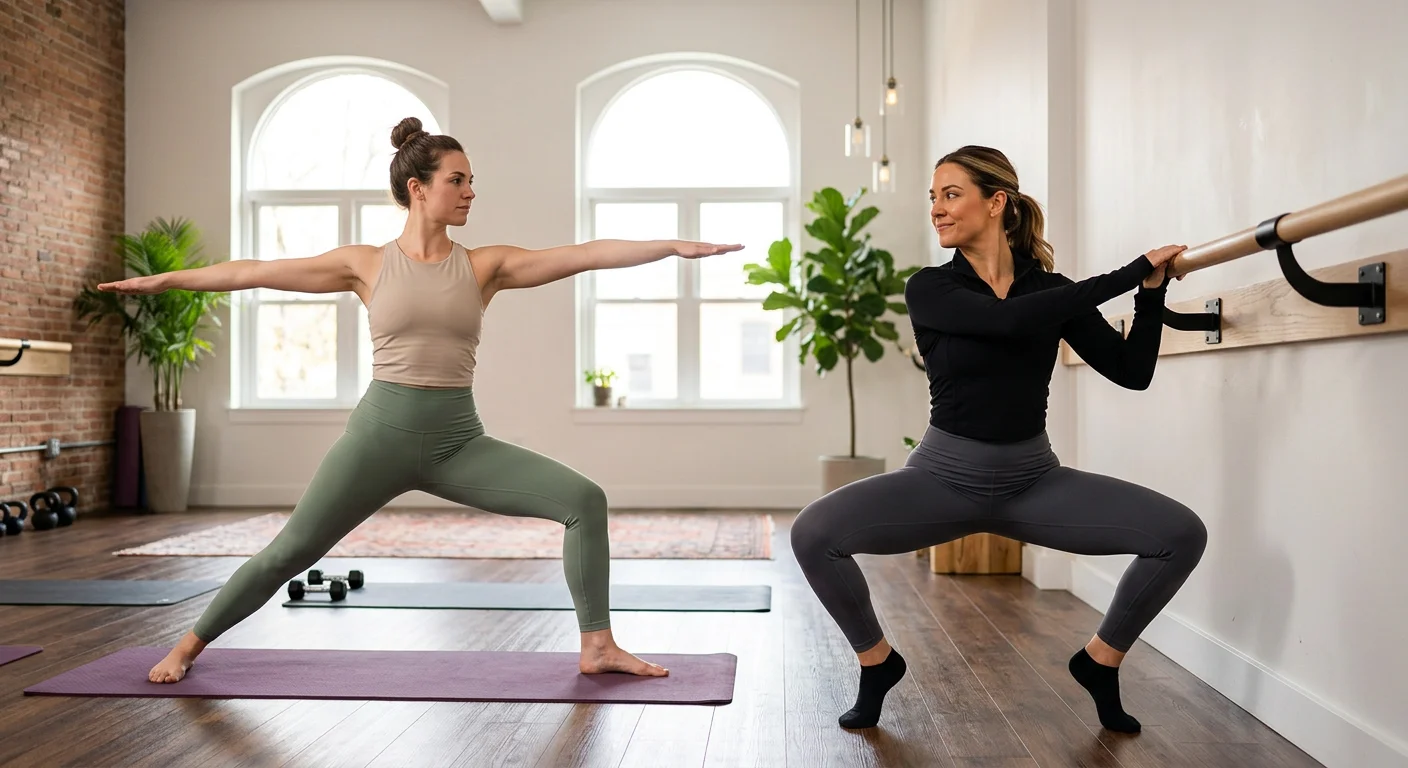
Same leggings. Same studio building. Different experience the moment you step inside.An experienced activewear supplier will often design separate collections for yoga and barre because each workout places different demands on fit, stretch, and garment stability.
That's the thing about yoga and barre — from the outside, they look like cousins. Spend 60 minutes in each class, though, and you'll feel just how far apart they are. Here's the real breakdown.
How Each Class Moves
Yoga is built on flow and hold. You move through sequences — warrior poses, downward dog, sun salutations — staying in each position for several breaths before moving on. The whole body works together. The pace ranges from slow and meditative (yin, hatha) to steady and rhythmic (vinyasa). The room stays quiet enough to hear your own exhale.
Barre is a whole different energy. Think: small, relentless pulses in a deep squat position. Music is pumping . Your thighs are screaming. The work is isolated — glutes, inner thighs, core, arms — each muscle group pushed to exhaustion through high-rep, low-range movements. There's a barre (ballet-style handrail) for support, but don't let that fool you. The burn is real.
Intensity, Joints, and Who Each Workout Is For
Both are low-impact — no jumping, no joint pounding. But they stress your body in different ways.
Yoga sits around RPE 3–7/10, depending on style. Gentle hatha? Restorative and easy to access. Power yoga? You'll feel it in your shoulders and core for days.
Barre runs RPE 6–8/10. Joint impact stays low, but local muscle fatigue hits hard — especially in the quads and glutes during those sustained pulse sequences.
Runners tend to love barre for this reason. It targets the hip stabilizers, calves, and hamstrings that running leaves behind.
The Numbers Side by Side
Yoga | Barre | |
|---|---|---|
Primary Goal | Flexibility, functional strength, stress relief | Muscle endurance, toning, core stability |
Movement Style | Flow sequences + static holds | Small pulses + isometric holds |
Calories (60 min) | ~150–400 kcal | ~300–500 kcal |
Equipment | Mat, blocks, strap | Barre, light dumbbells, resistance band |
Flexibility Impact | High | Moderate |
Mental Vibe | Inward, meditative | High-energy, music-driven |
The Mental Game Is Where They Split
Most comparison articles skip this part. That's a mistake.
Yoga is a mind-body practice at its core. Breathwork, guided relaxation, moments of stillness — all of it is built into the structure. Studies link regular yoga to reduced stress, better sleep, and lower anxiety. You're not just training your body. You're training your nervous system too.
Barre delivers a different kind of rush. The music, the burn, the collective shake rippling across the room — it runs on pure endorphins. Students describe it as "legs shaking but I feel powerful." The payoff comes from pushing through, not from slowing down.
One pulls you inward. The other pushes you forward. Neither is wrong — they're just answering different questions.
Muscles Worked: What Each Workout Targets
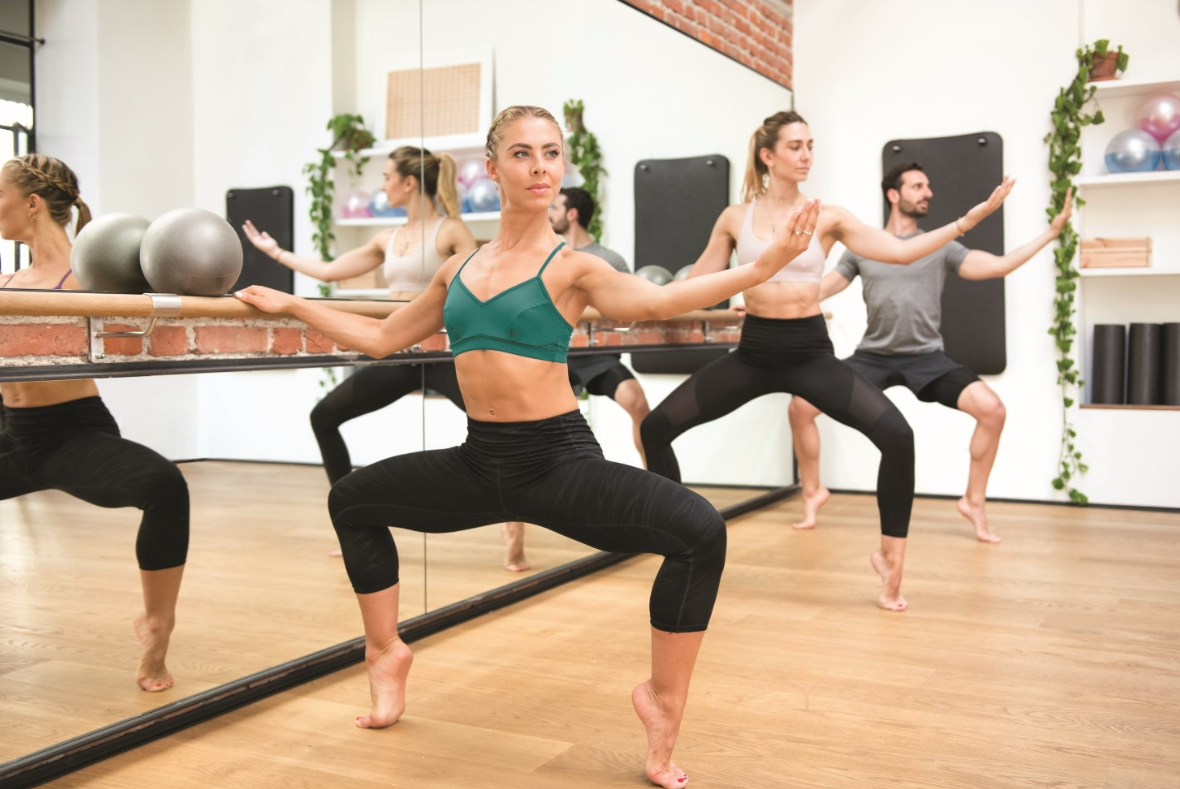
These two workouts leave very different marks on your body — and you'll feel the difference long after class ends.
What Barre Does to Your Muscles
Barre is surgical. It goes in, isolates one muscle group, and works it into the ground before moving to the next.Many fitness brands working with OEM/ODM yoga wear services develop dedicated barre collections with compression fabrics and reinforced waistbands to support these repetitive movements.
The main targets: glutes (both the max and the med) , quads , hamstrings , calves , and triceps . Plus the deep core — the transverse abdominis (TA) . That's the muscle that cinches your waist with consistent, focused training.
Here's how those muscles map to the moves:
Narrow V / plié pulses → inner thighs, quads, glutes, calves
Pretzel / arabesque / standing seat → gluteus medius, glute max, hip stabilizers
Flat-back / core pull-in → transverse abdominis, deep spinal stabilizers
Reverse push-ups / U-shaped elbow lifts → triceps, shoulders, upper back
Heel lifts / relevé → calves, ankle stabilizers
The weights are tiny — 1–3 lbs . That's by design. Barre isn't trying to bulk you up. It combines isometric holds + high repetition + small pulses to push each muscle to local exhaustion. The result is lean, sculpted, defined — the kind of toning that changes how your clothes fit.
What Yoga Is Strengthening
Yoga spreads the work across your whole body. Rather than isolating one muscle at a time, it builds strength through full-body movement patterns.
Upper body: Planks, chaturanga, and downward dog load the shoulders, chest, triceps, and serratus anterior with your full bodyweight.
Core and spine: Nearly every pose asks your abs, obliques, and erector spinae to stabilize at once — no crunches required.
Hips and lower body: Warriors, chair pose, and lunges hit glutes, quads, hamstrings, and inner thighs . Single-leg balance work also builds hip stability that most gym routines skip over.
Where They Overlap
Both workouts share one core idea: core-first design. Barre's tuck and flat-back sequences and yoga's balance poses both call on the same deep stabilizers — transverse abdominis, obliques, multifidus. Both target the chest, shoulders, hips, and back in ways that build better posture. The Cleveland Clinic points this out for barre. Yoga gets there through mobility and spinal control instead.
Different road. Same destination for your back health.
Calories Burned and Weight Loss: Yoga or Barre—Which Wins?
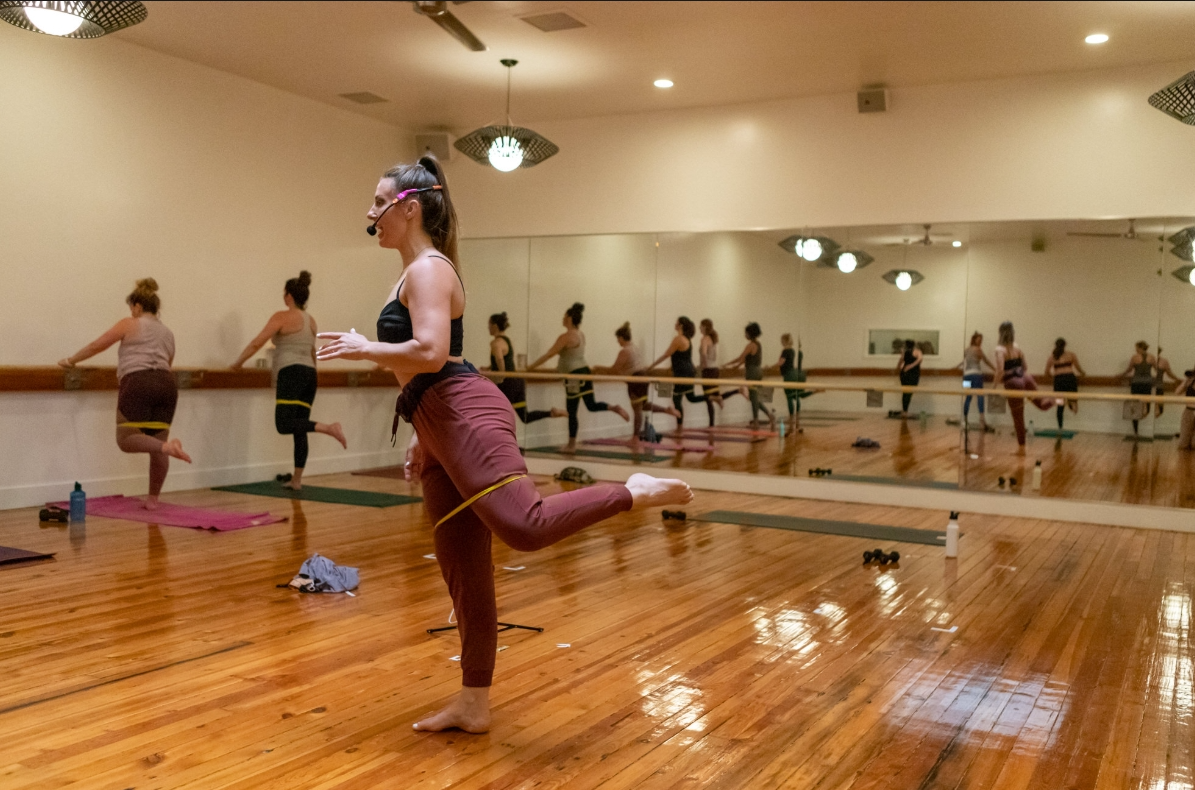
The honest answer? It depends on which version of each workout you're doing.This is one reason many private label activewear brands now create separate product lines for yoga and barre instead of marketing the same garments for every studio workout.
That distinction matters more than most people think. The calorie gap between a slow hatha class and a heated vinyasa session is huge. Lumping "yoga" into one number gets you nowhere. Same goes for barre.
Here's what the real data shows:
Yoga calorie burn (60 min):
- Hatha: ~183 kcal (for a 160 lb person)
- Standard vinyasa: ~240–500 kcal depending on body weight
- Power yoga: ~300–600 kcal
- Hot yoga (Bikram): ~220–400 kcal — not the calorie-doubler the internet claims
Barre calorie burn (60 min):
- Light-intensity barre: ~250–300 kcal
- Standard class: ~300–500 kcal
- Higher-intensity barre (with cardio intervals): up to ~450–500 kcal
At the "typical class" level, barre lands in that 300–500 kcal range pretty reliably. A regular hatha or gentle yoga class doesn't come close. High-intensity vinyasa, though? That's nearly even.
The Real Weight Loss Difference Is the Mechanism
Barre takes the burn-it-now path. You get steady calorie burn during class, plus light resistance that helps hold onto muscle and protect your resting metabolism over time.
Yoga plays a longer game. A 10-year study of 15,500 people found that regular yoga practitioners aged 45–55 gained 3 fewer pounds than non-practitioners of normal weight. Overweight practitioners lost an average of 5 lbs during that same period — while non-practitioners gained 14. Researchers pointed to mindful eating, better sleep, and less stress-driven overeating as the main drivers — not just calories burned per class.
Neither One Does the Heavy Lifting Alone
Three 60-minute, 300-calorie classes per week? That adds up to ~900 kcal total — around 0.11 kg of fat burned. That math is humbling.
The workouts that move the needle pair consistent movement with a 300–500 kcal daily dietary deficit. Barre's higher average burn gives you a small edge in the short term. Yoga's stress-regulation effect gives you a behavioral edge over the long run.
Pick the one you'll show up for every week. That's the one that wins.
Which Workout Fits Your Fitness Goal? A Goal-by-Goal Guide
The right workout isn't the hardest one or the trendiest one. It's the one built for what your body needs right now. Here's the honest, goal-by-goal breakdown.
Goal #1: Fat Loss + Toning
An experienced activewear factory also considers these movement patterns when selecting fabric weight, stretch recovery, and waistband construction for performance apparel.
Barre takes the lead here — but it doesn't finish the job alone.
A solid fat-loss week looks like this:
- 2–3 barre classes (45–60 min each)
- 1–2 full-body strength sessions
- 150 minutes of moderate cardio spread across the week
Walking, cycling, dancing — pick whatever you'll stick with.
Why barre first? Its high-rep, low-range sequences are built to sculpt the glutes, inner thighs, and arms. Those are the exact places most women want to see change. The burn in your legs isn't random. It's strategic.
Here's the honest math: three 300-calorie barre classes per week won't move the needle on their own. Pair your movement with a modest calorie deficit each day. That's when the transformation starts showing.
Goal #2: Flexibility + Mobility
This one belongs to yoga — and the research backs it up.
Aim for 3–5 sessions per week, 30–60 minutes each , mixing flow yoga with yin. The structure matters:
5–10 minutes of joint warm-up
20–30 minutes of active poses
10–15 minutes of long static holds
5–10 minutes of breathwork
Hold each static stretch for 10–30 seconds . Work up to 60 seconds as you progress.
Key targets: hamstrings, hip flexors, calves, shoulders, and lower back. Pigeon pose, cat-cow, supine twists, and downward dog cover most of it. Show up on a regular schedule, and mobility changes happen faster than you'd expect.
Goal #3: Stress Relief + Better Sleep
Yoga. Every time.
A 20–30 minute yin or restorative session, 3–7 nights per week , does something no other workout can match. It calms your nervous system down. The formula is simple:
3 to 5 poses held for 2–3 minutes each — legs-up-the-wall, child's pose, supine twist, savasana
Breathe at a 4-second inhale, 6-second exhale rhythm
That exhale emphasis isn't just a vibe thing. It's a real technique that switches your body into rest mode.
Add a 30-minute walk during the day, and your sleep quality gets a boost from both ends.
Goal #4: Posture + Core Strength
This one depends on where your posture is breaking down.
Desk posture problems — rounded shoulders, tight hips, neck tension? Yoga wins. Do 2–3 sessions per week focused on chest-opening, spinal extension, and hip flexor release.
Pelvis and lower back instability? Barre takes over. Its plank variations, single-leg holds, and glute bridge sequences go straight after the deep stabilizers that sitting wears down. Try this core sequence three times a week:
Plank: 30–45 sec × 3
Side plank: 20–30 sec × 3
Glute bridge: 15–20 reps × 3
Stick with it for 8–12 weeks. You'll notice real change.
The smartest approach: yoga twice a week for mobility, barre once or twice for stability . Your back will thank you.
Not Sure Where You Fall? Answer These 3 Questions
1. What's your #1 goal right now?
- Lean out + tone → Barre-first
- Move better, stretch more → Yoga-first
- Sleep deeper, stress less → Yoga-first (yin/restorative)
- Fix your posture + core → Yoga + Barre combined
2. How much time can you commit per week?
- Under 150 minutes → Pick one and go deep
- 150–300 minutes → Mix barre + yoga with ease
- Over 300 minutes → Add strength or light cardio to the mix
3. What's your starting point?
- Postpartum, chronic pain, or complete beginner → Gentle yoga first, light barre later (get medical clearance for postpartum)
- Desk worker with mild back issues → Equal mix of both
- Already active, no major pain → Push barre intensity, use yoga for recovery
Pick your lane. Then show up.
Yoga vs. Barre for Beginners: Which Is Easier to Start?
First class jitters are real.If you're comparing yoga wear and barre clothing wholesale price for studio collections, evaluating garment performance for different training styles is often more valuable than focusing on unit cost alone. The last thing you need is to walk into a room where everyone else seems to know what their body is doing while you're still figuring out which foot goes where.
So here's the straight answer: gentle yoga is the easier entry point. Not because barre is scary. It's because the two workouts demand very different things from a brand-new body.
The Real Difference in Day-One Experience
A beginner yoga class — Hatha, Gentle, or Restorative — moves at a pace that lets you breathe . Poses have names that repeat class after class (downward dog, warrior II, child's pose). Within a few sessions, your body starts to remember them. The learning curve flattens fast. The biggest challenge is tightness, not exhaustion.
Barre feels like a different world. The music is loud. The reps are relentless. Your thighs will shake in ways that feel almost personal . That's by design. Barre is built on high-rep, small-range movement that pushes muscles to failure before moving on. For a complete beginner, the fast pacing, frequent position changes, and sustained burn make it harder than most gentle yoga classes.
Here's the thing though: you don't need a dance background for barre. Not even close. Modern barre studios are clear about this. The barre itself is just a balance tool. Beginner and Chair Barre classes slow things down enough to learn the mechanics without destroying your legs on session one.
Which Class Type to Start With
For the gentlest possible start:
- Hatha or Gentle Yoga — slow pace, basic poses, zero prerequisites. All you need is a mat and clothes you can move in.
- Yin or Restorative Yoga — floor-based, long static holds, close to meditative. Perfect if stress relief is part of your goal.
For a smarter barre start:
- Beginner Barre or Intro to Barre — scaled-back moves, more instructor cues, fewer sequences stacked together.
- Chair Barre — works from home, uses a regular kitchen chair instead of a studio barre. Lower barrier to entry, same targeted burn.
The Questions You Want Answered
"I'm super inflexible. Can I even do yoga?"
Yes — that's the person beginner yoga is built for. Flexibility isn't a requirement. It's the result . Tell your instructor where you're tight. They'll offer blocks, straps, and modified versions of every pose.
"How fast will I see results?"
Barre tends to show physical changes faster. Some studios cite visible toning around the 8-class mark with 2–3 sessions per week. Yoga's changes look different — better posture, less stiffness, improved balance. They build up over weeks rather than showing up all at once.
Bottom line: Start with beginner yoga for the softest landing. Ready for a real burn from day one and don't mind the muscle shake? Jump straight into a beginner barre class. Just know it'll feel harder than it looks on Instagram.
Can You Do Both Yoga and Barre? How to Combine Them Well
Short answer: yes — the combo hits different than either one alone.
Barre and yoga aren't fighting for the same slot in your week. They do different jobs. Barre targets muscular endurance — those relentless pulses that fire up your glutes and deep stabilizers. Yoga covers the other side: mobility, nervous system recovery, and full-body reset. That reset is what makes your next barre class feel good instead of brutal.
That's the key insight. Use barre as your stimulus. Use yoga as your integration.
A Simple Weekly Structure That Works
No need to overthink the scheduling. Here's what a solid combined week looks like:
4-Day Option (works for most people):
- Monday — Barre (60 min, moderate-high intensity)
- Wednesday — Yoga (60 min, stretch + balance focus — clears Monday soreness)
- Thursday — Barre (45–60 min, cardio-barre style)
- Saturday — Yoga (restorative or yin, long static holds + breathwork)
5-Day Option (for those ready to push more):
- Monday: Barre | Tuesday: Recovery yoga | Thursday: Barre | Friday: Barre cardio | Sunday: Yoga
Both schedules include at least 1–2 full rest days . That part is not optional.
The Rules That Prevent Burnout
Don't stack two hard sessions on the same day. Doing both barre and yoga in one day? Keep this order: barre first (strength stimulus), then gentle yoga second (stretch and breathe out). Pairing barre with power vinyasa on the same day wears out your core and puts stress on your knees.
Combining both in one day? Space the sessions 6–8 hours apart. Eat protein in between. Drink plenty of water throughout the day.
New to both? Start at 3–4 sessions per week for the first 4–6 weeks — try barre twice and yoga once or twice. Pay attention to how your body responds. Soreness in the same muscle group lasting past 48 hours means you're pushing too hard too soon. Drop one session and reassess before adding more.
One more thing: a history of knee issues, lower back problems, or osteoporosis means you should talk to your doctor before starting this kind of combined schedule. Both are low-impact, but certain moves — deep spinal flexion in yoga, sustained quad holds in barre — need to be adjusted for some bodies. Tell your instructor before class starts, not after something hurts.
Essential Gear for Yoga and Barre: What You Need
Good news: neither workout demands a major shopping haul. One mat, one good pair of leggings, and you're most of the way there.
Here's the honest breakdown of what you need — and what you can skip.
Yoga: The Short List
Must-haves:
- Yoga mat — no studio will loan you one, so this is your first buy. Go for the 3–6 mm range . Pick 3–4 mm for flow or balance work. Go 5–6 mm if your knees need extra cushion during long holds. Grip matters more than price. A mat that slides under your hands in downward dog is a mat you'll hate by week two.
- Form-fitting, moisture-wicking clothes — anything that moves with your body and stays in place during a twist
- Water bottle — non-negotiable for hot yoga
Worth adding later:
- Yoga blocks (buy two) — a real game-changer for beginners with tight hamstrings and hips
- Yoga strap — bridges the gap between where your body is and where the pose needs it to be
- Microfiber mat towel — a must if you sweat a lot or practice hot yoga
Barre: Even Simpler
Must-haves:
- Grip socks — most studios require them. The silicone dots on the bottom do real work on slick studio floors.
- High-waist leggings — the same ones you'd wear to yoga work fine. Look for four-way stretch and a waistband that stays put through arabesque and deep plié sequences.
Optional:
- Light dumbbells (0.5–2 kg) and a mini resistance band — great for at-home barre sessions. Studios tend to provide these in class, so skip them for now if you train in a studio.
The Two-for-One Play
One pair of high-waist leggings with at least 20–25% spandex covers both workouts. So does one medium-support sports bra. The one real gear difference between yoga and barre comes down to your feet — bare for yoga, grip socks for barre.
That's the whole list.
Conclusion
Here's the truth: there's no wrong answer here — only the right fit for you .
Yoga builds deep body awareness, real flexibility, and inner calm. These things take time. You can't rush them. Barre sculpts and tones with that sneaky, shake-til-you-break intensity. It's challenging, but it feels surprisingly graceful. The best workout is the one you'll show up for — again and again.
Chasing lean definition and core strength? Barre is your answer. Need to decompress and move with intention? Roll out your mat and breathe. Want both ? You can have both.
Stop overthinking it and start moving. For studios, retailers, and businesses sourcing through an activewear wholesaler, understanding the functional differences between yoga and barre apparel can help build product collections that better match customer needs.Check out our curated yoga essentials at yogavendor.com . The right gear makes every practice better. Commit to showing up for yourself this week.
Your body will thank you. 🧘♀️