You found a class you love — maybe two. But standing in front of your closet before your first reformer session, you realize your favorite high waist yoga pants might not tell the whole story.
Here's the thing: yoga clothing and pilates clothing look almost identical on a rack. Yet the differences in fabric, fit, and function can affect how you move, grip, and feel through every rep and stretch.For brands developing custom activewear, understanding these discipline-specific performance requirements is essential for creating apparel that truly matches how athletes move.
Building your first activewear wardrobe? Not sure if your moisture-wicking gear pulls double duty? Just tired of tugging at a waistband mid-roll-down? This guide cuts through the noise.
We'll break down what each discipline demands from your clothing — and how to choose pieces that work with your body, not against it.
What Makes Yoga and Pilates Clothing Different?
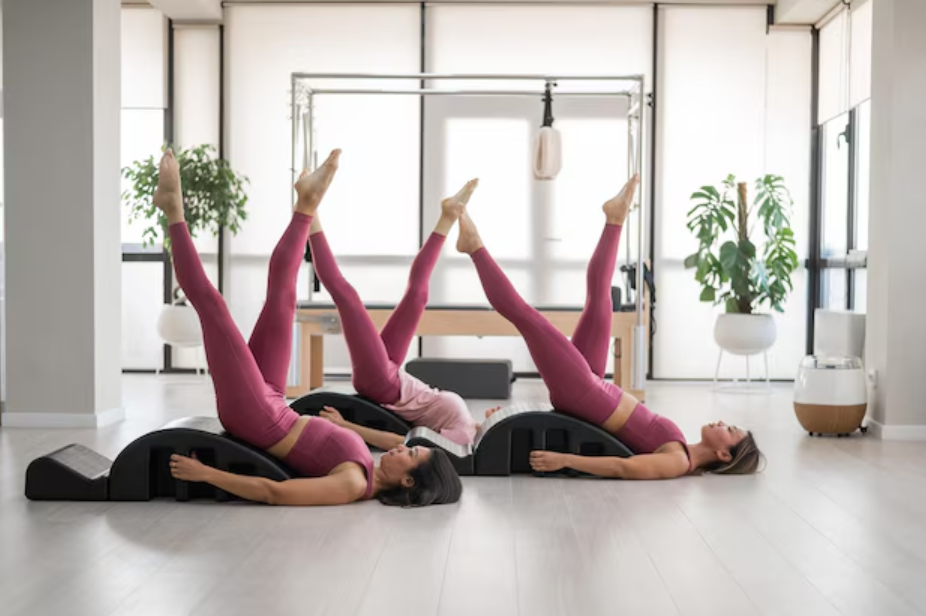
The gap between these two wardrobes isn't about looks — it's about mechanics.
Every design choice in activewear comes down to how your body moves during a workout. Yoga and Pilates demand very different things from your body. So they demand very different things from your clothes.A knowledgeable yoga wear supplier typically develops separate fabric specifications and garment patterns for yoga and Pilates rather than relying on a one-design-fits-all approach.
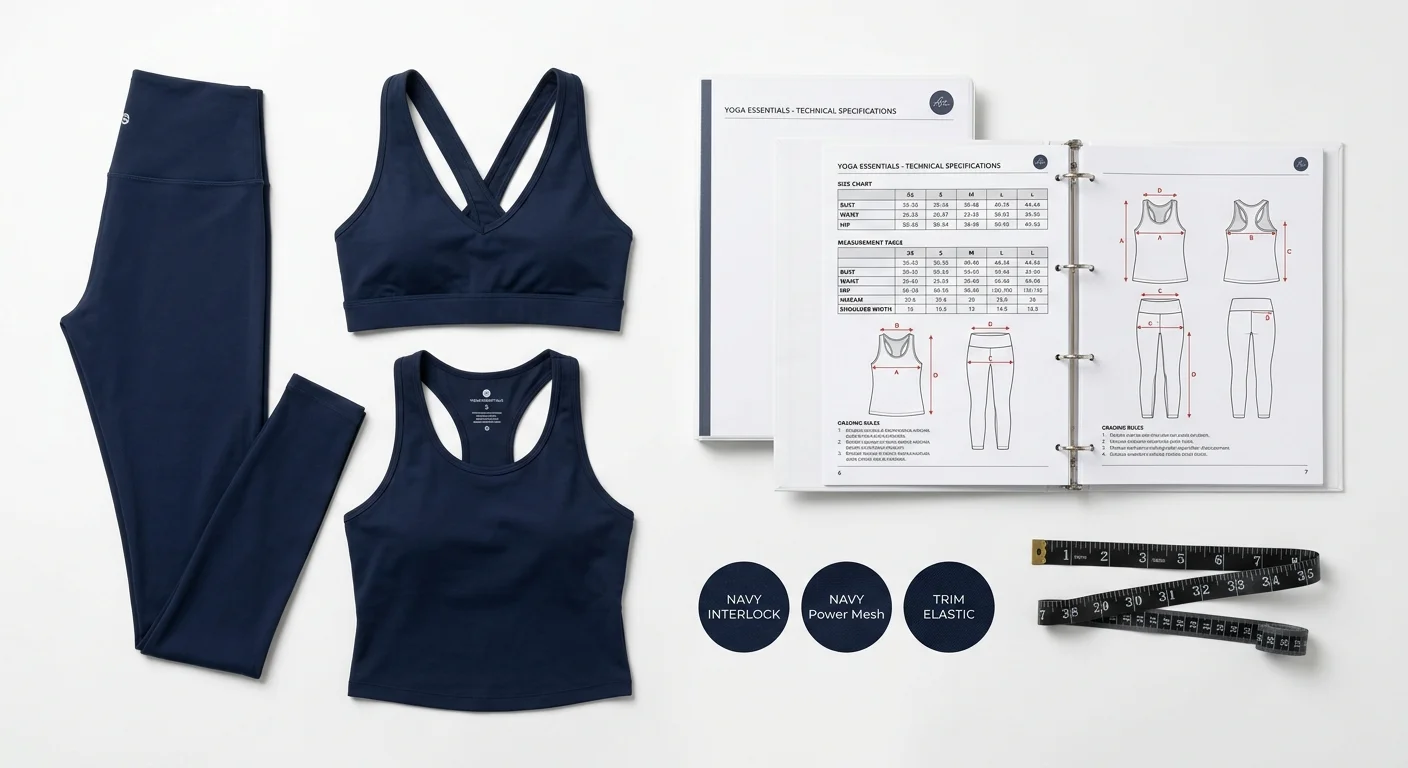
Yoga is about range. Think deep lunges held for 30–60 seconds, full spinal inversions, wide-stance folds that push fabric to its limit. Your clothing needs to move with you — no going sheer at the seat, no waistband rolling down mid-Downward Dog. Quality yoga leggings fabric contains 15–25% spandex. It's woven thick enough — around 220–280 g/m² — to stay opaque in the deepest postures. The high waistband sits at 8–12 cm. That's not a trend. It's structural support.
Pilates is about precision. Reformer springs don't care about your aesthetic. Loose fabric near a pulley system is a safety issue, full stop. Fitted Pilates reformer clothes — 7/8 length leggings with a snug ankle opening, a top that stays put through a hundred pulses — let your instructor see your spine, your pelvis, your rib positioning. That visibility is the feedback loop. Break it with a bunched-up top and you lose half the correction.
A few subtler differences are worth knowing:
Compression level : Pilates favors soft, consistent compression across the core and hips. It helps you feel muscle engagement. Yoga puts stretch recovery first, not compression.
Seam placement : Pilates clothing uses minimal, flat seaming. Rolling on a mat with a raised inseam pressing into your spine is as uncomfortable as it sounds.
Top length : A top that rides up causes problems in both disciplines. In Pilates, it blocks your instructor's view of your ribcage. In yoga, it covers your face during inversions.
The clothes look similar on a hanger. What they do in motion is a completely different story.
Fabric Breakdown: What Each Workout Actually Demands
Fabric is where each discipline's philosophy gets literal — woven into every thread choice, every weight decision, every stretch percentage.
Yoga Leggings Fabric: Built for Extreme Range
Yoga pushes fabric harder than most people realize. A deep forward fold or a full inversion doesn't just stretch your body. It tests whether your leggings can keep up without distorting, thinning, or going sheer.
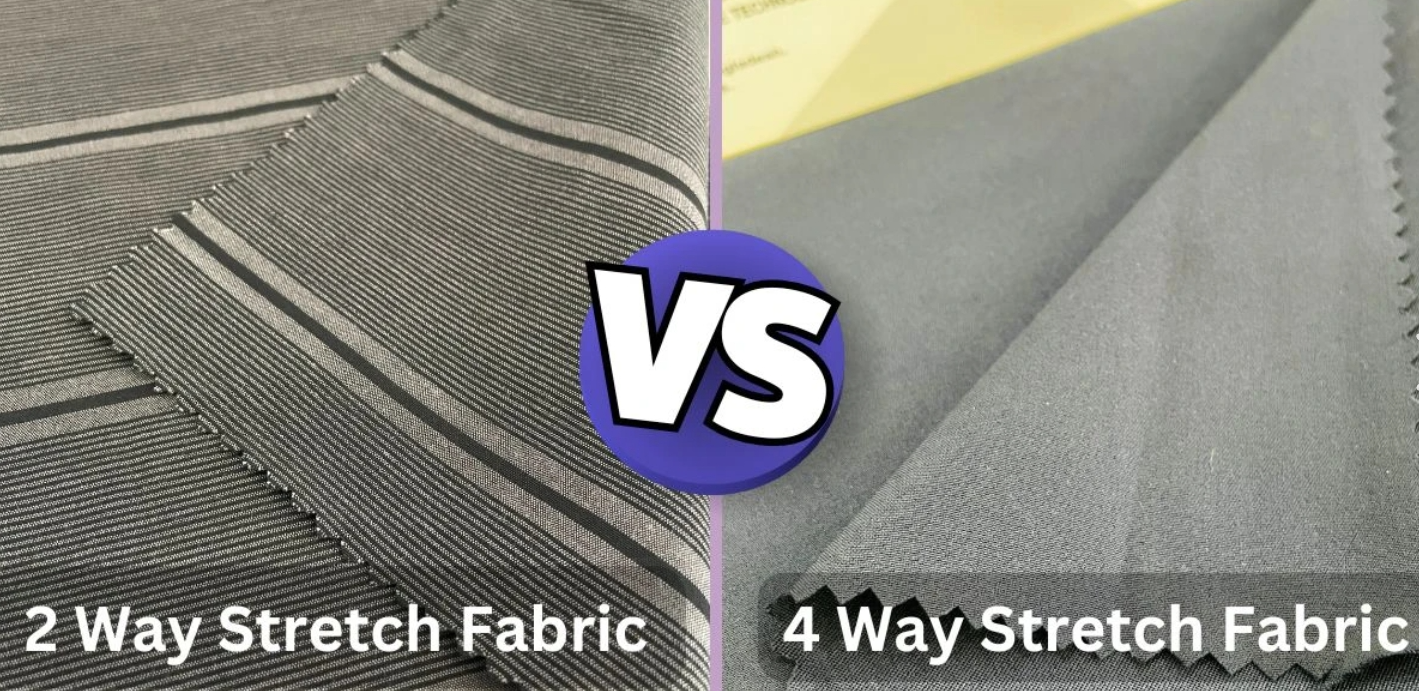
The standard that separates functional yoga fabric from everything else is four-way stretch . Traditional two-way stretch fabrics extend around 120%. High-quality four-way knit structures can reach 182% stretch capacity — a 51.7% improvement. Many brands working with OEM/ODM yoga leggings services now specify stretch recovery, fabric weight, and opacity standards during product development to ensure consistent performance across production runs.That number isn't abstract. It's the difference between a fabric that moves with your Warrior III and one that fights it.
In a study of 50 yoga practitioners wearing 100D four-way stretch garments, 92% reported no restriction during movement , and 88% rated the fit as excellent . That's the benchmark worth chasing.
Weight matters too. Breathable workout clothing for active yoga falls in the 140–160 g/m² range — light enough for airflow, structured enough for opacity. For deeper poses under bright studio lighting, squat-test your leggings before buying. Thin fabric under tension goes transparent fast.
Pilates Clothes Fabric: Built for Precision and Endurance
Pilates fabric asks different questions. Less about maximum stretch, more about consistent hold, smooth contact, and resilience through repetition .
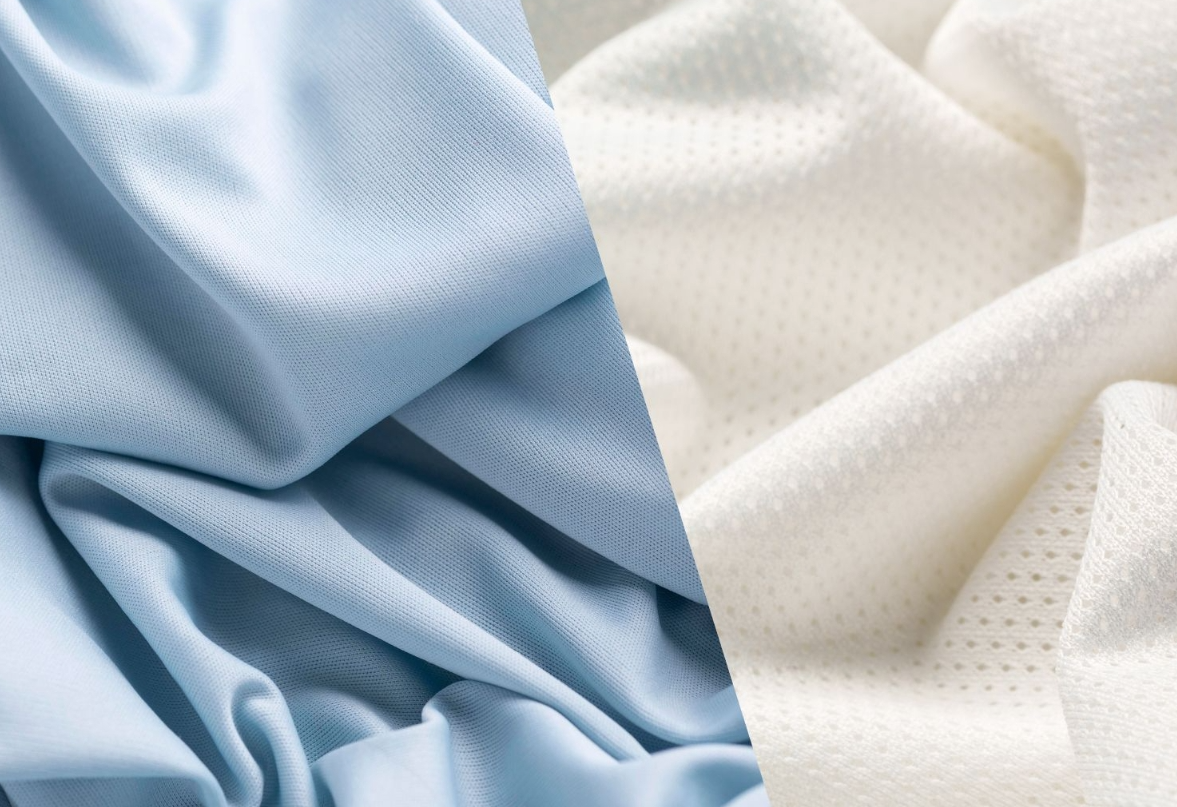
Nylon-spandex blends lead the category — and for good reason. Nylon is lightweight and highly abrasion-resistant. That matters when your leggings meet a reformer carriage dozens of times per session. Spandex delivers the close-body recovery that keeps compression leggings for Pilates in shape through a full hour of springs and pulleys.
Pilates generates more heat than its calm reputation suggests. So moisture-wicking activewear construction isn't optional. Look for dual-layer structures — moisture-pulling outer, water-repelling inner. This setup stops the post-sweat cling that makes floor work uncomfortable.
The practical checklist before buying either:
Stretch recovery : Does the fabric bounce back after a deep-lunge test, or does it bag out?
Opacity under tension : Run a strong-light test at maximum stretch points
Dry time : Do a drip-spread test. If moisture sits on the surface, it'll sit on your skin
Surface durability : For reformer classes, check for pilling resistance at contact zones
Fit & Cut: Why Pilates Demands a Closer Silhouette
Loose fabric near a reformer spring isn't a fashion mistake — it's a safety risk.This is also why many private label activewear collections designed for Pilates prioritize streamlined silhouettes and body-hugging fits instead of oversized fashion trends.
The reformer carriage moves fast. The gap between the metal edge of the carriage rail and the spring attachment point is just a few centimeters. Any excess fabric — a flared cuff, a billowing hem — extending more than 2–3 cm beyond your body puts you in that danger zone. It can catch. It can pull. It can cause the carriage to jerk mid-movement. This isn't theoretical. Every experienced Pilates instructor will tell you the same thing: fitted clothes on any sliding apparatus aren't optional.
That's the safety case. There's a performance case too.
Your Instructor Reads Your Body Through Your Clothes
Reformer Pilates tests strength, stability, and eccentric control — all at once. Your instructor is watching the whole time: Is your pelvis neutral? Is your lumbar spine in safe range? Are your knees tracking over your second toe?
Loose tops and baggy leggings block what they need to see. At 3–5 meters away, a 5° pelvic tilt or a 3–5° knee valgus collapse disappears under excess fabric. Compression leggings for Pilates show the true contours of the glutes, quads, and hips. That gives your instructor the visual information to spot a misalignment before it turns into an injury.
The same logic applies to your top. A fitted silhouette shows the shoulder line, the ribcage expansion, the lateral waist — the clear landmarks that tell a trained eye what your spine and core are doing in real time.
How Yoga Silhouettes Differ by Style
The fitted vs. loose yoga wear question comes down to the type of yoga — not yoga as a broad category.
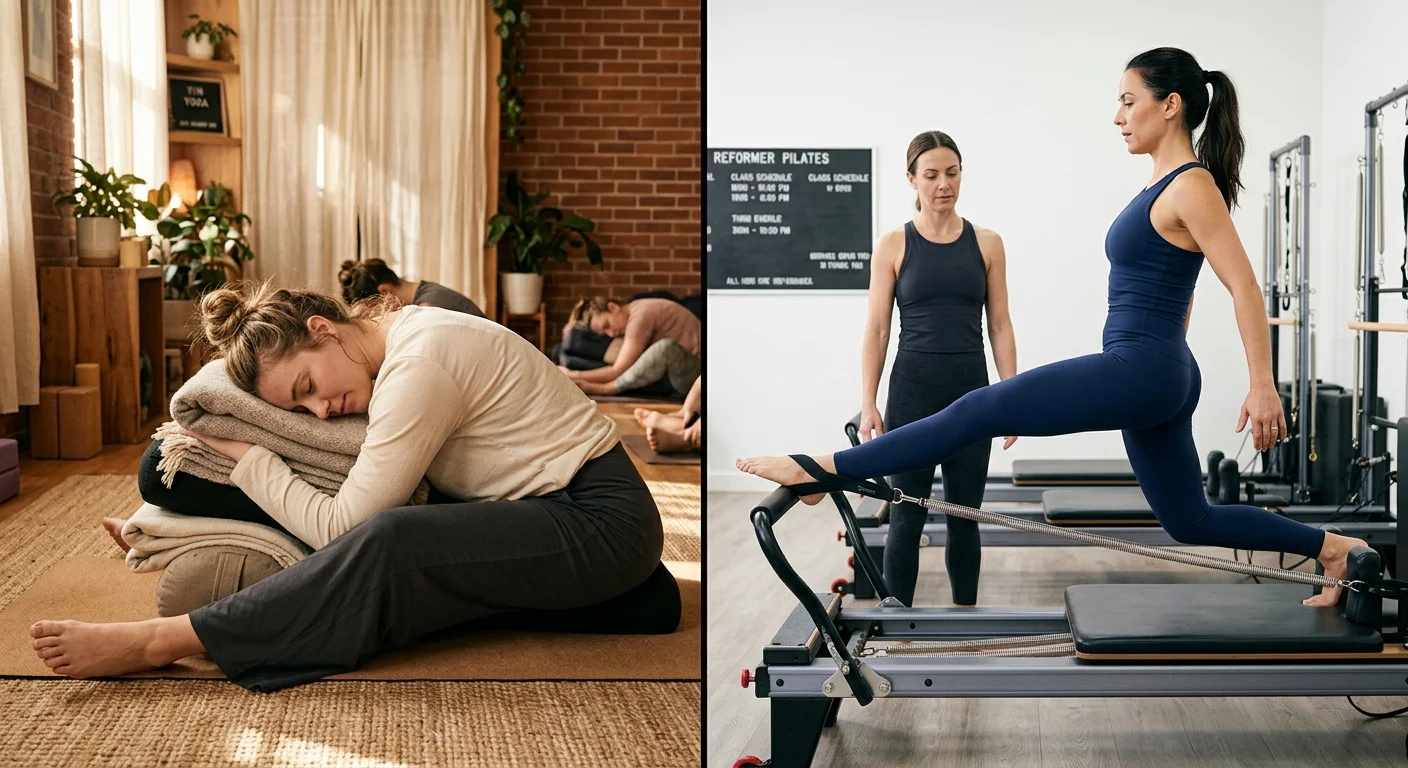
Yin and restorative yoga — poses held for 3–5 minutes at a time — have no mechanical hazard points. Loose cuts make real sense here: comfort, warmth, mental ease. Your instructor isn't tracking your pelvis position in real time.
Vinyasa and hot yoga are a different story. Fast transitions, inversions, standing balances — a wet, oversized cotton top in a heated room droops forward during forward folds and covers your face in Downdog. Fitted breathable workout clothing cuts down fabric-against-skin friction, stops sweat from dragging the garment down, and lets both you and your teacher see where your joints are landing.
The Waistband Equation
High waist yoga pants — 8–12 cm at the waistband — cover from the hip crest to just below the navel. In deep forward folds and inversions, that wide contact surface acts as an anchor. It spreads pressure across the torso, stops the waistband from rolling down mid-pose, and holds everything in place once gravity works against you.
Pilates waistbands follow a different logic. The priority is stable but non-restrictive — a mid-to-high cut around 6–10 cm, soft compression, flat and crease-free against the skin. Lying supine on a carriage and cycling through hip flexion and extension, a rolled waistband digs into your abdomen and disrupts diaphragmatic breathing. That breaks down core activation at the base level.
For anyone in postpartum recovery or with abdominal scarring, this is not a small detail. Pilates rehabilitation training flags waistband compression as a factor that affects pelvic floor and core recruitment quality.
The practical cut checklist for reformer classes:
- Tops : hem sits at the hip crest or just below; no swing or movement beyond 3–5 cm from the body
- Bottoms : full-length fitted leggings, cuffed ankle, no flared or split-hem cuts
- Waistband : 6–10 cm, medium compression, does not roll or gap away from the abdomen during supine movement
Tops, Sports Bras & Socks: The Details That Change Everything
Small things betray you in motion. A top that rides up two inches. A bra strap that digs in during a prone stretch. A foot that slips half a centimeter on a reformer footbar at the wrong moment.An experienced yoga and Pilates clothing factory will often refine neckline depth, hem stability, and seam placement through multiple wear tests before finalizing production. None of these feel significant until they are.
Tops: The Fit Logic Is Not the Same
For Pilates, you need a top that stays put. Not just when sitting upright — but through spinal flexion, extension, rollbacks, and inverted spring work. A hem that lifts during a teaser blocks your instructor's view of rib flare, core engagement, and shoulder position. Plus, loose fabric near cables, pedals, or rollers creates a real entanglement risk. This isn't overcautious advice. Most reformer studios make it policy.
The practical formula: fitted tank, cropped fitted tee, or a sports bra layered under a snug long-sleeve . Nothing that swings more than a few centimeters from the torso.
Yoga gives you more room — but not unlimited room. Loose tops work well in yin and restorative practices, where you stay low and slow for minutes at a time. In vinyasa, a flowy hem droops forward in standing folds and lands over your face in Downward Dog. Go with a fitted or slightly relaxed top — easy at the shoulder and underarm, close-fitting everywhere else. That's the sensible middle ground.
Sports Bras: Shared Ground, Different Priorities
Both disciplines call for low-to-medium support . Neither is high-impact. Neither needs the full-compression approach of a running bra.
The difference is in what "support" means for each practice.
Pilates asks your bra to hold position . You're doing prone work, spring resistance, and front-to-back trunk loading. The bra needs to stay anchored through all of it. Wide shoulder straps and a broader underband spread pressure and stop shifting. A crossback or wide-strap sports bra with a stable underband works well here.
Yoga asks your bra to get out of the way . Breath expansion is a core part of the practice. Your ribcage needs room to move. Look for softer construction — less banding, lighter compression, fabric that moves with your chest as you inhale. You can breathe fully without anything pressing back.
The rule is simple:
- Lots of inversions, apparatus work, or prone sequences? Go for stability.
- Floor-based flow? Go for softness.
Grip Socks: Required vs. Optional
This distinction is cleaner than most people expect.
For Pilates reformer and apparatus work — grip socks are essentially required. The contact surfaces are hard and smooth: the carriage, the footbar, the pedal, the foot straps. Sweat makes it worse. Pilates grip socks — full-foot or Pilates toe socks — add friction at every contact point. They sharpen your body awareness and cut out the small slips that throw off alignment in spring-loaded movements. Most reformer studios require them or push them hard.
For yoga — it's your call. The barefoot tradition in yoga exists for good reason. Direct mat contact is part of how grounding, balance, and sensation work in the practice. The mat itself handles grip. Grip socks in yoga come down to personal preference — useful in cold studios, good for those who like coverage, but not a performance factor the way they are in Pilates.
Short version: pack grip socks any time class involves Reformer, Cadillac, Chair, or Barrel. For mat-only work, bring them or don't — it's up to you.
Style by Class Type: What to Wear to Each Specific Session
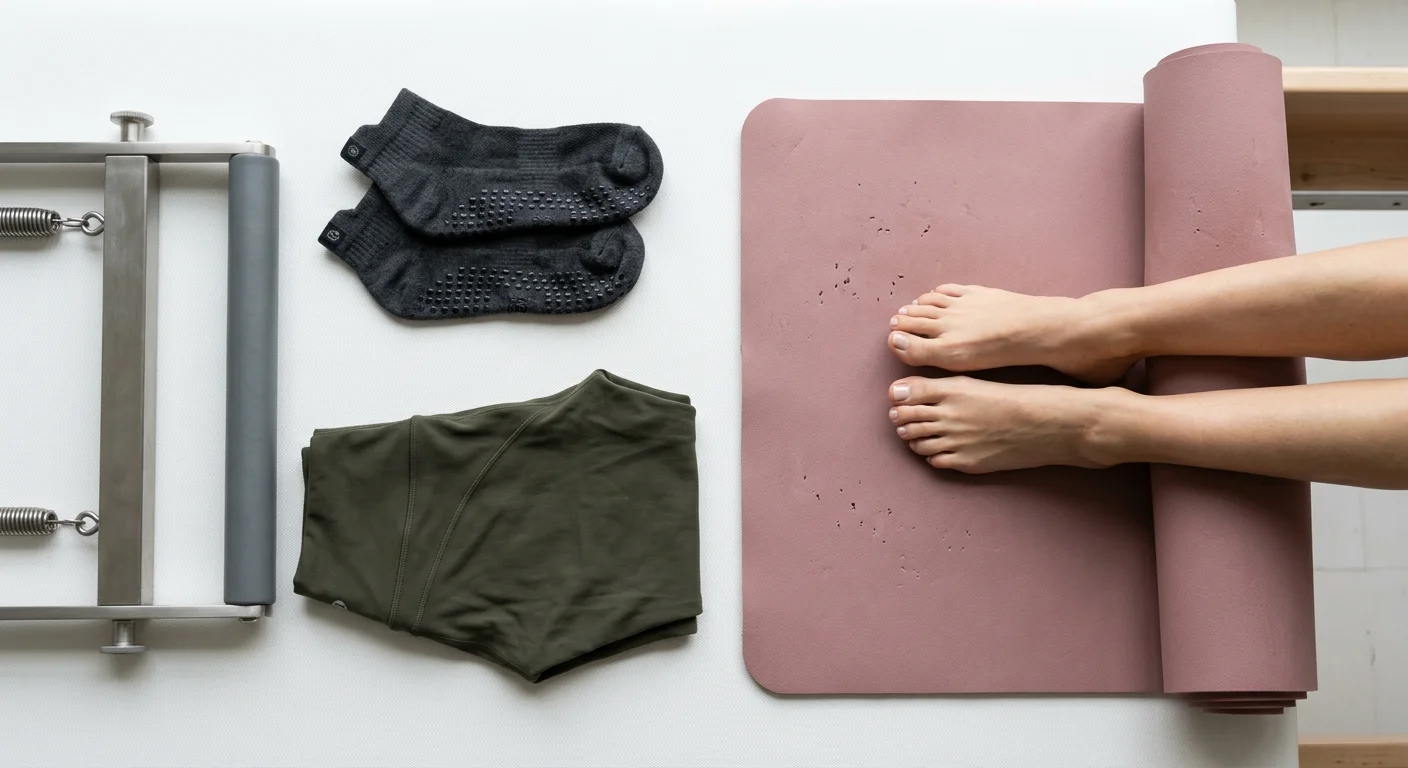
The same leggings do not belong in every room. Each format has its own logic — and once you see it, dressing for class becomes automatic.
Mat Pilates
Keep it soft, fitted, and simple. High-waist 7/8 leggings with a fitted tank or training tee work best. Your instructor needs to see your core engagement, spinal alignment, and hip position. Throw on a zip-up before and after class if the studio runs cold.
Skip these : baggy tops, wide-leg cuts, and any hardware. Metal drawstring tips, buckles, and clasps scratch equipment and catch on carriage edges. Thick cotton socks or bare feet on a mat will slide. Grip socks keep you stable and safe.
Reformer Pilates
Go tighter. The reformer has no room for loose fits. The formula is simple: full-length or 7/8 fitted leggings, a close-fitting vest or sports bra, and grip socks . Skip anything with pockets, dangling ties, or cuffs that could snag a spring. Your instructor reads your pelvis and ribcage from three meters away. Extra fabric blocks that view.
Grip socks are not optional here. They keep your feet locked on the footbar. No grip means an unplanned slip mid-extension — not what you want.
Hot Yoga
Keep it minimal. A lightweight sports bra or cropped fitted top paired with high-waist shorts or thin-layer leggings is all you need. Moisture-wicking fabric earns its place in a 37–40°C room. More layers make things worse. Your goal is airflow, fast dry time, and low fabric weight — everything feels heavier once it is soaked.
Vinyasa / Flow Yoga
Go with full-length high-waist yoga pants and a fitted top that stays in place. You'll move through Downward Dog, Warriors, and standing inversions. The waistband needs to hold its position. The hem needs to stay down. Four-way stretch fabric handles wide stances and deep lunges. It won't pull or thin out at the seat.
Yin and Restorative Yoga
This is the one class where soft and relaxed wins. Choose long, fluid pants — not dragging on the floor, just easy and roomy. Layer with a lightweight long-sleeve top and something simple to remove. Poses hold for three to five minutes, so comfort and warmth matter more than compression. Grip socks are a good addition. Tight waistbands are not.
At a glance:
Format | Priority |
|---|---|
Mat Pilates | Fitted, visible, no hardware |
Reformer Pilates | Fitted, grip socks, nothing loose |
Hot Yoga | Minimal layers, maximum airflow |
Vinyasa / Flow | High-waist, full coverage, stays put |
Yin / Restorative | Soft, relaxed, warm layers |
Can You Wear Yoga Clothes to Pilates (and Vice Versa)?
The short answer is yes — but there are a few things worth knowing first.
Most fitted yoga clothing works fine in a Pilates class. Most Pilates clothing holds up just as well on a yoga mat. The overlap is real. But that word most is carrying more weight than it looks.
What works in both disciplines:
High-waist fitted leggings — close to the body, stable at the waist, opaque under tension
Nylon or polyester-blend fabrics — four-way stretch, fast-drying, holds up through repeated use
Supportive sports bras with fitted tanks — clean fit, no extra movement, right at home in either room
What belongs in yoga only — not on a reformer:
Wide-leg or loose yoga pants — the fabric bunches up, your instructor can't read your alignment, and loose fabric near spring mechanisms is a real safety issue
Thin fashion leggings — go sheer in a forward fold, and they've already failed both the squat test and the Pilates test
Low-rise styles with unstable waistbands — one roll-down in a teaser sequence and your focus is gone for the rest of class
The practical rule is simple: the legging needs to stay opaque under stretch, hold its waistband through a deep squat, and sit close to the body. Do all three, and it belongs in both bags.
Pilates clothes to yoga? Almost always fine. The fitted cut that performs on a reformer moves just as well through Warriors and forward folds.
One honest caveat: loose, restorative yoga pants feel comfortable for a reason — they're relaxed by design. That relaxed fit doesn't work with reformer or apparatus training. Save them for yin class. They don't belong in the reformer room.
How to Choose: A Decision Framework Based on Your Actual Needs
Three questions cut through the noise faster than any product comparison.
Q1: Which discipline do you practice most?
Q2: How hard do you sweat — on a scale of 1 to 5, do you hit 3 or above?
Q3: Can your budget stretch to two separate wardrobes?
Your answers point straight to what you need.
One Wardrobe or Two?
Budget allows? Buy separate pieces for each. Yoga gear is cut for deep, wide range-of-motion — broad hip panels, high waistbands built for inversions. Pilates gear is cut for body-reading precision and reformer safety. The overlap exists, but the edge cases matter.
Budget is tight? The one-kit-for-both route works — but every condition below must be met. All of them, not just most:
Fabric : 80–88% nylon or polyester + 12–20% spandex. Four-way stretch with less than 5% deformation under tension.
Weight : ≥220 g/m². Below that, deep squats and bridge work go sheer — on a reformer or a mat.
Waistband : Mid-to-high rise, stretch ratio ≥1.2x your natural waist. It must not roll during rollbacks or inversions.
Fit : Tops must stay anchored through arms raised above 150°. Keep nothing loose near cables or spring mechanisms.
Grip socks : Buying one pair? Get them for Pilates. Full-sole grip coverage — forefoot, heel, arch — matters more on a carriage than on a mat.
Match Fabric to Your Sweat Rate
High intensity (hot yoga, vinyasa, power Pilates): go with ≥85% nylon or polyester, 10–15% spandex. Skip cotton above 50%. It absorbs sweat, gets heavier as you move, and clings in ways that hurt both movement and comfort.
Low to moderate intensity (yin, restorative, mat Pilates): organic cotton or bamboo blends hold up well here. Still aim for ≥8–10% spandex so the fabric handles stretch without fighting you.
Keep It Wearing Longer
Wash in cold water. Dry on low heat or lay flat to air-dry. High heat breaks down spandex fast. Once the elastic memory goes, the fit goes with it. Pick dark or mid-tone colors — black, charcoal, navy. They hide sweat marks and friction wear far better through repeated use.
Conclusion
The right workout clothes aren't just about looking the part — they're about feeling it, too. Yoga calls for fabrics that breathe and move with your body. Pilates needs a closer fit that keeps you connected to every controlled, precise movement. That distinction matters. Once you see it, the choice gets much easier.
Your clothing should work with you — not pull your focus away from the practice. This applies whether you're on a reformer for the first time or deep into a long-term mat routine.
Start by identifying your main practice. Build from there.
Compression leggings and a fitted top cover most Pilates sessions with ease.
High waist yoga pants in a moisture-wicking fabric? That's your yoga wardrobe sorted.
For studios, retailers, or businesses sourcing from an activewear wholesaler, understanding these performance differences also makes it easier to choose collections that meet customer expectations.
Shop with purpose. Put your money into what you'll wear.Comparing wholesale Yoga Clothing and Pilates Clothing prices only makes sense after evaluating fabric quality, garment construction, and intended training use—not price alone. Let your gear support the practice you've already shown up for.