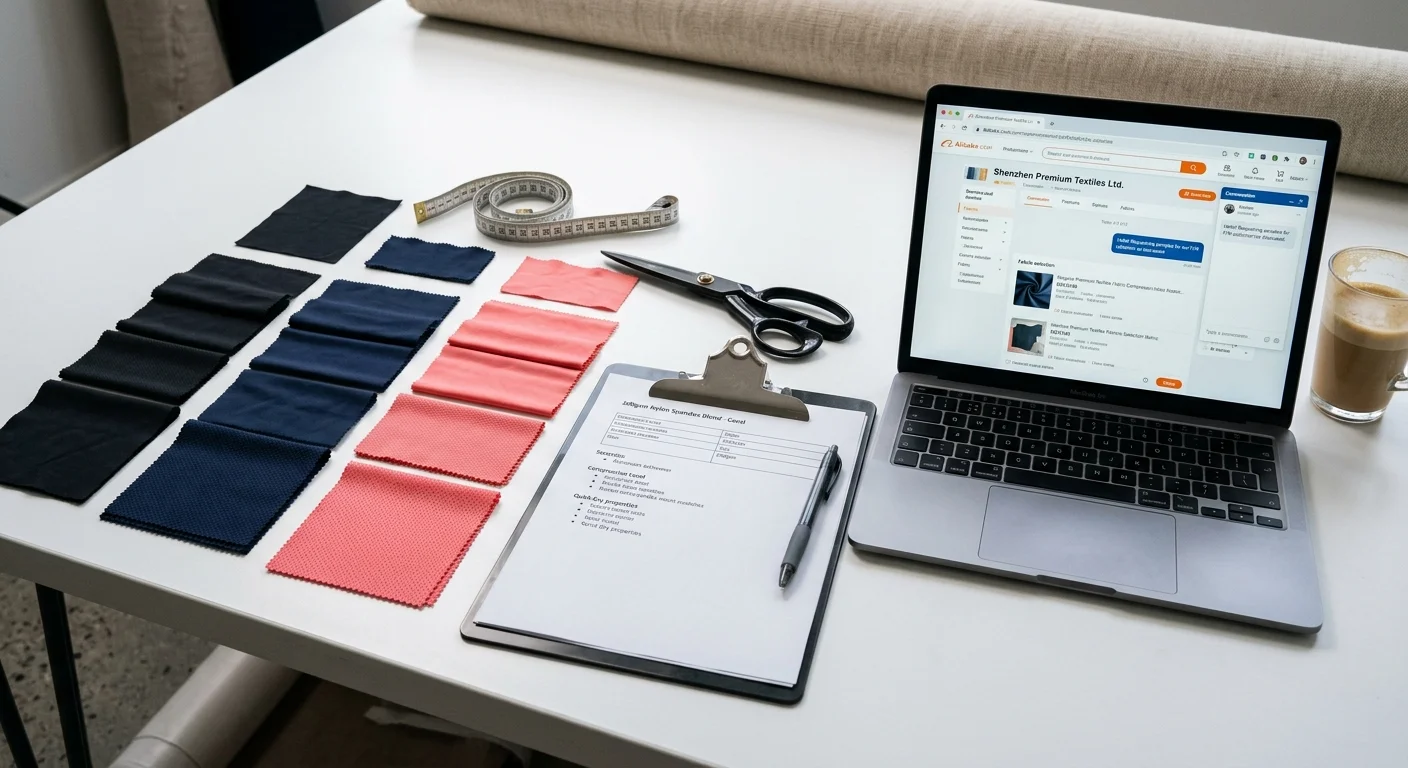
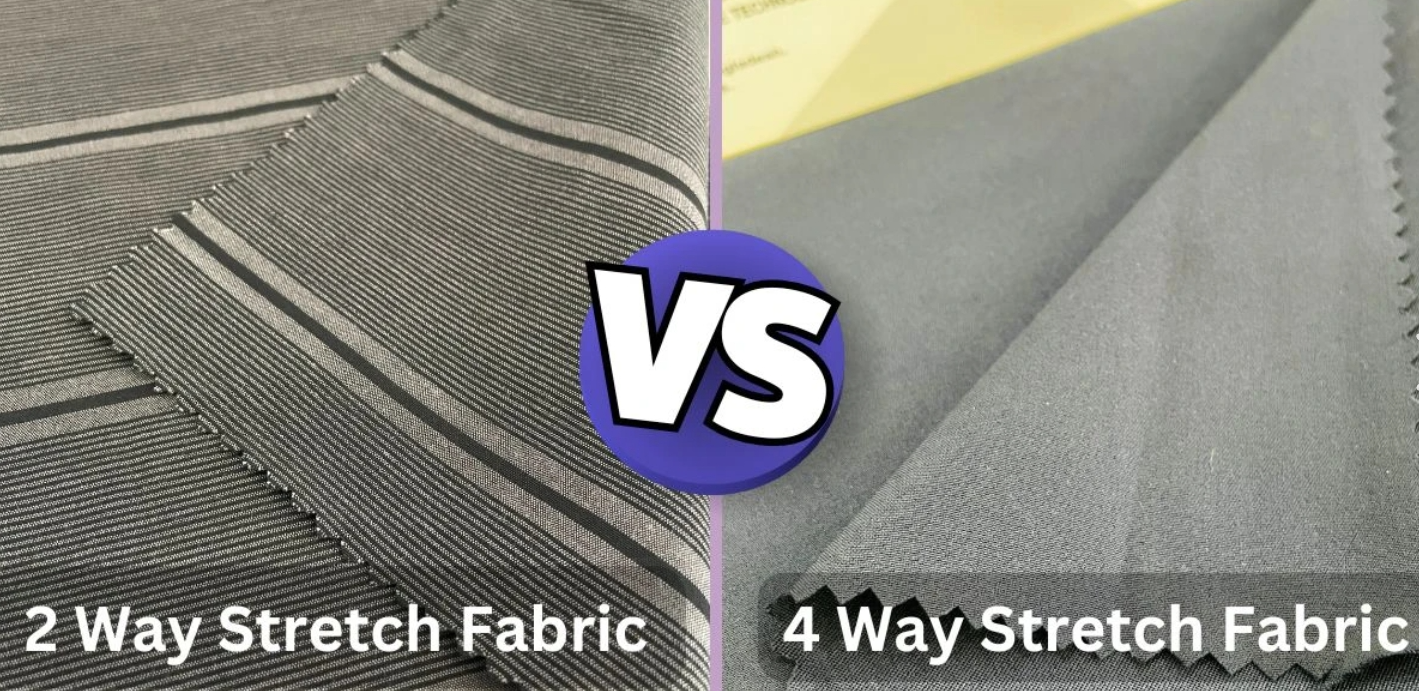
Every roll of fabric that enters our cutting room has already passed a strict check most brands skip. We've turned away shipments of four-way stretch nylon that looked perfect on the surface but failed colorfastness after one wash cycle simulation. We've caught GSM deviations small enough to pass a quick hand-feel check but large enough to ruin a compression legging's silhouette.
The gap between activewear that lasts and activewear that triggers chargebacks isn't the cut, the stitch, or the finish. It's what happened — or didn't happen — in the thirty minutes before that fabric touched a cutting blade.
Below is our actual incoming fabric inspection process. You'll find:
The checkpoints we run
The rejection thresholds we hold to
Real cases where we said no
A documentation framework your QC team — or your next activewear factory audit — can use starting tomorrow
Incoming Fabric Receiving, Quarantine, and QC Environment Setup

Fabric doesn't earn its place in production the moment it arrives. It earns it after it passes.
A delivery lands at our dock. The first step isn't unpacking — it's quarantine. Every roll goes straight into a locked hold zone. No exceptions for familiar activewear suppliers. No shortcuts for repeat dye lots. That hold zone is a hard stop in our system. No picking. No production allocation. No cutting ticket can reference a roll that hasn't cleared disposition.
Here's what triggers a quarantine hold:
PO/ASN receipt (every incoming roll, by default)
Missing or mismatched COA
Dye-lot or traceability deviations
Visible packaging damage at receipt
Manual QC flag from receiving staff
Each roll gets a unique barcode at intake. That barcode links to the PO number, colorway, dye lot, mill origin, receipt date, roll length, and quarantine status. The tag doesn't change until QA signs off. That's how a failed roll stays failed — it can't slip into released inventory without someone catching it.
The Inspection Environment Matters More Than Most Brands Realize
Visual inspection under bad lighting is guesswork. Our inspection station runs 6500K daylight-equivalent lamps with a 45–60° viewing angle . That's the same standard most certified mills use for defect and color review. A backlight station sits alongside it for opacity and pinhole checks. Those checks carry real weight for compression fabrics, where coverage is a product promise.
Inspection speed is capped at ≤15 yards per minute . Go faster than that, and you're moving fabric — not inspecting it.
Our sampling rules are clear:
100% inspection for new activewear suppliers, first-time dye lots, flagged mills, or any style with prior claims history
Minimum 10% roll yardage for validated vendors on repeat programs — though shade-critical fabrics often get full-roll review regardless
A 5×5-inch swatch from each approved lot goes into our shade library. We mount it to a run card and store it against the Approved Production Standard for that style. The next shipment comes in — there's no memory involved. You hold the new roll next to the reference under the same light and make a call.
Fabric moves out of quarantine after five things are confirmed: receiving scan complete, inspection complete, COA verified, shade disposition approved, and barcode status updated. Until all five clear, that roll doesn't exist to our cutting room.
The 10 Core Activewear Metrics and Pass/Fail Thresholds
Here's the uncomfortable truth about most incoming fabric inspections: they test for the wrong things. Or they test for the right things, but with thresholds that don't reflect how activewear performs on a moving body.
A fabric that looks great flat on a table can fall apart the moment it's stretched across someone's seat during a squat. A color that holds through a hand-wash check can bleed onto a white sports bra after three machine cycles. The ten metrics below catch those failures before they become your customer's problem. Every threshold listed is the actual number we hold to — not a benchmark pulled from a textbook.
1. GSM (Fabric Weight Consistency)
Pass: Measured GSM within ±5% of spec at three points per roll — top, middle, bottom.
Fail: Any single position exceeds ±5%, or the roll shows consistent drift across its length.
Typical specs for activewear run 220–280 gsm for leggings, 200–260 gsm for sports bras, and 140–180 gsm for performance tees. Take a 260 gsm spec as an example. Anything below 247 gsm risks going see-through under tension and loses its compression function. Anything above 273 gsm starts affecting hand-feel, yield, and how the garment moves with the body.
We cut at least three swatches per roll — start, middle, and end — and weigh each on a calibrated digital GSM scale. For color-critical or compression styles, we test at least five rolls per dye lot.
2. Wash Shrinkage (Dimensional Stability)
Pass: ≤ 3% shrinkage in both warp and weft directions after 3 wash/dry cycles (40°C, tumble dry low) per ISO 6330 or AATCC 135.
Fail: Any direction exceeds 3% shrinkage — or shows growth exceeding 3%.
For compression leggings and bras where fit precision matters, we tighten this to ≤2% . A warp shrinkage of −4.0% with a weft result of −1.0% is a clear fail. The weft passing doesn't rescue the warp. Both directions have to hold.
3. Stretch & Recovery (Compression Performance)
Pass: ≥95% recovery within 60 seconds of release after stretching to the set elongation. Elongation should meet ≥120–150% in both directions for leggings, and ≥100% for bras and shorts (ASTM D2594 / ISO 20932).
Fail: Permanent set exceeds 5% — the fabric doesn't spring back.
Here's the practical version of this test. Stretch the fabric to 50% elongation, hold for 30 seconds, release, and measure recovery at the 60-second mark. We expect the fabric to return to ≥97% of its original length . Anything less, and you're shipping leggings that bag at the knees after the first workout.
4. Colorfastness to Washing & Perspiration
Pass: ≥Grade 4 for both color change and staining across multi-fiber test cloth (ISO 105-C06 for washing; ISO 105-E04 or AATCC 15 for perspiration).
Fail: Any result below Grade 4 on change or staining.
For deep or fluorescent colors, we run three home-launder cycles at 40°C for 30 minutes each and require a 4–5 rating on both dimensions. A Grade 3 result on a black nylon/spandex legging means dye transfer onto skin or light-colored equipment. That's not a QC note — that's a return.
5. Pilling & Abrasion Resistance
Pass: Grade 3–4 minimum at 2,000 Martindale cycles for leggings and shorts (ISO 12945-2). High-friction styles at premium price points require Grade 4 at 5,000–7,000 rubs .
Fail: Grade ≤3 at 2,000 cycles, or visible fuzz and surface fiber lift before the threshold.
Tops and lightweight knits carry a lower bar — Grade 3 minimum at 2,000–3,000 cycles . For mid-weight nylon/spandex blends, abrasion resistance per ISO 12947 should clear ≥20,000 rubs before yarn breakage. A fabric that pills at 1,500 rubs isn't a borderline case. It's a no.
6. Fabric Width, Bow & Skew
Pass: Width within ±1.5 cm of spec (e.g., 148.5–151.5 cm for a 150 cm spec); skew ≤3% per ISO 16322.
Fail: Width out of range, within-roll variation exceeding 5%, or skew above 3%.
Skew is the one that catches brands off guard. A 4% skew in a legging panel means the side seam twists toward the front after washing. The garment fits fine in the fitting room and fails on the first launder. For legging programs, we push our mills toward ≤2% skew at finishing.
7. Opacity Under Tension (Squat-Proof Standard)
Pass: 100% visual coverage at 20–30% elongation under 1,000–1,500 lux lighting against a contrasting background.
Fail: Any visible skin tone, underwear color, or background pattern at the set stretch level.
There's no global standard for this test. That's the reason so many factories skip it. Our method: mark a 10 cm segment on the fabric, stretch it to 12–13 cm (20–30% elongation), and place it over a white card or checker grid under a lightbox. The grid shows through? The fabric fails — no matter what the GSM number says. Higher GSM, tighter knit construction, darker colorways, and brushed backings all push opacity scores up.
8. Print Registration & Pattern Alignment
Pass: Repeat registration deviation ≤2 mm across the full roll and between panels.
Fail: Deviation >2 mm, causing a visible step at side seams or waistband joins.
For sublimation and digital print programs, panel-to-panel placement must hold within ≤3–4 mm at seam intersections for standard styles, and ≤2 mm for premium programs. We measure at four reference points on every sample: waist, knee, hem, and side seam intersection. One misaligned side seam on a floral print legging makes the entire colorway unsellable.
9. Chemical Safety (Skin-Contact Compliance)
Pass thresholds aligned with OEKO-TEX STANDARD 100 Class II and EU REACH:
- pH (ISO 3071): 4.0–7.5
- Formaldehyde: <20 ppm (we use the babywear standard across all activewear)
- Heavy metals (extractable): <10 ppm; not detectable above method LOQ is the target
- Azo dyes releasing banned amines: <30 mg/kg per EU limits; we require ND (not detected)
Fail: Any result outside the pH range, or any restricted substance above stated limits.
We require third-party test reports from SGS, Intertek, or Bureau Veritas at the fabric-lot level — not mill-issued internal reports. That distinction matters. A mill that can offer only its own internal chemical compliance data is a mill that has never been verified by an outside party.
10. Moisture Wicking & Drying Performance
Pass:
- Drop absorption time (AATCC 79 or AATCC 195): ≤ 3 seconds on face side
- Vertical wicking height (AATCC 197): ≥ 100 mm in 30 minutes (high-performance specs: ≥150 mm)
- One-way transport index (AATCC 195): > 300–400% for performance classification
- Dry time to 50% regain: < 20–30 minutes vs. cotton control
Fail: Drop time >3–5 seconds, wicking height <100 mm/30 min, or transport index <100%.
A fabric that calls itself "moisture-wicking" but absorbs a water drop in 8 seconds is a marketing claim, not a product function. We've rejected fabrics from otherwise strong mills on this metric alone — recycled polyester constructions are a common problem, where the wicking finish had broken down before delivery.
The Pass/Fail Matrix at a Glance
Metric | Pass Threshold |
|---|---|
GSM deviation | ≤±5% vs spec (top/mid/bottom) |
Wash shrinkage | ≤3% warp & weft after 3 cycles |
Stretch & recovery | ≥95% recovery within 60 s |
Colorfastness | ≥Grade 4 change & staining |
Pilling resistance | ≥Grade 3–4 at 2,000 Martindale cycles |
Width / skew | ±1.5 cm width; ≤3% skew |
Opacity | No see-through at 20–30% elongation |
Print registration | ≤2 mm repeat deviation |
Chemical safety | pH 4.0–7.5; formaldehyde <20 ppm; heavy metals <10 ppm |
Moisture wicking | Drop time ≤3 s; vertical rise ≥100 mm/30 min |
Ten metrics. Every roll. No exceptions for familiar suppliers, no shortcuts for repeat programs. That's the floor — not the ceiling.
4-Point System Application and Shade Consistency Mapping
Two separate processes run in parallel on the inspection table. Mixing them up is where most incoming inspections go wrong. The 4-point system scores physical defects. Shade mapping tracks color uniformity. Neither replaces the other. Both must clear before a roll moves.
Scoring Defects with the 4-Point System
Every visible defect gets a penalty score based on its length. The scale is simple:
Defect Length | Points |
|---|---|
≤ 3 in (≤ 75 mm) | 1 point |
3.1–6 in (75–150 mm) | 2 points |
6.1–9 in (150–230 mm) | 3 points |
> 9 in (> 230 mm) | 4 points |
Hole or opening ≤ 1 in | 2 points |
Hole or opening > 1 in | 4 points |
No single defect scores above 4 points, no matter the size. The system penalizes frequency and spread — not how bad any one flaw is.
Roll scores are normalized using this formula:
Points per 100 sq. yd. = (Total penalty points × 3,600) ÷ (Fabric length in yards × Fabric width in inches)
Rolls arrive in different lengths and widths. Without normalization, a longer roll looks cleaner than a shorter one — the math just favors it. This formula removes that distortion.
Our acceptance thresholds:
- Standard activewear: ≤ 40 points per 100 sq. yd. (PPHSY) — the common industry line
- Knit activewear and compression styles: ≤ 28 PPHSY — our internal target for premium programs
- Wovens: ≤ 20 PPHSY
A roll scoring 43 PPHSY doesn't get averaged against a cleaner roll from the same lot. Each roll is graded on its own. A good roll in the same shipment doesn't cancel out a bad one's score.
Common defects we log for nylon/spandex and performance knits: barre, slubs, oil stains, dropped stitches, mis-weaves, and print misalignments . Any of these that affect first-quality appearance get recorded as majors. We don't downplay them to keep the score low.
Every defect gets marked in real time: colored tape at the defect location, an entry on the tally sheet, and a photo log tied to the roll number, lot, defect type, size, point value, and position on the roll. That documentation isn't just for internal records. It's the traceability file we send back to the mill when a roll is rejected.
Shade Consistency Mapping
After the defect score is set, the roll goes under shade review. This is a separate pass, checked against the Approved Production Standard (APS) under the same 6500K lighting used for the visual inspection.
We check four dimensions of shade consistency on every roll:
Side-to-side (selvedge-to-selvedge): dye uptake variation across the width
End-to-end: shade drift from the beginning, middle, and end of the roll
Center-to-selvedge: critical for knitted and tubular constructions, where center and edge dye penetration can split apart
Roll-to-roll dye lot variation: each roll compared against the APS and against the first reference roll in the lot
For nylon/spandex blends, we watch closely for barre effects — vertical or horizontal streaking that reads as shade inconsistency even with a correct base color. Barre in a black compression legging often doesn't show on a flat table. It shows up once the panel is cut and stretched across a garment form. By that point, you've already cut the whole roll.
A shade shift visible across multiple adjacent rolls from the same dye lot is a lot-level risk — not a single-roll issue. We quarantine the affected dye lot as its own group. It does not get pooled with passing stock. Mixing a borderline roll into a passing lot to fill a cutting ticket is exactly how shade mismatch ends up in finished garments.
Disposition follows a hard three-way split:
- Pass: released for cutting
- Fail: held, rechecked, downgraded, or returned to mill
- Mixed lot: segregated by dye lot before any cutting begins
A roll that clears the 4-point score but drifts on shade still fails. Both scores have to hold.
Manual Table Review vs Automated Roll Inspection Machines
The question isn't which method is better. It's which method fits the fabric in front of you.
Manual table inspection and automated roll machines solve different problems. Treat them as competitors — or default to one because it's cheaper or faster — and defects slip through.
What Manual Inspection Does Well
A trained inspector's hands catch things cameras can't measure. On high-compression nylon/spandex, a quick two-direction stretch at the table — 10–20% elongation, then release — tells you in seconds whether the recovery feels right. No machine gives you that. Neither does a lab report from two weeks ago.
Manual review holds its ground in specific situations:
High-stretch and compression fabrics — tactile recovery matters just as much as visual clarity
Brushed-back fleece and peach-skin finishes — pile height and surface uniformity shift with touch, not light
Dark matte solids — black, deep navy, greige — subtle shade bars read better under a human eye at a D65 light booth than under most standard camera setups
Complex jacquards and dense textured constructions — pattern noise throws off defect-detection algorithms unless they're trained on a large defect library for that exact fabric
Here's the real limitation. A manual inspector running 15–20 rolls per day at 10–20 meters per minute is human. Fatigue-driven miss rates in repetitive visual inspection run 20–40%. That's not a workforce problem. That's a physiology problem. Paper-based defect logs make it worse — defect positions on a roll get estimated, not mapped. That makes cutting optimization harder than it needs to be.
What Automated Machines Handle Better
Automated inspection machines run at 40–80 m/min for standard polyester and nylon blends — up to 50–80 rolls per hour on a continuous line. Speed isn't the main point. Consistency is.
The machine doesn't slow down on roll 47 of a shift. It logs the same defect at meter 23.4 on every run, generates a digital map, and flags the roll for hold — no one needs to remember to write it down. On high-volume programs with repeat fabrics — standard nylon/poly blends, cotton-poly jerseys, lining materials — that systematic logging is worth more than the raw throughput number.
The cost structure is clear:
A basic semi-automatic inspection and rolling machine runs USD 15,000–30,000
A camera-equipped system with defect-mapping software and AI modules lands at USD 40,000–120,000, depending on width and speed
Spread over two to three years at volume, the per-meter operating cost drops to USD 0.005–0.015 — below the USD 0.01–0.03/m typical of manual inspection in low-wage markets, and far below labor costs in EU or US production environments
What cameras tend to miss in activewear programs:
Stretch and recovery feel on power-net and shapewear constructions
Micro-pilling tendency on brushed fabrics before the pilling becomes visible
Moisture-wicking finish degradation within a lot — this needs a wicking strip test, not an optical pass
Subtle dye variation on matte, low-contrast solids where the gap between Grade 4 and Grade 3 colorfastness lives in the undertone, not the surface
The Hybrid Model We Run
The practical answer isn't a choice between the two. It's a sequence.
Front-end: Automated inspection covers ≥80–90% of linear meters on polyester and nylon programs. The machine scans meter by meter at full speed. It maps defects with exact positions. Where sensors are integrated, it profiles GSM across the roll. Bow, skew, and bias get flagged against the ≤3% threshold. Every roll exits with a digital report and a clear grade: pass, hold, or reject.
Back-end: Manual table review covers the 10–20% that needs it most — flagged rolls, compression and stretch fabrics, complex jacquards, dark matte solids, and any style with prior claims history. One or two senior inspectors handle this. They're not doing primary inspection. They're doing the work cameras can't: shade approval under standard light, stretch/recovery validation, hand-feel check against the lot reference.
The KPI target for this structure: fewer than one undetected major defect per 10,000 meters shipped, and a 30–50% reduction in fabric-related brand claims within six to twelve months of full deployment.
Running both together isn't redundancy. It's coverage.
Real Rejection Cases: Defect Discovery and Escalation Protocols
Three rejections tell you more about a activewear factory's standards than any certification plaque on the wall. Here's what we turned away — and what happened next.
Case 1: GSM Drift That Almost Made It to the Cutting Table
A nylon/spandex lot arrived looking clean. Packaging intact, COA attached, familiar supplier. The incoming roll-weigh checkpoint caught it anyway. Measured GSM ran −7.8% below target spec across multiple rolls in the dye lot.
That's not a rounding error. At that deviation level, compression leggings lose structural integrity under load. We flagged the entire dye lot — no partial sorting, no cherry-picking the better-looking rolls. We issued a 100% yardage return and opened a vendor CAPA. It targeted knitting machine calibration, tension control verification, and pre-shipment weight validation.
Weight drift at receiving almost always points to a problem embedded upstream. Sorting roll-by-roll doesn't fix a machine that ran loose the whole shift.
Case 2: Grade 2 Colorfastness on a Black Compression Fabric
Lab wash testing flagged a deep black nylon lot with a Grade 2 wash and perspiration result — two full grades below our ≥Grade 4 minimum. The failure showed uneven dye fixation: shade loss, color migration, and visible horizontal barre after thermal washing.
We quarantined the rolls before a single cut was made. Production shifted to an alternate pre-approved lot. We issued supplier credit for the failed material.
The CAPA required a documented review of dye fixation temperature profiles, bath pH, dwell time, and heat-setting conditions. A re-test result was required before any future release.
A Grade 2 on activewear isn't a borderline call. It's dye on someone's skin.
Case 3: Stretch Recovery at 88% on a Compression Legging Fabric
A tensile stretch and recovery test — backed up by a manual bias pull — returned 88% recovery . Our threshold is ≥95%. The fabric had been stored without proper conditions before shipment. Elastane fatigue from too little relaxation time left it with permanent deformation.
We didn't return it outright. Instead, we downgraded it from compression-use to non-compression loungewear . We logged the rejection in our fabric roll defect database. The sportswear supplier now must include elastane batch recovery certification on all future orders.
The Escalation Protocol Behind Every Rejection
Every one of these cases followed the same five-step sequence:
Detect — receiving audit, lab wash test, or stretch/recovery result
Contain — quarantine the roll, hold the dye lot, stop cutting
Decide — return, downgrade, or shift to alternate approved stock
Correct — open CAPA with documented process evidence: calibration logs, fixation temp records, batch certifications
Prevent — add pre-shipment validation gates before the next order ships
Every rejection gets logged with:
- Defect code
- Roll and dye lot number
- Discovery stage
- Test method
- Measured result vs. spec
- Containment action taken
- Supplier response
- CAPA reference
- Final disposition
That record exists whether the roll was returned, reworked, downgraded, or released with concession. A brand asks us what happened to a specific lot six months later? We can answer in under two minutes.
Final Grading, Documentation, and Cutting Table Release
A roll that clears every test still isn't cleared to cut. Most brands miss that distinction — and it costs them.
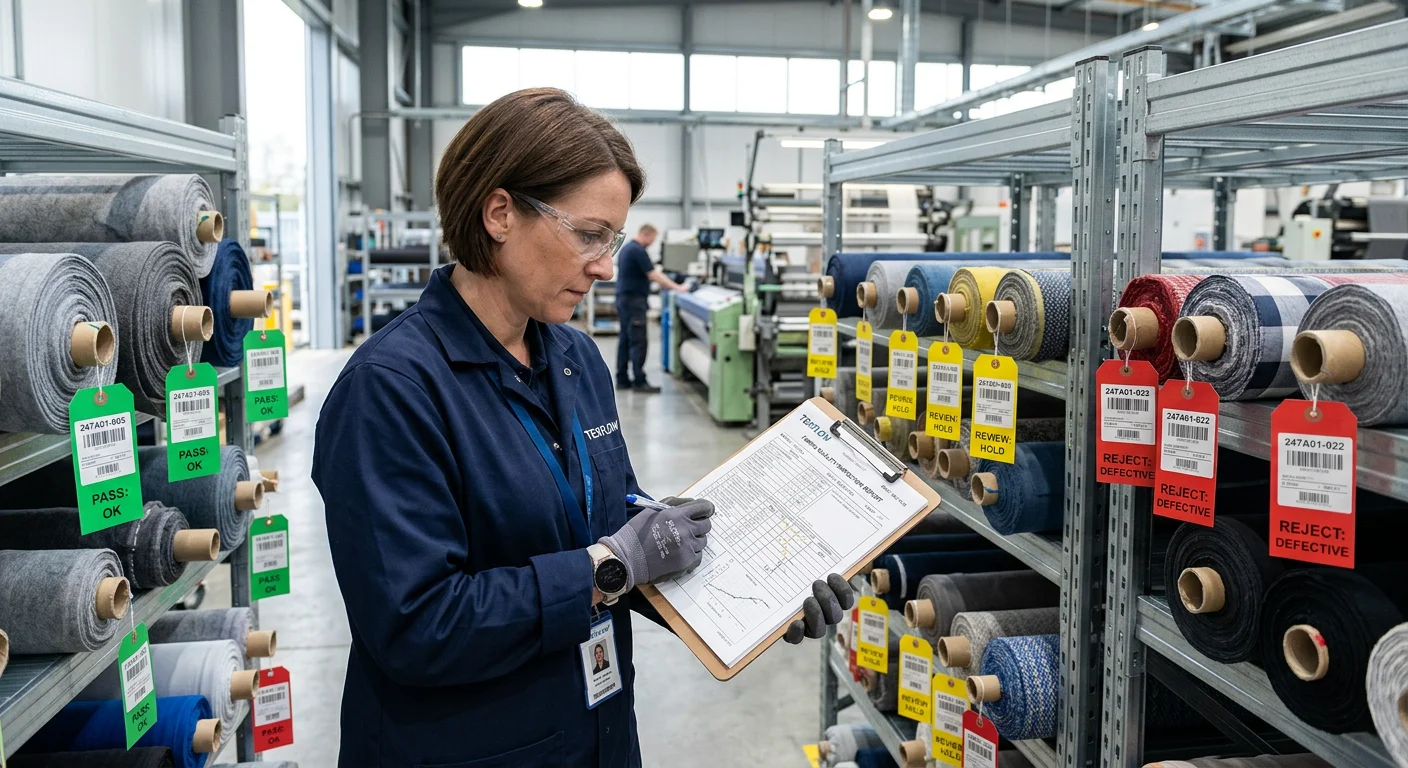
Final grading takes inspection data and assigns a physical status to each roll. That status travels with the roll from QA straight into the cutting room. Four outcomes exist. Each one triggers a different action.
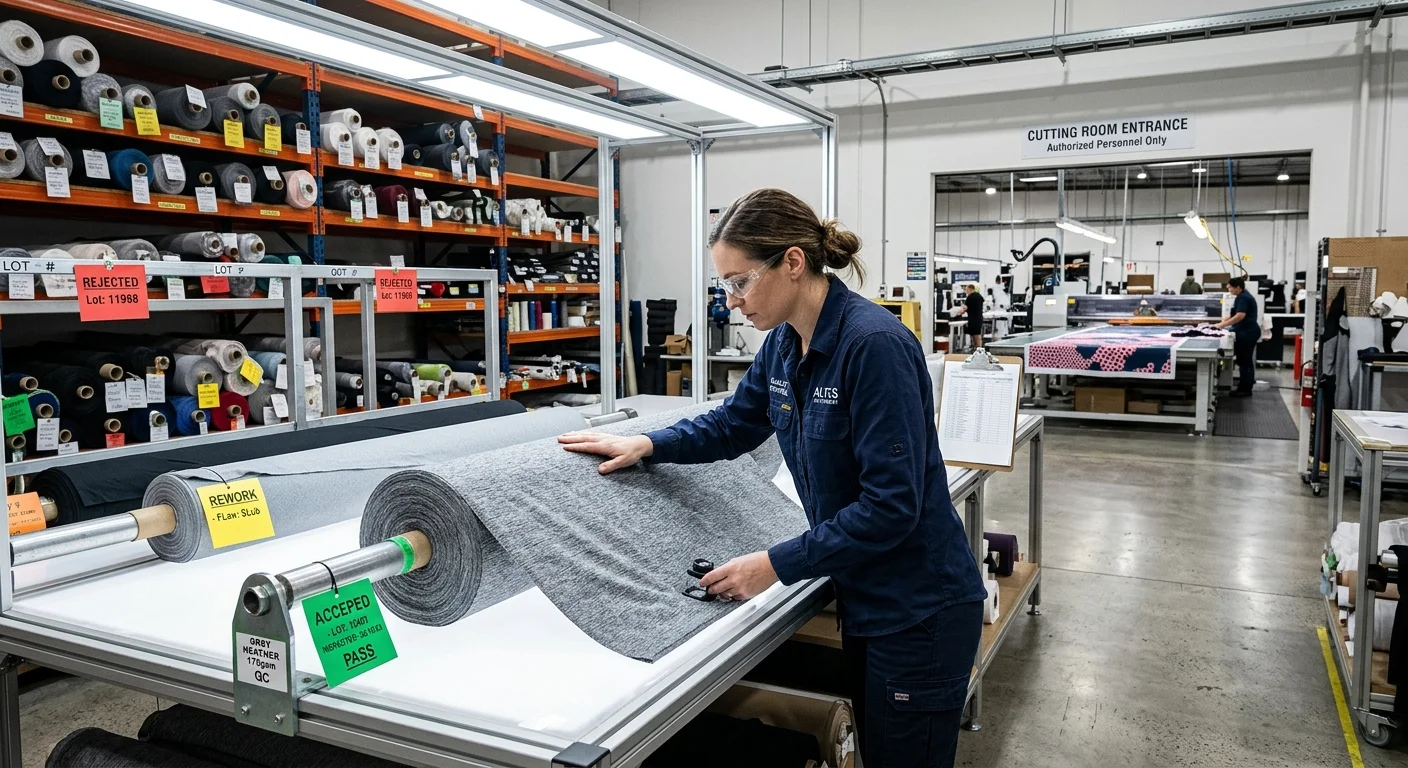
PASS (Green tag): 4-point score ≤ 28 PPHSY for premium activewear programs (≤ 40 for standard styles), all lab results within spec, shade approved against the APS. The roll barcode flips to "Cleared for Cutting" in the system. Nothing else moves it forward.
HOLD (Yellow tag): Visual grading passed, but a lab result is still pending — perspiration colorfastness, crocking, or chlorinated water resistance for swim-adjacent styles. The roll is blocked from cutting reservation. No one pulls it until the result comes in and QA updates the status.
REWORK (Blue tag): The fabric is usable, but has a localized problem — a concentrated defect zone at the roll head, a barre band limited to specific panel sections, or a width reduction that still works with a tighter marker. The tag carries a rework code and a cutting note: "Avoid center 30 cm, lanes 3–4." The marker plan adjusts around it. The roll still cuts — just under constraint, with QA sign-off on the specific marker version.
REJECT (Red tag): 4-point score above 40 PPHSY, or any critical failure — GSM deviation beyond ±7%, colorfastness below Grade 4, shrinkage beyond spec, lycra breaks, unresolved shade drift. The roll moves to a locked, separate quarantine zone. Cutting supervisors have no issue rights from that location. Re-grading requires a written override from the QA head.
What the Cutting Release Document Contains
The inspection report is the record. The cutting release is the authorization. These are not the same document. Handing over one without the other leaves a gap.
Every fabric lot cleared for bulk cutting leaves QA with a Cutting Release Authorization Form referencing:
PO number, style, colorway
Roll ID range cleared (specific barcodes, not just lot-level approval)
Lab test pass list with result codes
Any conditional approvals — for example, "REWORK rolls 04 and 05 approved for size S–M panels only, per marker MK-S001-V3"
QA manager signature and timestamp
That form attaches to the cutting order — printed on paper and uploaded to the brand portal before bulk cutting begins. Not after. Before.
The fabric inspection report follows a fixed structure:
Page one: A PO-level summary table listing every roll, its 4-point score, and its final status
Subsequent pages: Per-roll detail tables showing defect type, position in meters from roll start, distance from selvedge, and point value
Defect photos named by convention (
PO_Style_RollID_DefectType_Position.jpg) linked inline
Export goes out as both Excel and PDF. A CSV or JSON feed also pushes into the ERP for downstream traceability.
The Gatekeeping Step Most Factories Skip
The barcode scan is the last checkpoint before rolls reach the cutting floor. A roll tagged PASS with a confirmed "Cleared for Cutting" flag goes through. A HOLD or REJECT roll triggers a hard system error — no one can allocate it to a cutting order without a QA head override logged against it.
The physical tag color and system status must match. No match, no movement.
Spreading logs on the cutting floor close the loop. They record which rolls went into which lay, against which marker version, with what layer count and end-loss measurement. Any new defect found during spreading — bowing, bias, a shade strip not visible on the flat roll — goes straight back to QA. The remaining yardage from that roll gets reclassified. A PASS roll can become a REWORK. It can also become a REJECT.
That feedback loop is what makes the whole documentation system worth running. The cutting release isn't a one-way sign-off. It's a live record — and it stays live until the last panel from that roll clears final inspection.
6 Operational Indicators to Judge a Factory's Fabric Quality Control During Audits
Go into a factory audit without a clear rubric. You'll end up approving suppliers you'll regret six months later. The plaque on the wall tells you nothing. The inspection table tells you everything.
Here are six things to check — and what each one signals about how seriously a factory treats incoming fabric.
1. Pre-Cutting Quarantine Enforcement
The first thing to check isn't the cutting room. It's the space before it.
A factory with real incoming controls keeps uninspected fabric separated from approved and rejected stock. Look for painted floor lines, labeled racks, and color-coded status tags on every roll. Red means hold. Green means cleared. Yellow means conditional.
Walk the floor. Pull 3–5 rolls at random from the cutting room. Ask to trace each one back to its inspection record. Any roll that moved from receiving to cutting without a documented QC pass? That's a clear sign discipline breaks down under production pressure.
Minimum benchmark: ≥10–20% roll inspection per lot for standard activewear programs. New mills or flagged fabric types should hit 100%.
2. Live 4-Point Scoring With Roll-Level Logs
A factory can claim it runs the 4-point system. What matters is whether it's running right now — on the current shipment, with records that go deeper than lot-level summaries.
Ask the inspector to score a defect on the spot. A 3-inch slub on a nylon/spandex panel should score 1 point. A 7-inch horizontal barre stripe gets 3. The inspector hesitates? The system isn't built in — it's staged for auditors.
Pull last week's inspection sheets. A solid record shows per-roll detail:
Roll ID, fabric type, colorway, dye lot
Inspected length in meters or yards
Defect type, position (meter mark + distance from selvedge), and point value assigned
Total PPHSY score and final disposition
Red flag: Shipment summary sheets with averages but no roll-by-roll breakdown. That's a sign the 4-point system lives on paper, not on the table.
Strong operations can pull mill-level rejection data from the past 3–6 months — something like "Mill X averaged 15 pts/100 yd, 3.5% roll rejection rate last quarter." That data only exists if someone has been tracking it without gaps.
3. APS Archive and Shade Band Management
Color control in activewear depends on how a factory manages its Approved Production Standards. Ask to see the APS folder for a fabric in current production.
What you want to find:
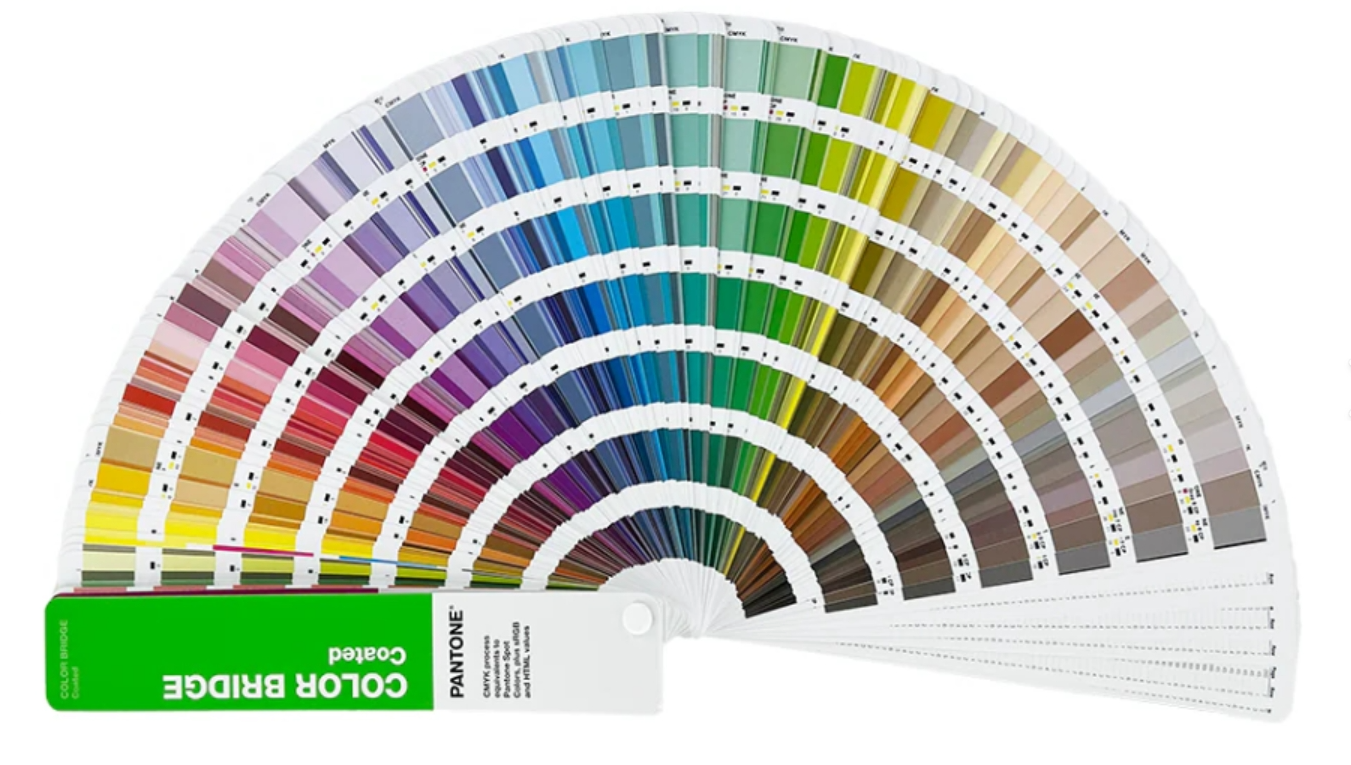
Swatches labeled with style, color code, Pantone reference, approval date, and approver name
Shade bands for each dye lot — a row of swatches from light to dark, with a marked acceptable range
Storage conditions that stop color drift: sealed folders, kept in a climate-controlled area around 21–24°C and 45–65% relative humidity
Then ask the inspector to pull a roll-end from active stock and hold it against the APS under a D65 lightbox (6500K, minimum 1,000 lux at the inspection surface). That comparison takes under two minutes in a well-run system.
Unmarked APS swatches, unlabeled shade bands, or a lightbox with only one light mode — none of these disqualify a factory on their own. But they're worth noting.
4. Lot-Specific Lab Certificates, Not Shared Reports
The question isn't "do you have lab reports." It's "do you have a separate lab report for each dye lot in your warehouse right now."
Pick two or three dye lots at random from active stock. Ask for the lab test certificates tied to those specific lot numbers. For activewear, the key results to check include:
Wash shrinkage (ISO 6330 / AATCC 135): ≤±3% warp and weft
Colorfastness to washing (ISO 105-C06): ≥Grade 4
Colorfastness to perspiration (AATCC 15): ≥Grade 4
Crocking, dry and wet (AATCC 8): Dry ≥4, Wet ≥3
Stretch and recovery (ASTM D2594 or ISO 14704): ≥90–95% recovery after elongation cycles
The gym wear factory hands you one report covering multiple dye lots? They're pooling results. One shrinkage certificate across three lot numbers isn't traceability. It's a paperwork shortcut. The moment one of those lots behaves differently from the others, the whole chain breaks.
Additional check: Confirm the issuing lab holds third-party accreditation (ISO 17025). Internal mill reports don't count as independent verification.
5. Documented Rejection and CAPA Workflow
Every sportswear factory will tell you it rejects nonconforming fabric. The real question is whether a paper trail exists — and what that trail does after the rejection.
Ask to see the last three to five Non-Conformance Reports (NCRs) or fabric claim forms issued to mills. A solid NCR contains:
Buyer, style, PO, supplier name, and lot number
Defect description with photos, 4-point score, and relevant test results
Quantity affected in yardage and rolls
Proposed disposition: return, downgrade, cut-around with marker adjustment, or conditional approval
Then ask what happened next. A factory with strong activewear supplier relationships has escalation SLAs in place — replacement shipments within 7–14 days, credit notes for unusable yardage, agreed maximum defect rate thresholds (under 2–3% of total yardage per order). Ask to see the email trail or supplier portal log from a recent claim.
CAPA records are the next layer. Each major rejection needs a documented root cause — stenter miscalibration, dye recipe error, yarn batch inconsistency. There should be a corrective action with a named responsible person and a completion date. A follow-up check confirms the fix held.
Factories that track this data by mill, raise inspection rates on repeat offenders, or phase out chronic problem suppliers — those are running a system. The others are just reacting.
6. GSM Verification, Storage Discipline, and Contamination Controls
Three operational details that rarely show up in factory pitch decks. All three show up fast on a floor walk.
GSM verification as routine, not exception. Ask the QC team to show you their GSM cutter and scale. The equipment should be calibrated. Records should show target versus actual measurements per roll (tolerance ≤±5%). Fabric width should be logged at multiple points per roll. Wide variation across a single roll points to a mill control problem. A factory that doesn't track it won't catch it.
Storage discipline. Fabric should sit off the floor, away from direct light and moisture sources. Long-stored rolls should show moisture monitoring — moisture meter readings on file or desiccant in storage bays. A roll with mildew odor, water staining, or deformation from bad stacking is a storage failure. Don't let a factory blame the mill for that one.
Sharp tool and contamination controls. Needle detectors are standard on finished garments. At the fabric stage, check for documented tool management policies — are scissors, seam rippers, and other sharp instruments tracked and controlled near open rolls? Damage lines that show up during spreading often start at the inspection or storage stage, not at the mill.
These six indicators don't need a formal checklist. You can cover all of them in ninety minutes with any fitness activewear factory that's willing to be open. The suppliers worth working with don't need to be asked twice.
Conclusion
Every roll of fabric that hits your cutting table casts a vote — for or against the product you're about to put your name on.
The gap between activewear that sells and activewear that gets returned isn't a design problem. It comes down to three things:
A 4-point inspection that got skipped
A GSM deviation that slipped through
A colorfastness test that no one ran because the shipment was already three days late
You now have the checklist, the thresholds, and the reject cases. So put them to work. Ask your current gym wear supplier to walk you through their incoming fabric inspection process. Can they explain their AQL acceptance criteria on the spot? Do they know their stretch recovery benchmarks by heart? Their answer tells you what you need to know.
Download the fabric inspection checklist above and bring it to your next sportswear factory audit. Have them fill it out with you. How comfortable they are with those questions says everything.