Choosing between OEM and ODM yoga wear manufacturing is one of the biggest decisions you'll make when launching a private label yoga wear brand. Most founders get it wrong — not because the choice is complicated, but because they don't know the difference going in.
Pick the wrong model and you end up stuck. Either you're locked into someone else's designs with nothing to set you apart, or you burn through capital building custom yoga wear specs your team wasn't ready to deliver on. Neither outcome is good.
This guide clears that up. You'll leave knowing:
How OEM and ODM differ in practice
Which model fits your brand's current stage
What to prepare before contacting a yoga apparel production partner
No guesswork. Just a straightforward framework built for the real challenges of growing an activewear brand from scratch.
OEM vs ODM: Head-to-Head Comparison for Yoga & Activewear Brands
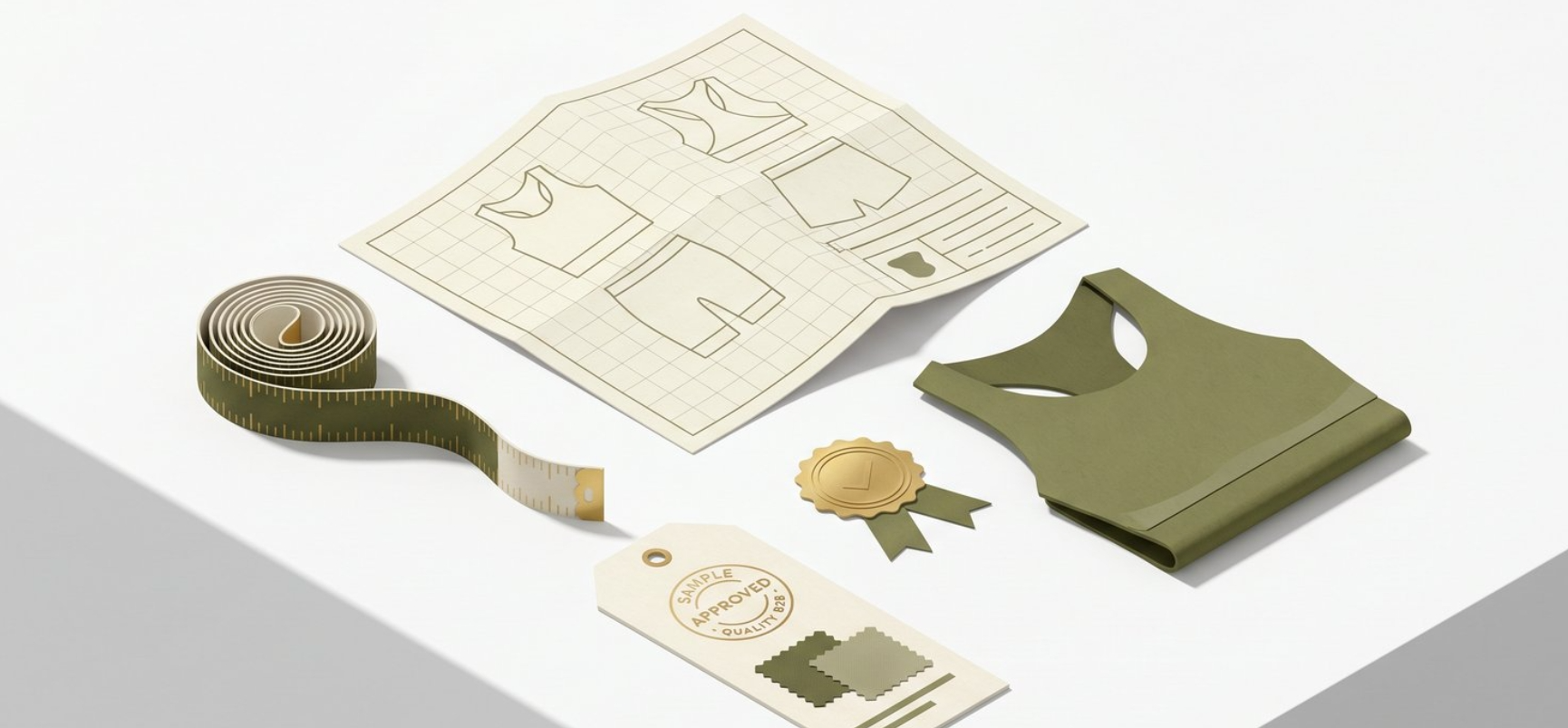
Here's the clearest way to think about it: OEM is "you design, we produce." ODM is "we design, you brand it." That one difference shapes every decision you'll make — from how much you spend upfront to whether your best-selling legging can ever be yours in any real, protectable sense.
The table below breaks down how these two models compare across the dimensions that matter most for yoga and activewear brands.
Dimension | OEM | ODM |
|---|---|---|
Design & IP Ownership | You own the patterns, cuts, and tech specs. The factory executes your vision. | The factory owns the base pattern. You own the brand name — and little else. |
Customization Depth | Full control: compression level, waistband height, inseam, fabric weight, stitch placement. | Limited edits: colorways, prints, logo position. The silhouette stays fixed. |
Product Uniqueness | High. Your legging shape can be yours — recognizable and defensible. | Low to medium. The same cut may already sell under three other labels on Amazon. |
Development Cost | Higher upfront — design fees, sampling rounds, and fabric development can run 15–30% of your first order value . | Minimal. You pay little to no sampling fee. Almost all spend goes straight to product. |
MOQ | 500–1,000+ units per style/colorway . | 100–500 units per style/colorway — far more accessible for testing. |
Time to Market | 3–6 months from concept to shelf (2–4 months development + 4–8 weeks production). | 1.5–3 months. Style selection and sample approval can wrap up in as little as 2–4 weeks. |
Quality Control | You define every QC standard: stitch density, shrinkage, color fastness, squat-proof opacity — all confirmed pre-production. | QC follows the factory's existing benchmarks. You can request adjustments, but the baseline is theirs. |
Brand Asset Built | You build both brand and design assets — patterns you can relaunch, evolve, and protect season after season. | You build brand and marketing assets alone. The product belongs to the factory. End the partnership, and you start rebuilding from zero. |
Where It Gets Yoga-Specific
Generic activewear comparisons stop at cost and MOQ of fitness wear. Yoga wear has its own performance language, and the OEM vs. ODM divide plays out in a distinct way at that level.
Compression. With OEM, you can specify fabric weight (say, 220–260 g/m² high-density nylon blend), Spandex ratio (20–25% for a firm-but-not-punishing hold), and design zone-specific compression — higher at the thigh, gentler at the waist. With ODM, you pick between "light compression" and "high compression" from whatever the factory already stocks. There's no rewriting the formula.
Squat-proof opacity. OEM lets you set a minimum opacity threshold (≥220 g/m² is a common benchmark) and require lab-tested results on stretch. That matters a great deal for pale colorways and extended sizing. With ODM, you trust the factory's existing performance record — which may or may not hold up for your specific color choices.
Moisture-wicking. OEM lets you specify fiber composition and finishing treatments (like hydrophilic coatings or cool-touch finishes), then tie them to measurable test standards like AATCC. With ODM, you pick from a fixed menu: "standard quick-dry" or "enhanced wicking." You get the result — you don't get to define it.
Fit and pattern. This is where OEM's edge is hardest to copy. You can build separate size grading for different body proportions — adjusting rise, hip-to-waist ratio, and inseam in 2–5mm steps — for your specific target customer. ODM uses a global average. It fits most people well enough. It fits your niche customer perfectly by chance alone.
The Phrase That Puts It Plainly
Here's one way to explain this to a co-founder, an investor, or yourself at 11pm when you're second-guessing everything:
"Under ODM, you own the brand. Under OEM, you own the brand and the design."
Or picture it this way: OEM builds you a private island. ODM gives you a well-furnished apartment in a building where other tenants have the same floor plan. Both are real. Both work. The question is what you're building toward .
The Hidden Risks of Each Model That Yoga Brand Owners Often Overlook
Most founders do their homework on MOQs and lead times. What they don't see coming are the quieter costs — the ones that never show up on a quote sheet but hit hard on a P&L.
The OEM Traps That Drain Time and Money
Incomplete tech packs are the number one silent budget killer. In small-to-mid-size yoga apparel brands, vague or incomplete technical specs push sampling do-overs to 25–40% of all styles. The average SKU needs 1.5 to 2.3 rounds of sampling before getting approved.
Run the numbers on a modest 20-SKU season launch:
- One extra sample round per style at US$100 each = US$2,000 in extra sampling costs
- 3–5 extra hours of back-and-forth per style = 60–100 hours of team time lost
- Each sampling delay pushes your timeline out by 7–14 days — long enough to miss a seasonal drop or a planned campaign window
Then there's the IP risk. 50–60% of small activewear brands working with overseas factories never sign a proper NDA before sharing design files. Almost no one talks about this until it happens to them. Your pattern gets folded into the factory's "standard template" library. Months later, it shows up on 1688 or Alibaba in a different colorway.
Your hero legging drives 35–50% of your seasonal revenue. A knockoff floods the market within six months. Gross margin on that style compresses by 10–20 percentage points — either from price cuts or the higher ad spend needed just to hold your position.
High MOQ minimums create their own pressure. A standard 500-unit run at US$12 per unit ties up US$6,000 per style, per colorway. Real-world sell-through in a brand's first two seasons often lands at 40–60% of target. That leaves you holding 200–300 units. Clear them at US$25 instead of US$45, and what looked like a 73% margin drops to 52%. Your whole season's profitability takes a 5–10 percentage point hit.
The ODM Risks That Cap Your Brand's Ceiling
ODM feels safer at the start. Lower spend, faster timelines, less to figure out. The risk isn't in getting started — it's in where the model leaves you eighteen months later.
Your "exclusive" product isn't exclusive. A single ODM factory base pattern goes to 10–50 different brands and platform sellers. Only the logo, colorway, and minor trims change. Search "high waist yoga leggings " on Amazon and you'll find 100+ listings built on the same three or four silhouettes. The result: price compression. The lowest-price version of your silhouette sits at US$18–22. You try to hold at US$48–65. Customers spot the identical cut in product photos. Your realized selling price drifts to US$30–40 — no matter what your listing says.
That same competition drives up your ad costs. Ten sellers bid on "high waist yoga leggings." CPC climbs to US$0.70–1.50 per click. A brand with a proprietary silhouette pays far less for the same eyeballs.
Structural fit issues become permanent. ODM base patterns are built around average-body sizing data — a 28–32 cm waist-to-hip differential designed for standard European or American sizing charts. Yoga and fitness customers are built differently: more muscular glutes, smaller waists, more extreme proportions overall. A base pattern that generates waistband roll-down in 15–20% of customer reviews, or "camel toe" complaints in 20–30% of negative feedback, leaves the ODM brand with almost no fix. The pattern belongs to the factory. You can swap fabrics. You can't change the architecture.
The long-term ceiling this creates is easy to measure. ODM brands on Shopify convert at 1.8–2.1% with repurchase rates around 15–18%. OEM brands running proprietary, fit-calibrated silhouettes — with "anti-camel toe" or "squat-proof" callouts backed by real construction — convert at 3.0–3.8% with repurchase rates of 25–30%. Same traffic volume. Very different outcomes.
The premium gap is just as stark. ODM brands achieve 2–3x factory cost in retail pricing. OEM brands with strong design IP reach 3–5x — the same economics behind Alo and Lululemon's core legging styles at US$88–128 retail against a US$18–30 production cost. That 20–40% difference in brand premium won't close with better photography or a stronger Instagram presence. It's built into the product itself.
Which Model Fits Your Yoga Brand Stage? A Decision Framework by Budget & Goals
The answer isn't "OEM is better" or "ODM is better." The real answer is where you are right now — and where you're trying to go in the next twelve months.
Brand stage matters more than almost any other variable here. The same founder who makes a smart ODM call at month three can make an equally smart OEM call at month eighteen. The models themselves don't change — what changes is what your business needs from them.
Here's a simple way to think through your current stage:
Stage 1: You're Just Starting Out (You Have a Logo and a Vision)
→ Start with ODM.
At this point, your most important job isn't building brand assets. It's proving that real customers will buy what you're making. ODM lets you do that without the capital commitment of full custom development.
Sampling costs stay low. You can move from concept to a live product in weeks, not months. And if a style doesn't land the way you hoped, you haven't sunk $1,500 into a custom tech pack for it.
Use this stage to test colorways, sizing, fit feedback, and repurchase behavior. Think of it as market research you also happen to sell.
Stage 2: You Have Winning Products, But You're Still Growing
→ Move to a Hybrid model (ODM + OEM working together).
This is where most growing yoga apparel brands find their footing. You've proven demand — two or three styles keep selling out. Now the question is: how do you protect what's working while building something harder to copy?
Here's how the split works in practice:
ODM handles : core basics, replenishment SKUs, color and size extensions, standard leggings and sports bras you need in stock on a consistent basis
OEM handles : your brand's hero pieces — the one or two styles you want to own outright, with proprietary construction, fabric specs, and fit details no other factory can copy
The hybrid approach protects your cash flow. At the same time, it builds the kind of design IP that raises your pricing ceiling.
Stage 3: You're Building a Real Brand Identity
→ Shift to OEM as your primary model.
Your goal has moved from "sell product" to "build something with genuine premium positioning." At that point, OEM isn't optional anymore. This is the stage where you develop exclusive compression structures, specify proprietary fabric blends, and dial in fit grading for your specific customer's body — not a global average.
The signal that you're ready isn't a revenue number. It's a mindset shift. You catch yourself thinking, "I want something no one else can replicate." That's OEM territory.
Clear signs you're ready to commit to OEM:
- A proven bestseller that's sold through multiple reorder cycles
- You're comfortable investing $500–$2,000 per style in development to protect higher long-term margins
- Customer feedback calls out specific fit or performance details you want to own — and can't control right now
- Your brand is starting to mean something beyond the product itself: an aesthetic, a standard, an identity
The One-Line Rule for Every Decision
Brand Stage | Budget Priority | Recommended Model | Core Goal |
|---|---|---|---|
Early (idea stage) | Low | ODM | Validate fast, low risk |
Growing (proven SKUs) | Medium | Hybrid | Replenish + differentiate |
Established (brand-building) | Higher | OEM | Proprietary product, premium positioning |
Three lines you can put to use right now:
No proven demand yet — use ODM.
You have a bestseller — use Hybrid.
You're building a brand that's hard to copy — use OEM.
The mistake most founders make isn't picking the wrong model forever. It's treating the choice as permanent. It was always meant to change as you grow.
What You Must Prepare Before Contacting Any OEM or ODM Yoga Wear Manufacturer
Manufacturers talk to dozens of brands every week. The ones who land better pricing, shorter lead times, and real factory attention show up with something in hand. Not a mood board. Not a vision statement. A file.
What you prepare before that first email sets the tone for everything that follows.
Going OEM? Build Your Tech Pack First
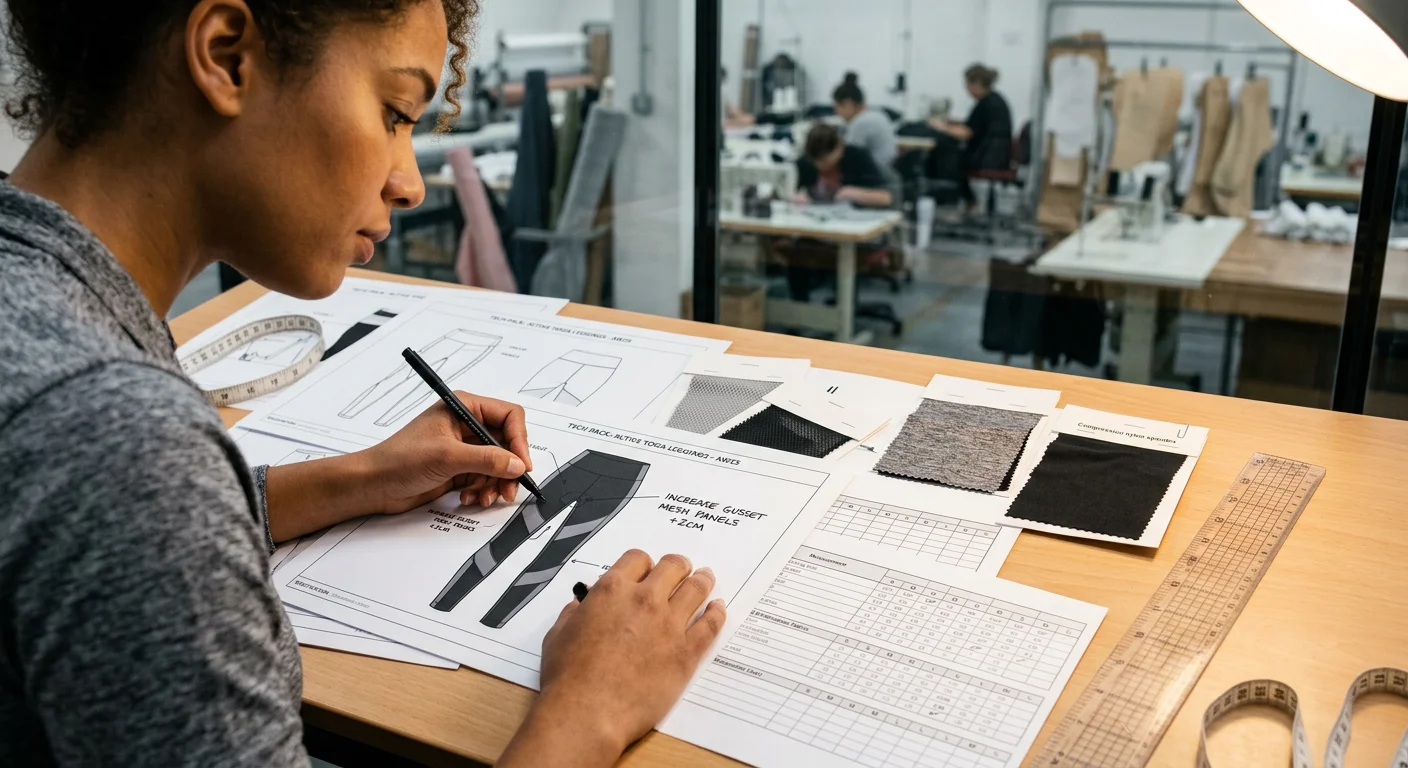
A tech pack is your product's blueprint. Without one, you're asking a factory to read your mind — and they won't. Incomplete specs are the single biggest reason sampling rounds pile up, timelines slip, and budgets bleed out.
Your OEM tech pack for yoga apparel needs to include:
Size specifications. List every key measurement, every size, in one unit — cm or inches, pick one. For women's yoga pants, that means waist, hip, inseam, rise, hem, and outseam across your full size run. Write your quality tolerance directly into the document: a ±1–1.5 cm allowance on finished garments. Do not leave that for post-sample negotiation.
Construction details. Name the stitch type at every seam — flatlock at the main seams, coverstitch at the hem, and your preferred waistband construction. Add stitch density (3–4 stitches per cm), thread weight, and stretch thread requirements. For yoga wear: all seams must pass a minimum of 50 full-range stretch cycles without breaking. That's a hard requirement — not optional when someone's in downward dog.
Fabric performance parameters. State your fiber composition (75% nylon / 25% spandex is standard), your target weight (220–280 g/m² for leggings, 180–240 g/m² for bras), and your stretch recovery standard — no more than 5% residual deformation after 30 minutes. Ask for test data. Not promises.
Logo and artwork files. Vector format — AI, EPS, or PDF. Include exact placement measurements and Pantone color codes. Doing an all-over print? Add your repeat unit dimensions and a maximum seam misalignment tolerance of 2mm.
Going ODM? Lock In Your Brand Decisions Before You Call
ODM prep is less technical — but the stakes are the same. The mistake most brands make is reaching out to a factory before they know what they want. The factory then fills in those gaps for you. That's not your brand anymore.
Before contacting any ODM yoga wear supplier, decide on:
Your category mix. Know your ratios: 40% leggings, 30% bras, 30% tops, or whatever your launch plan calls for. This determines which factories are even worth approaching.
Your colorway shortlist. Cap it at five colors. Pull from the factory's existing dye stock. This keeps you within minimum dye run requirements — 100–300 meters of fabric per color — without overextending your budget.
Your logo application method — heat transfer, embroidery, or woven label. Choose one method per style. Mixing two methods on the same garment pushes up cost and complexity with very little return.
Your packaging specs. Hang tag dimensions, fiber content language, washing symbols, country of origin. These feel minor. They're not — missing details here can stall your customs clearance.
Both OEM and ODM Require One Thing: Sign the NDA First
Before you share a tech pack, a pattern, or any design file that hasn't launched yet — get a non-disclosure agreement signed. Not after. Before.
The NDA must state clearly that the factory cannot display your samples in their showroom, use your silhouettes as generic templates, or pass your patterns to other buyers. For OEM, push further. Negotiate exclusivity on your core styles. Get pattern ownership written into the contract. Set a defined exclusivity window — two to three years works, tied to a minimum annual order of around 3,000 units per style.
This isn't being difficult. It's the difference between owning what you built and watching it appear under a competitor's label six months from now.
How to Evaluate and Shortlist OEM/ODM Yoga Clothing Manufacturers
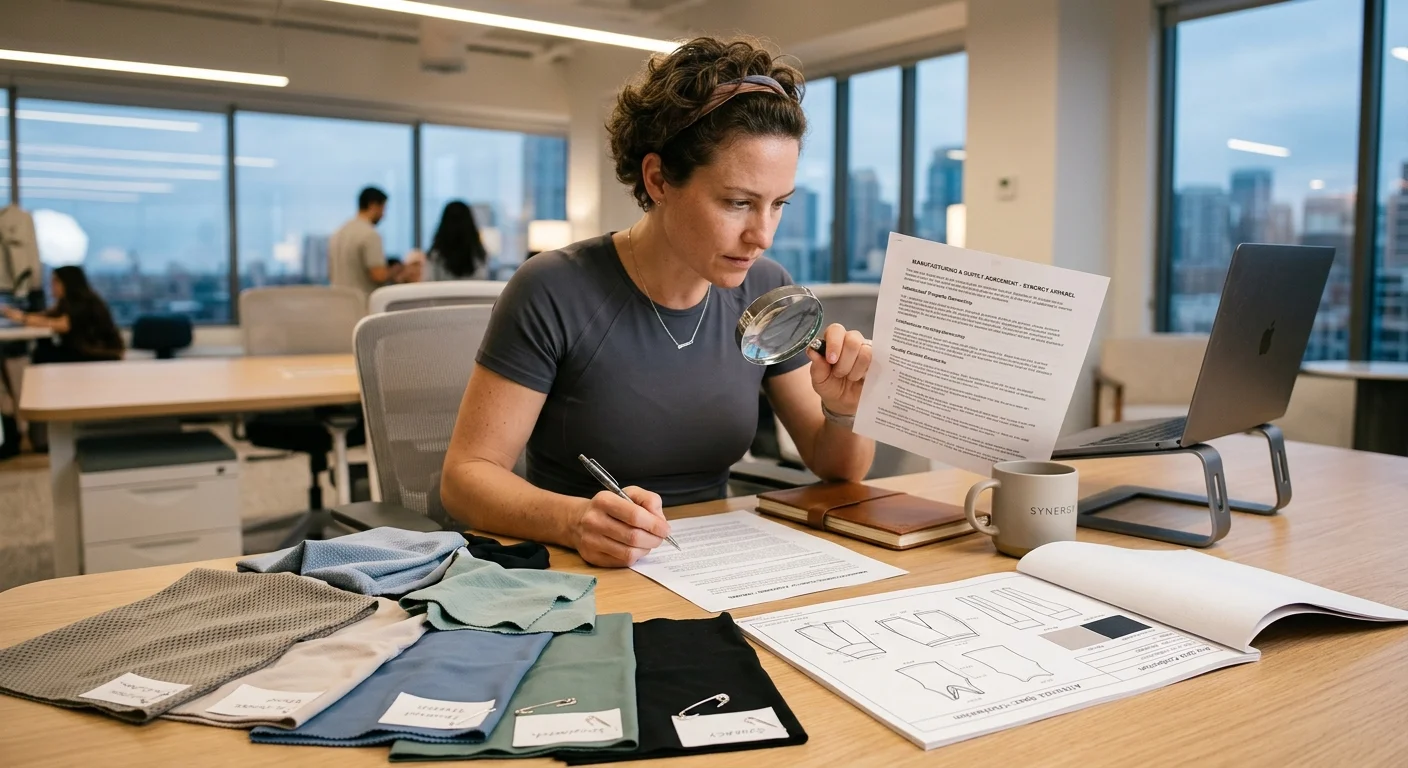
Finding the right manufacturing partner isn't a search problem — it's a filtering problem. Most factories will say yes to your inquiry. The real work is figuring out which ones deserve a second conversation.
Here's what to look at.
Yoga-Specific Production Experience (Not Just "Activewear")
A factory that makes swimwear or athleisure basics is not the same as one that focuses on performance yoga apparel. Look for at least 3–5 years of dedicated yoga and fitness wear production — with real documentation to back it up.
Ask them to show you:
- 10+ production samples or shipment photos from finished yoga collections. Fabric weight (220–280 g/m² for leggings) and elastane ratio (15–25% spandex) should be noted on each
- Technical capability in flatlock seaming, seamless knitting, bonding, laser cutting, and heat-press application — not just standard woven garment construction
- A track record supplying brands in your target market (US, EU, or Southeast Asia), plus familiarity with regional size chart standards
Functional Fabric Sourcing Depth
A manufacturer's quality depends on their material suppliers of yoga wear. Ask for the names of their 3–5 core performance fabric suppliers . Also request copies of their OEKO-TEX Standard 100 or GRS certification numbers .
Confirm they can source:
- High-stretch nylon/spandex blends: 200–300 g/m², four-way stretch, ≥18% elastane
- Moisture-wicking fabrics with documented test data — water vapor permeability ≥5,000 g/m²/24h, or a verifiable third-party test report
- Recycled polyester or nylon (rPET/rNylon) with GRS traceability documentation
For small-batch testing, check whether they can handle minimum fabric runs of 70–100 meters per color .
MOQ Structure and Lead Time Benchmarks
Get exact numbers — not loose ranges that shift after you've committed.
OEM Custom | ODM Existing Styles | |
|---|---|---|
MOQ per style/color | 200–500 pcs | 100–200 pcs (some as low as 50) |
Sampling lead time | 7–15 days (up to 30 for custom prints) | 3–7 days |
Bulk production | 30–45 days (2,000–5,000 pcs) | 30–45 days |
Ask factories to break it down: MOQ per color, minimum per size, and tiered pricing at 200 / 500 / 1,000 units. This lets you model your actual margin before committing.
Quality Verification: Certifications and Sample Testing
These certifications are non-negotiable:
- OEKO-TEX Standard 100 — check whether it covers fabric only or finished garments, and verify the expiry date
- ISO 9001 for quality systems; GRS if you're sourcing any recycled content
Check samples against these benchmarks:
- Fabric weight deviation: ±10 g/m² is acceptable; anything beyond ±20 g/m² is a warning sign
- Stretch recovery: ≥90% recovery after 30% lateral extension
- Loose threads: more than 5 uncut threads per garment points to a systemic craftsmanship problem
Request at least one yoga pant and one sports bra sample. Written specs should come attached.
Red Flags That Should End the Conversation
Watch for these deal-breakers:
Refusal to sign an NDA before you share tech packs or design files. A legitimate factory will provide or accept a mutual confidentiality agreement without pushback
Vague answers about ODM exclusivity — a trustworthy factory will tell you straight how many brands carry a given silhouette and whether regional exclusivity is on the table
Lump-sum sampling quotes with no cost breakdown — a proper sample quote separates pattern-making fees (US$50–150 per style), fabric costs with per-meter pricing, embellishment costs, and shipping. Anything less is a transparency problem
No anonymous client reference, no verifiable business registration, no real production facility address — any one of these is a serious concern
The manufacturer you pick becomes part of your brand's foundation. Shortlist with care — it saves you from starting over later.
The Final Verdict: OEM or ODM — Making the Right Call for Yoga Wear Brand
Here's the truth nobody tells you at the start: there's no single right answer. There's just the right answer for where you are right now .
One sentence sums it up — "Speed and cash flow come first? Choose ODM. Unique fit and long-term brand equity come first? Choose OEM. Need both? Start with ODM, then move your hero styles to OEM as you grow."
That's the whole framework. Everything else is detail.
Use it like this:
Cash flow is tight and you need to move fast → ODM. Low development cost, flexible MOQs, weeks not months to market.
You want a silhouette nobody else can copy → OEM. Your design, your specs, your patterns — owned by you.
You want both → Hybrid. Run your basics and replenishment styles through ODM. Build your signature pieces through OEM.
This decision doesn't have to be permanent. Brands that grow well treat it as a sequence , not a fixed position. Start where your budget and timeline allow. Shift as your brand gets stronger.
Conclusion
OEM vs. ODM — there's no wrong answer here. It comes down to matching the right model to where your brand stands right now , not where you picture it in three years.
Take this with you: ODM gets you moving fast with less upfront risk. OEM hands you full creative control to build something no competitor can copy. Both paths work. What doesn't work is sitting on the fence while your competitors are out there sampling fabrics.
You have the framework now. You know:
What questions to ask
What documents to prepare
What red flags to spot in any private label fitness clothing manufacturer conversation
So here's what to do next. Find a vetted yoga apparel production partner. Have your brand vision ready. Know your MOQ budget. Then start the conversation.
Your brand doesn't begin at launch. It begins the moment you decide to take it seriously.